


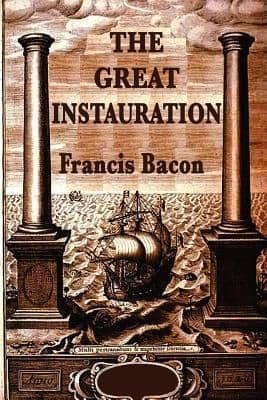
The Great Instauration (Instauratio Magna)

The Great Instauration is Bacon's overarching plan for the regeneration of the sciences, a projected six-part work of which only the second part, the Novum Organum, was completed. Its central claim is that knowledge must be rebuilt from the ground up through a new method of induction, and that this 'instauration'—a restoration or founding anew—requires a systematic program of natural history, experimentation, and collaborative inquiry. The work's distinctive mechanism is its diagnosis of the 'idols' that block knowledge, coupled with the promise of a 'new instrument' for interpreting nature.
Key Insights
✦What is the Great Instauration, and why is it called an 'instauration' rather than a 'restoration' or 'revolution'?
The Great Instauration is Bacon's grand plan for the reform of learning, conceived as a six-part work. The term 'instauration' is deliberately chosen: it means a founding anew, a restoration to a proper state, but with the connotation of a fresh start rather than a mere return to the past. Bacon does not want to restore ancient wisdom; he wants to establish a new foundation for knowledge. The plan is outlined in a preface (the 'Proemium') and a 'Plan of the Work' (the 'Distributio Operis'), which divides the project into six parts: the survey of existing sciences, the new logic (Novum Organum), natural history, the ladder of intellect, the anticipations of the new philosophy, and the new philosophy itself. Only the Novum Organum was completed.
✦What is the Novum Organum, and how does it fit within the larger plan?
The Novum Organum (New Instrument) is the second part of the Great Instauration, published in 1620. It presents the new method of induction that Bacon believed was necessary to replace the syllogistic logic of Aristotle. The title is a deliberate contrast with Aristotle's Organon, the collection of logical treatises that dominated medieval and Renaissance education. The Novum Organum is both destructive and constructive: it begins with the doctrine of the idols, which diagnoses the sources of error that have prevented knowledge from advancing, and then presents the new method of induction, which proceeds from particulars to axioms by a careful process of elimination and experiment. It is the philosophical heart of the Great Instauration.
✦What are the idols of the mind, and how do they function within the Great Instauration?
The idols of the mind are the sources of error that distort human understanding. Bacon identifies four kinds: idols of the tribe (errors rooted in human nature itself), idols of the cave (errors peculiar to the individual), idols of the marketplace (errors arising from language and social interaction), and idols of the theatre (errors derived from received philosophical systems). The doctrine of the idols is diagnostic: it explains why learning has failed to advance, despite the efforts of countless scholars. The new method of induction is designed to overcome these errors by proceeding carefully from particulars to general axioms, avoiding the premature generalization that the idols encourage. The idols are thus the negative counterpart to the positive method of the Novum Organum.
✦Why was the Great Instauration never completed, and what does its incompleteness reveal?
Bacon planned a six-part work, but only the Novum Organum was completed and published. The other parts exist only as plans, fragments, or related works. The natural history (Part III) was partially realised in Sylva Sylvarum (1627); the ladder of intellect (Part IV) was never written; the anticipations (Part V) exist as aphorisms; and the new philosophy (Part VI) was never completed. The incompleteness is not merely a matter of Bacon's death in 1626; it reflects the sheer scale of the project. The Great Instauration was a vision of a new kind of science, one that required the collaboration of many minds over generations. Bacon knew that he could not complete it alone, and he intended it as a program for others to carry forward.
✦How does the Great Instauration relate to Bacon's other works, such as De Augmentis and New Atlantis?
The Great Instauration is the overarching framework that encompasses Bacon's other works. De Augmentis Scientiarum (1623) corresponds in part to the first part of the Instauration—the survey and classification of existing knowledge—though it was written later and in a different form. The Novum Organum is the second part. New Atlantis (1627) can be seen as a fictional illustration of what a society organised around the new science might look like, with Salomon's House as the institutional embodiment of the Instauration's goals. The works are thus complementary: De Augmentis provides the taxonomy, the Novum Organum provides the method, New Atlantis provides the vision of application, and the Great Instauration provides the unifying plan.
✦What was the reception of the Great Instauration in the seventeenth century, and how did it influence later science?
The Great Instauration was widely read and admired, though its ambitious scope made it more of a manifesto than a completed system. The Novum Organum, in particular, was influential in shaping the ideology of the new science. The Royal Society, founded in 1660, adopted Bacon as a guiding spirit, and his vision of collaborative, methodical inquiry informed its programs. The idea of a 'great instauration'—a comprehensive reform of knowledge—became a model for later encyclopedic projects, including Diderot and d'Alembert's Encyclopédie. Bacon's emphasis on the practical benefits of knowledge, the relief of humanity's estate, became a central justification for scientific research. The work's influence has been enduring, even if its specific method of induction has been superseded.
Wealthy Psyche is an intellectual archive. We do not host, distribute, or sell book copies — physical or digital. We provide structured knowledge to help you think better, faster.