



Killing Time: The Autobiography of Paul Feyerabend
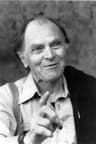
Feyerabend's autobiography argues, through the story of his own life, that philosophy is not a system to be defended but an activity that must remain open to accident, inconsistency, and change. The book's distinctive mechanism is the deliberate refusal of coherence: Feyerabend presents his life as a series of episodes, encounters, and enthusiasms—Vienna, the war, Popper, Berkeley, opera—without imposing a unifying narrative. The result is an autobiography that embodies his pluralism, showing that a life, like knowledge, is richer than any theory can capture.
Key Insights
✦What is the central argument of Killing Time, and how does it relate to Feyerabend's philosophical work?
The central argument, conveyed through the narrative of his life rather than stated as a thesis, is that philosophy is not a system to be defended but an activity that must remain open to accident, inconsistency, and change. Feyerabend presents his life as a series of episodes, encounters, and enthusiasms, refusing to impose a unifying narrative. The book's distinctive mechanism is this refusal of coherence: Feyerabend does not try to show that his life or his thought forms a consistent whole. The result is an autobiography that embodies his pluralism, showing that a life, like knowledge, is richer than any theory can capture. The book is thus not merely a memoir but a philosophical statement in its own right, demonstrating rather than arguing for his view of human existence.
✦How did Feyerabend's experiences in Vienna and during the Second World War shape his philosophy?
Feyerabend's early life in Vienna, his service in the German army during the Second World War, and the injury that left him with a lifelong disability are recounted in Killing Time as formative experiences. He describes the intellectual ferment of interwar Vienna, his encounters with the Vienna Circle, and his early enthusiasm for theatre and opera. The war and his injury are presented without self-pity, as accidents that shaped his life and thought. These experiences contributed to his suspicion of grand systems and his appreciation of the contingent and the particular. The autobiography shows how his philosophy emerged from a life rather than from abstract argument alone, and it helps readers understand why he was so resistant to the claims of universal reason.
✦How does Feyerabend depict his relationship with Karl Popper and the Popperian school?
Killing Time recounts Feyerabend's complex relationship with Popper and his followers. Feyerabend was initially a member of Popper's school, and he acknowledges Popper's influence on his development. But the autobiography also describes his growing dissatisfaction with Popperian orthodoxy, which he came to see as dogmatic and intolerant of criticism. The break was both intellectual and personal, and Feyerabend does not disguise his irritation with some of Popper's disciples. The book is a valuable source for understanding the intellectual politics of the Popper-Kuhn-Lakatos era, and it shows how Feyerabend's own position emerged from his engagement with, and eventual rejection of, the Popperian framework.
✦What is the significance of the book's title, and how does it frame the autobiography?
The title 'Killing Time' is deliberately ambiguous. It refers to the activity of passing time, but it also suggests the killing of a certain kind of time—the linear, progressive time of philosophy and history. Feyerabend's autobiography does not follow a chronological narrative; it moves back and forth, following the associations of memory rather than the sequence of events. The title thus frames the book as an exercise in resisting the tyranny of linear time, just as Feyerabend resisted the tyranny of linear reason. The book is an autobiography that refuses to be a conventional life story, and the title signals this refusal. It is a meditation on time, memory, and the contingencies of a life rather than a record of achievements.
✦How was the book received, and what did reviewers make of its unconventional form?
Reception was generally positive, with reviewers appreciating the book's wit, honesty, and refusal of conventional pieties. Some critics found the unstructured form frustrating, and others noted that the autobiography is more revealing of Feyerabend's personality than of his philosophy. But most agreed that it is a compelling and unusual self-portrait. The book has been valued for its account of the intellectual and cultural life of the twentieth century, from interwar Vienna to postwar Berkeley, and for its candid treatment of personal difficulties, including his relationships and his disability. It is regarded as a fitting testament to a philosopher who insisted on the importance of the particular over the general, the accidental over the necessary, and the human over the abstract.
✦Is Killing Time a reliable source for understanding Feyerabend's philosophy?
It is a valuable but not a sufficient source. The autobiography provides essential context for understanding Feyerabend's intellectual development, his motivations, and the experiences that shaped his views. But it is not a systematic exposition of his philosophy, and it should be read alongside his philosophical works. Feyerabend himself was sceptical of the idea that a philosopher's life explains his thought, and the book's refusal of coherence is part of its point. Readers seeking a clear statement of his position should turn to Against Method or Farewell to Reason. Killing Time is best read as a complement to those works, illuminating the person behind the philosophy without reducing one to the other.
Wealthy Psyche is an intellectual archive. We do not host, distribute, or sell book copies — physical or digital. We provide structured knowledge to help you think better, faster.