


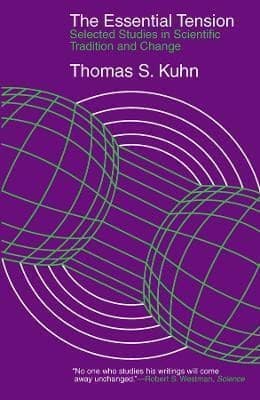
The Essential Tension: Selected Studies in Scientific Tradition and Change
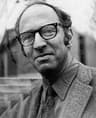
The central thesis of The Essential Tension is not simply that science alternates between tradition and revolution, but that the two are productively interdependent: the 'essential tension' of the title names the paradox that normal science—a deeply conservative, paradigm-bound puzzle-solving activity—is the necessary precondition for the fundamental innovations that periodically overturn a paradigm. Kuhn argues that a scientific community without dogmatic commitment to a tradition would lack the focused, esoteric problem-solving that generates the anomalies and precision crises from which novelty emerges. The book reframes scientific change as a tension internal to research practice, not a contest between reason and prejudice.
Key Insights
✦What exactly is the 'essential tension' Kuhn identifies, and what does it reject?
The 'essential tension' is the double bind of the successful scientist, who must be simultaneously a committed traditionalist and a potential iconoclast. Kuhn rejects the commonplace view that creativity in science consists in eliminating prejudice and cultivating pure open-mindedness. Instead, he argues that the convergent, authority-bound training of normal science is what equips researchers to recognise and exploit anomalies. The tension is 'essential' because no algorithm can decide in advance when to conserve a paradigm and when to abandon it; scientific communities must cultivate both dispositions at once. This reframing moves the debate away from 'dogma versus criticism' toward a structural account of how traditions generate their own transformation.
✦What did Kuhn mean by the 'historiographic revolution' in the study of science?
Kuhn describes a historiographic revolution inaugurated by historians such as Alexandre Koyré, who insisted on reading past scientific texts in their own terms rather than as anticipations of present-day science. This anti-Whiggish approach, which Kuhn associates with recapturing 'out-of-date ways of reading out-of-date texts', treats an ancient writer's view as 'sound in its own terms' rather than as a catalogue of errors. For Kuhn, this historiographic shift is not merely a methodological preference; it is the empirical foundation for the philosophy of science he defends, because it reveals that scientific rationality is historically situated without collapsing into relativism. The revolution is therefore both a claim about how to write history and a claim about the nature of scientific development.
✦How does The Essential Tension relate to The Structure of Scientific Revolutions—is it a sequel, a correction, or a defence?
The Essential Tension is best understood as a retrospective and defensive elaboration of the 1962 book, not a sequel with a new thesis. Most of its fourteen essays were previously published between 1959 and 1976, and Kuhn adds two previously unpublished pieces plus a partly autobiographical preface. Across the collection he refines the vocabulary of Structure—acknowledging, for instance, that 'paradigm' had generated confusion and proposing 'disciplinary matrix' as a replacement in some contexts—and responds directly to critics who charged him with irrationalism and relativism. The volume thus functions as a companion that clarifies the earlier work's commitments while extending its historiographic programme into the history–philosophy of science relationship.
✦Who were the main critics Kuhn was answering in this collection, and what were their objections?
The collection responds to a decade of criticism that followed Structure, including Dudley Shapere's charge that Kuhn's account was empirically inadequate to how science is actually practised, and the broader allegation—associated with Karl Popper and his followers—that Kuhn's normal science amounted to indoctrination. In the Preface and several essays Kuhn pushes back against the reading of his work as a defence of mob psychology or epistemic relativism. He concedes, for example, that Structure gave little attention to socio-economic influences on science, but he insists that his position is a form of group-level, not individual-level, relativism. The volume also engages the Popper–Kuhn debate by insisting that falsificationism and paradigm-based research are not wholly antithetical, even if they diverge sharply over the character of criticism.
✦Is this a unified book or simply a miscellany of occasional papers, and how should a reader approach it?
The Essential Tension is explicitly framed as 'selected studies' rather than a systematic treatise. The fourteen essays are divided into 'Historiographic Studies' and 'Metahistorical Studies', and the Preface supplies a partly autobiographical narrative of Kuhn's intellectual development. Some pieces are closely argued historical case studies—for example, on concepts of cause in physics and on energy conservation as a case of simultaneous discovery—while others are programmatic statements about the relations between the history and the philosophy of science. A reader seeking the book's central argument should begin with the title essay and the Preface; a reader interested in Kuhn's historiography should begin with the essays on Koyré and on mathematical versus experimental traditions. The volume rewards selective, essay-by-essay reading rather than linear consumption.
✦What specific concept from this book has had the most lasting influence beyond philosophy of science?
The 'essential tension' itself has travelled beyond philosophy of science into science education, research management, and innovation studies. In the 1959 essay that anchors the volume, Kuhn describes the successful scientist as someone who must display 'the characteristics of the traditionalist and of the iconoclast' at once. This formulation has been taken up by scholars studying interdisciplinary research, where the tension between established disciplinary norms and novel cross-boundary work is treated as a structural feature rather than a temporary obstacle. The concept has also been used to critique educational systems that overemphasise either convergent, textbook-based training or unconstrained divergent thinking, with Kuhn's argument implying that neither pole alone can sustain a healthy research culture.
Wealthy Psyche is an intellectual archive. We do not host, distribute, or sell book copies — physical or digital. We provide structured knowledge to help you think better, faster.