



Three Dialogues on Knowledge
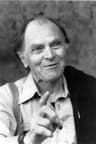
Feyerabend's three dialogues argue that knowledge—whether common sense or scientific—cannot be captured by a single rational methodology, and that the authority of science rests on power rather than superior method. The book's distinctive mechanism is the revival of the Socratic dialogue form, using irony, voice, and distance to stage confrontations between Feyerabend's views and those of rationalism, Platonism, and his own Popperian past. The dialogues examine relativism, the ignorance of scientists, and the nature of being, arguing that a free inquiry requires the proliferation of traditions, not their subjection to one standard.
Key Insights
✦What are the three dialogues, and how do their dates of composition shape the book's argument?
The volume comprises three dialogues written at different times: the First Dialogue (1990), a Platonic exercise; the Second Dialogue (1976), a long polemic; and the Third Dialogue (1989), an apologia and distancing from Popper . The CHOICE review notes that the 1976 piece, the oldest, is the least advertised in the postscript because it mostly reiterates the trivialisation of scientific rationalism already made famous by Against Method . The 1989 piece contains a vigorous distancing of Feyerabend from Karl Popper, long considered his progenitor . The chronological spread allows readers to see Feyerabend's development and his retrospective framing of his own career.
✦Why does Feyerabend choose the dialogue form, and what does it accomplish that a treatise could not?
The dialogue form is central to Feyerabend's philosophical strategy. The publisher's description notes that he uses literary strategies—irony, voice, and distance—to make philosophical points about the epistemic, existential, and political aspects of common sense and scientific knowledge . The dialogue allows Feyerabend to stage positions rather than assert them, to give rationalism its strongest voice before subverting it, and to avoid the dogmatic monologue that he associates with systematic philosophy. The CHOICE review observes that the most recent piece, a modern review of Plato's Phaedrus, is 'a model of a modern review' and represents Feyerabend's own recent classes in philosophy . The form enacts the pluralism the content defends.
✦How does the Third Dialogue distance Feyerabend from Popper, and why does that matter?
The CHOICE review identifies the 1989 piece as containing 'a vigorous distancing of Feyerabend and Karl Popper, long considered his progenitor' . Feyerabend had been associated with Popper's school, and his early work was shaped by Popperian falsificationism. But by 1989 he had long since broken with Popper, and the Third Dialogue makes that break explicit. The distancing matters because it clarifies that Feyerabend's critique of rationalism is not a development of Popper's project but a rejection of its fundamental premises. Where Popper sought a rational method of criticism, Feyerabend denies that any such method exists. The dialogue form allows him to stage this break as a conversation rather than a polemical assertion.
✦What does the book say about the authority of science and the ignorance of scientists?
The publisher's description lists the book's themes as including 'the authority of science' and 'the ignorance of scientists' . Feyerabend's argument, consistent with his earlier work, is that scientific authority is not grounded in a superior method or in the special insight of scientists. Scientists are often ignorant of the philosophical and historical presuppositions of their own practice, and the authority granted to them is a social and political phenomenon rather than an epistemological one. The dialogues stage this critique through conversations that reveal the gaps between scientific self-image and scientific practice. The point is not to denigrate science but to demystify its authority, opening space for other traditions to be heard on equal terms.
✦How was the book received, and what did reviewers identify as its strengths and weaknesses?
The CHOICE review, reprinted in library catalogues, describes the volume as 'a very stimulating icebreaker for any undergraduate class in classical philosophy, epistemology, or the philosophy of science' . The reviewer, P. D. Skiff of Bard College, found the most recent piece 'charming, but a bit naive,' noting that 'the defenses of rationalism are less subtle than Plato's and the subversion of them are less subtle than Feyerabend's' . The overall assessment is that the book is recommended as an accessible and provocative introduction, though it does not represent Feyerabend at his most rigorous. A Google Scholar citation notes that Three Dialogues was 'the last of his books that he saw into print' and that it 'has received the attention it deserved' .
✦Is this book a good introduction to Feyerabend's philosophy, or does it presuppose prior knowledge?
It can serve as an introduction, but with qualifications. The dialogue form is more accessible than the dense historical argumentation of Against Method, and the CHOICE review recommends it for undergraduate classes . However, the Second Dialogue (1976) assumes familiarity with the debates that Against Method had already made famous, and the Third Dialogue's distancing from Popper presupposes some knowledge of the Popperian framework. Readers entirely new to Feyerabend might do better to start with Against Method or with a secondary overview. Three Dialogues is best read as a companion and a retrospective, offering a distilled and dramatic presentation of themes developed elsewhere. It is a stimulating entry point, not a systematic foundation.
Wealthy Psyche is an intellectual archive. We do not host, distribute, or sell book copies — physical or digital. We provide structured knowledge to help you think better, faster.