



A Defence of Usury
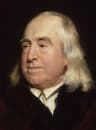
Bentham's argument is not that usury is good but that legal ceilings on interest—specifically Adam Smith's defended 5% cap—are an illegitimate restraint on private judgment. The distinctive mechanism is a proto-liberal extension of utilitarian reasoning: the legislator cannot know the exigencies or projects of individual borrowers and lenders, so prohibiting mutually advantageous bargains at higher rates protects no one while stifling inventive industry. The book's final letter directly challenges Smith's inconsistency, charging that the apostle of laissez-faire abandoned his own principle when it came to money.
Key Insights
✦What is the central claim of A Defence of Usury, and what does it reject?
Bentham argues that legal limits on the rate of interest are an unjustified restraint on the freedom of private individuals to make their own financial bargains. He rejects the paternalistic premise that legislators can know better than borrowers and lenders what terms suit their circumstances. The book's target is not the morality of high interest as such but the presumption that the state should prohibit mutually agreeable transactions simply because the rate exceeds a statutory ceiling. Bentham's argument is distinctly utilitarian in form: the harms attributed to usury either do not exist or are outweighed by the benefits of allowing capital to flow to those who value it most, including projectors and innovators whom Smith had dismissed.
✦How does A Defence of Usury relate to Adam Smith's Wealth of Nations?
The final letter is explicitly addressed to Adam Smith and responds directly to Smith's defense of a 5% legal maximum in The Wealth of Nations. Bentham charges Smith with inconsistency: the theorist of free exchange who opposed so many restraints nevertheless endorsed a cap on interest. Where Smith worried that high rates would channel capital to 'prodigals and projectors,' Bentham defends the projector as a driver of improvement and argues that Smith's own principles should have led him to reject the cap. David Alff has recently argued that Bentham's defense of speculative enterprise was informed by his experience of the Gordon Riots and his Russian sojourn, positioning the book as a resuscitation of early modern debates about free-lance enterprise .
✦What specific argument does Bentham make about the legislator's knowledge?
Bentham's core epistemic argument is that the legislator 'knows nothing, nor can know any thing' of the particular circumstances that make a loan advantageous or disadvantageous to the parties involved . A borrower may need funds to avert a loss or seize a gain that exceeds the statutory interest rate; in such cases, the bargain benefits both parties, and the law prevents it purely on the basis of a general presumption. Bentham insists that the individual is ordinarily the best judge of his own interest, and that the folly of forcing advice upon others is at least as common as the folly of refusing it. This argument extends his broader utilitarian critique of legal fictions and unnecessary restraints into the domain of economic regulation.
✦Is the book a defense of usury in the moral sense?
No, and this is a persistent misreading. Bentham is not arguing that charging high interest is morally admirable or that usurers deserve praise. His target is the legal prohibition, not the moral status of the practice. He treats the word 'usury' as carrying a prejudice that obscures the question: what reason is there for forbidding a transaction that both parties believe serves their interests? The book's title is polemical, not celebratory. Bentham's concern is liberty and utility, not the vindication of moneylenders. Frederick Rosen has suggested that a title more faithful to the book's spirit would be 'A Defence of Liberty,' since the argument is fundamentally about the limits of legislative interference rather than the merits of high-interest lending .
✦How has the argument held up since its publication?
The specific target—usury laws with fixed statutory ceilings—has been largely dismantled in modern economies, though interest-rate regulation persists in various forms, including caps on payday lending and consumer credit. Bentham's broader argument for presumptive liberty in financial contracts remains a foundational text for classical liberal and libertarian positions. Critics of deregulation have argued that information asymmetries and predatory lending practices complicate Bentham's assumption that borrowers are the best judges of their own interest—a point that modern behavioral economics has pressed with some force. The book is now read less as a policy manual than as an early and influential statement of the case against paternalistic economic regulation, and as a revealing episode in the intellectual relationship between Bentham and Smith.
✦What is the publication history of the Defence, and does it affect how we read the text?
The Defence first appeared in 1787, published in London by T. Payne and Son . It was written as a series of letters to Bentham's friend George Wilson, composed largely during Bentham's stay in Krichev in White Russia, with a final letter added for Smith. A Dublin edition followed in 1788, and further editions appeared in 1790, 1796, and 1818 . The Cambridge University Press reissue reproduces the 1788 Dublin text rather than the first London edition . This matters for scholarly citation: the Dublin text may differ from the London original in minor ways, and readers should check which edition a given citation follows. The letters format also shapes the reading experience—the argument unfolds conversationally rather than as a systematic treatise, which can make its polemical force more apparent than its theoretical structure.
Wealthy Psyche is an intellectual archive. We do not host, distribute, or sell book copies — physical or digital. We provide structured knowledge to help you think better, faster.