



Panopticon; or, The Inspection-House
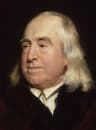
Bentham's proposal is not merely a prison design but a general architectural principle: a central inspection lodge from which a supervisor can see every inmate at any moment without being seen, while inmates know they may be watched. The mechanism is psychological rather than physical—the inmate internalizes the possibility of observation and becomes his own guard. Bentham extends this 'simple idea in architecture' to workhouses, factories, madhouses, hospitals, and schools, arguing that visibility and economy together can reform conduct without coercion. The prison is the model, not the whole.
Key Insights
✦What is the central idea of the Panopticon, and what does it reject?
The central idea is that architecture can be used as a moral and economic instrument: a circular building with a central inspection lodge allows a single supervisor to observe all inmates without being seen, and the inmates, aware of this possibility, regulate their own conduct. Bentham rejects the assumption that reform requires either brutal coercion or the expensive, inefficient prisons of his day. His target is the waste and cruelty of existing penal institutions, which he argues fail to reform because they neither secure constant inspection nor align the keeper's interest with the prisoner's improvement. The Panopticon is a utilitarian solution: it seeks the greatest happiness by making discipline cheap, constant, and self-enforcing.
✦How does Foucault's use of the Panopticon differ from Bentham's own project?
Foucault, in Discipline and Punish, treats the Panopticon as the 'diagram' of a modern disciplinary society, a mechanism of power that produces docile bodies through constant surveillance. Many Bentham scholars have argued that this is a misinterpretation: Foucault abstracts the building from Bentham's utilitarian framework and from the reformist intentions that animated it. As one recent study puts it, Foucault's reading 'deviated from Bentham's original intellectual trajectory and textual foundations' . The dispute is not merely antiquarian. Melossi has argued that Foucault 'hypostatized' Bentham's utopia into a universal metaphor, obscuring the material conditions of class struggle that produced such institutions . Readers approaching the Panopticon through Foucault should return to Bentham's text to see what the design was actually for.
✦Is the Panopticon only about prisons?
No, and this is a common oversimplification. Bentham's subtitle lists penitentiary houses, prisons, houses of industry, workhouses, poorhouses, manufactories, madhouses, hospitals, and schools. The prison is the most developed application, but the principle is general: any establishment where persons are to be kept under inspection can use it. Recent scholarship has identified four distinct panopticons in Bentham's corpus: the prison panopticon, the pauper panopticon (for industry houses), the chrestomatic panopticon (a day school), and the constitutional panopticon, in which citizens watch their governors rather than the reverse . The last of these is especially important: it shows that the inspection principle was not inherently disciplinary in Foucault's sense, and could be turned against state power.
✦What is the publication history of the Panopticon letters?
Bentham wrote the letters in 1787 at Krichev in White Russia, addressing them to his friend George Wilson in England. They were published in 1791 by T. Payne in London, as a three-volume work: the first volume containing the original letters, and the second and third comprising the 'Postscript' in two parts . The Postscript is not incidental: it is where Bentham works out the architectural and managerial details, including materials for construction and the full plan of management . A Dublin edition appeared in the same year . The work was never fully realized as a built prison, despite Bentham's decades of lobbying; the Millbank Penitentiary, eventually built on a different plan, became a source of bitter disappointment to him.
✦How has the Panopticon's argument held up since its publication?
The specific architectural proposal was never adopted in the form Bentham intended, and the prison he campaigned for was not built. But the inspection principle has proven extraordinarily influential, though largely through Foucault's mediation rather than Bentham's own text. Contemporary surveillance studies, organization theory, and digital privacy debates all draw on the figure of the Panopticon, often without distinguishing Bentham's utilitarian reformism from Foucault's diagnosis of disciplinary power. Critics of the Foucauldian appropriation, including Melossi and Fine, argue that the metaphor has been detached from the material and economic conditions that gave it force . The Panopticon is now less a blueprint than a contested emblem: read through Bentham, it is a rationalist reform project; read through Foucault, a vision of modern power at its most efficient.
✦What does the Panopticon reveal about Bentham's ethics?
It reveals that Bentham's utilitarianism is not merely a doctrine for judging actions but a design philosophy for institutions. The Panopticon is the principle of utility applied to architecture: the goal is to produce reform at the lowest cost in suffering and money, and the means is a manipulation of the inmate's own awareness. This has struck many readers as manipulative or sinister, but Bentham saw it as humane relative to the alternatives—transportation, capital punishment, or the filthy, chaotic gaols of the eighteenth century. The Panopticon also exposes a tension in utilitarian ethics between reform and control: the same principle that seeks to reduce pain can justify an apparatus of constant observation. That tension, rather than any simple celebration or condemnation, is what makes the book worth reading.
Wealthy Psyche is an intellectual archive. We do not host, distribute, or sell book copies — physical or digital. We provide structured knowledge to help you think better, faster.