



On Bentham
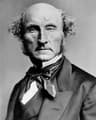
Mill's essay is not a summary of Bentham's utilitarianism but a dissection of a cast of mind. Its central thesis is that Bentham's method—the habit of breaking every question into its component parts—was both his greatness and his blindness. Bentham could analyze institutions and laws with unmatched precision, yet the same method left him constitutionally incapable of grasping the value of poetry, imagination, or the cultivation of character. Mill argues that a philosophy built solely on detail without the counterweight of imagination produces a partial human being and a partial ethics.
Key Insights
✦What is the central claim of On Bentham, and what does it reject?
Mill argues that Bentham's intellectual method—treating wholes by separating them into parts and breaking every question into pieces—was the source of both his extraordinary power and his equally extraordinary limitations. The essay rejects the assumption that this method suffices for ethics as a whole. Bentham could dissect legal codes and institutional abuses with unmatched rigor, but Mill insists the same habit of mind left him incapable of appreciating poetry, imaginative literature, or the subtle formation of character. The essay is therefore not a rejection of utilitarianism but a critique of a single-minded version of it that mistakes analysis for wisdom.
✦What specific concept or framework did Mill attribute to Bentham here?
Mill identifies what he calls the 'method of detail' as Bentham's defining intellectual contribution. He describes it as the practice of resolving abstractions into things, classes into individuals, and wholes into their component parts before attempting any solution. Mill credits Bentham with applying this method more consistently than anyone before him, which explains his interminable classifications and his legal reforms. The concept is important because Mill uses it to explain both why Bentham succeeded where others failed and why his philosophy remained incomplete. The method of detail, in Mill's account, is a necessary tool but a dangerous master.
✦How does Mill's essay relate to his later Utilitarianism?
On Bentham anticipates the central move Mill would later make in Utilitarianism: the insistence that not all pleasures are equal in kind, and that a purely quantitative hedonism cannot capture what makes human flourishing distinct. In the essay Mill criticizes Bentham for failing to appreciate the higher pleasures associated with imagination and culture. When Mill later introduced the distinction between higher and lower pleasures and the criterion of the competent judge, he was developing a line of criticism already visible in his 1838 essay. On Bentham is thus a crucial precursor to Mill's mature attempt to revise utilitarianism without abandoning it.
✦Is this the same as Mill's earlier 'Remarks on Bentham's Philosophy'?
No, they are distinct texts with different occasions. Mill first wrote a critical account of Bentham's philosophy in 1833 at the request of Edward Lytton Bulwer, published as an appendix to Bulwer's England and the English. The essay known simply as On Bentham or the Essay on Bentham appeared in August 1838 in the London and Westminster Review as a review of Bowring's edition of Bentham's works. Mill later revised it for inclusion in his Dissertations and Discussions. The 1838 essay is the fuller and more famous treatment, and it is the one usually meant when scholars refer to Mill's essay on Bentham.
✦How has On Bentham been misread or oversimplified?
A common misreading treats the essay as a straightforward attack on utilitarianism or as evidence that Mill abandoned Bentham's project. In fact, Mill begins by calling Bentham one of the 'two great seminal minds' of early nineteenth-century England and credits him with genuine philosophical achievements. The critique is internal and reformist: Mill wants to supplement Bentham's method with the imaginative and cultural sensibilities he associated with Coleridge. Reading On Bentham as a rejection rather than a corrective obscures Mill's continued commitment to utilitarian ethics throughout his life. The essay is better understood as an argument for intellectual balance than as a conversion narrative.
Wealthy Psyche is an intellectual archive. We do not host, distribute, or sell book copies — physical or digital. We provide structured knowledge to help you think better, faster.