



A System of Logic, Ratiocinative and Inductive: Being a Connected View of the Principles of Evidence, and the Methods of Scientific Investigation
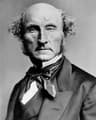
Mill's System of Logic is an ambitious attempt to ground all knowledge in induction and to reduce inductive reasoning to strict rules. Its central claim is that deduction is not a genuine source of new knowledge: the syllogism merely interprets inductions already made from particular observations. Mill argues that all inference runs from particular to particular, and he codifies four methods of experimental inquiry—agreement, difference, residues, and concomitant variation—for identifying causal laws. The work extends this empiricist program to the moral sciences, arguing that human character and society are proper objects of scientific investigation.
Key Insights
✦What is the central claim of A System of Logic, and what does it reject?
Mill argues that induction is the only form of inference capable of yielding genuinely new knowledge, and that deduction—the syllogism—adds nothing to what has already been established by induction from particulars. The book rejects the intuitionist position that logical and mathematical truths are known a priori, treating even the law of non-contradiction as a highly confirmed empirical generalization. Mill also rejects the notion that the moral sciences must adopt a method different in kind from the natural sciences. His target throughout is what he calls the 'intuitive school' in philosophy, which he associates with Kant and with conservative resistance to empiricist social reform [citation:7][citation:9].
✦What are Mill's four methods of experimental inquiry, and where are they used today?
Book III, Chapter 8 of the System presents the methods of agreement, difference, residues, and concomitant variation as canons for isolating causal relationships from observed phenomena. The method of agreement identifies a circumstance common to all instances of an effect; the method of difference compares cases where the effect occurs with cases where it does not; residues subtracts known causes to isolate a remainder; concomitant variation tracks correlated changes. These canons became foundational in nineteenth-century scientific methodology and remain standard in introductory treatments of causal inference and experimental design, even though later statistics and counterfactual theories of causation have refined or replaced them [citation:7].
✦How did William Whewell's criticisms shape the book's reception and later editions?
Whewell, the Cambridge philosopher of science and author of the History of the Inductive Sciences (1837), was Mill's most formidable contemporary critic. He attacked Mill's claim that all knowledge derives from induction by arguing that scientific discovery requires active mental concepts and that necessary truths cannot be reduced to empirical generalizations. Mill took these objections seriously and revised the Logic through eight editions during his lifetime, using prefaces and textual changes to respond to Whewell and other critics [citation:2][citation:10]. The Whewell–Mill debate became a canonical episode in the history of the philosophy of science, and modern scholarship continues to examine its implications for inductivism and the normativity of scientific practice [citation:11].
✦How does the System of Logic relate to Mill's ethical and political works?
The Logic supplies the epistemological foundation for Mill's later ethics and politics. Book VI, 'On the Logic of the Moral Sciences,' argues that human character and social phenomena are subject to causal laws and can be studied scientifically, a claim that underwrites the reformist ambitions of On Liberty and Considerations on Representative Government. Mill's ethical naturalism in Utilitarianism—the attempt to ground moral judgments in observable consequences—presupposes the inductive method defended in the Logic. Frederick Rosen has argued that the Logic and the Principles of Political Economy (1848) are the two major works from which Mill's more widely read essays on liberty and utility developed [citation:6].
✦Is the System of Logic still defensible given later developments in logic and philosophy of science?
Many of Mill's technical positions have been superseded. Frege and Russell transformed formal logic in ways that rendered Mill's treatment of the syllogism and of mathematics obsolete, and twentieth-century philosophy of science largely abandoned his strict inductivism in favor of hypothetico-deductive and Bayesian models. Yet the Internet Encyclopedia of Philosophy notes that Mill's basic empiricist vision remains a live option, citing W.V.O. Quine's naturalized epistemology as a modern descendant [citation:7]. Mill's insistence that logical and mathematical truths are continuous with empirical knowledge, and his concern with the normative standards of scientific practice, continue to attract scholarly attention even where his specific canons are no longer accepted .
✦Why does Mill include a book on fallacies, and what does it contribute to his argument?
Book V, 'On Fallacies,' serves a polemical function within the Logic's broader empiricist program. Mill classifies errors of reasoning into categories—fallacies of simple inspection, of observation, of generalization, of ratiocination, and of confusion—and argues that most philosophical error arises from violating inductive method rather than from formal invalidity. The book is continuous with Mill's political and religious writings: he treats intuitionist metaphysics, a priori ethics, and theological reasoning as instances of the same cognitive failure to attend to evidence. The fallacy book thus converts what might have been a technical treatise into an argument for intellectual reform, aligning logical rigor with the cause of social and political progress .
Wealthy Psyche is an intellectual archive. We do not host, distribute, or sell book copies — physical or digital. We provide structured knowledge to help you think better, faster.