



The Book of Fallacies
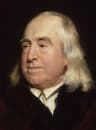
Bentham's project is a taxonomy of political deception: the rhetorical tricks by which those with an interest in abuse defend it against reform. The distinctive mechanism is not formal logic but interested motive—fallacies are catalogued by the legislative purposes they serve, such as the 'fallacy of the wisdom of ancestors' or the 'fallacy of the fear of innovation.' The book is a practical manual for the reforming legislator, teaching him to recognize the verbal screens behind which corrupt interests hide. It was assembled posthumously from Bentham's unfinished papers, a fact that shapes its structure and reception.
Key Insights
✦What is the central thesis of The Book of Fallacies, and what does it reject?
The central thesis is that political fallacies are not innocent errors of reasoning but interested arguments deployed by those who benefit from abuse to prevent reform. Bentham rejects the treatment of such arguments as merely intellectual mistakes to be corrected by better logic. His taxonomy is organized around the motive behind the fallacy, not its formal structure: the 'fallacy of the wisdom of ancestors' serves whoever profits from inherited arrangements; the 'fallacy of the fear of innovation' serves whoever dreads disturbance of the status quo. The book is thus an applied extension of the principle of utility, turning the utilitarian standard against the rhetorical defenses of established power. As the Westminster Review noted in 1824, the work's object is to classify and expose the sophisms by which a conspiracy of private interests against the public good deludes the public into acquiescence .
✦What specific concept or framework does the book introduce, and where is it used today?
Bentham's framework is a motive-based taxonomy of political fallacies: each fallacy is identified by the legislative purpose it serves and the class interest it protects. This is distinct from the formal-logical approach of Aristotle or the informal fallacies of later textbooks. The book names specific fallacies still recognizable in political discourse, including the 'fallacy of the wisdom of ancestors,' the 'fallacy of the fear of innovation,' and the 'fallacy of the opponent's personal interest.' Contemporary argumentation theory and political rhetoric occasionally cite Bentham's catalogue as an early attempt to situate fallacies in institutional contexts rather than abstract reasoning. However, the book has not been absorbed into the standard canon of fallacy studies, and its influence on modern argumentation theory remains marginal compared to its historical interest as a document of Benthamite reform.
✦How does The Book of Fallacies relate to Bentham's critique of natural rights?
The relationship is often misunderstood. Bentham's most famous attack on natural rights, 'Anarchical Fallacies' (written around 1795), was published in French in 1816 in Étienne Dumont's edition and later in English in Bowring's Works . The Book of Fallacies (1824) is a separate work with a different scope: it catalogues the fallacies of legislative debate, not the metaphysics of natural rights. Notably, the term 'anarchical fallacy' does not appear in The Book of Fallacies at all . Readers who approach the later book expecting a continuation of the natural-rights polemic will find instead a practical manual for parliamentary reform. The two works share a utilitarian animus against obfuscation, but the 1824 volume is organized around the defense of abuse, not the critique of revolutionary doctrine.
✦What is the textual history of The Book of Fallacies, and does it affect interpretation?
The book was not completed by Bentham. It was assembled from his unfinished papers and published in 1824 by J. and H. L. Hunt, edited by Peregrine Bingham, and attributed on the title page to 'a friend' . This posthumous, editorial mediation matters: the order and selection of fallacies reflect Bingham's judgment, not Bentham's final intentions. A 2015 Clarendon Press edition, edited by Philip Schofield, claims to be the first to follow Bentham's own structure for the work and to include a great deal of material omitted from the 1824 edition . Scholars should therefore distinguish between the 1824 Bingham text, which shaped nineteenth-century reception, and the reconstructed Clarendon edition, which aims to present Bentham's design more faithfully.
✦How does the book differ from William Gerard Hamilton's Parliamentary Logick?
Hamilton's Parliamentary Logick (first published 1808) is a collection of maxims for succeeding in parliamentary debate, often cynical in tone and concerned with managing an audience rather than exposing bad argument. Bentham's Book of Fallacies treats Hamilton's maxims as a target: the Westminster Review's 1824 notice observes that Bentham examined the fallacies prevalent in the British parliament, and that Parliamentary Logick had not obtained the notoriety its importance deserved . Where Hamilton offers tactical advice to the debater, Bentham offers a diagnostic manual to the reformer. The relationship is one of opposition: Bentham's catalogue is designed to disarm precisely the kind of rhetorical facility that Hamilton's maxims cultivate. The contrast illuminates Bentham's conviction that political speech should serve the greatest happiness, not the triumph of the speaker.
✦Is the book a work of ethics or of rhetoric?
It is both, but its ethical purpose is primary. The fallacies are catalogued not for their logical form but for their moral and political function: they are instruments by which a minority with an interest in abuse maintains its advantage against the general happiness. Bentham's ethics supplies the standard—the principle of utility—against which the fallacies are measured; his rhetoric supplies the diagnostic categories. The book belongs to the utilitarian tradition of exposure literature, in which clear speech is a moral duty because obscurity serves corrupt interests. This distinguishes it from classical rhetoric, which aims to persuade, and from formal logic, which aims to validate inference. The Book of Fallacies aims to inoculate the legislator and the public against deception, and its ethical commitments are inseparable from its rhetorical analysis.
Wealthy Psyche is an intellectual archive. We do not host, distribute, or sell book copies — physical or digital. We provide structured knowledge to help you think better, faster.