



On Coleridge
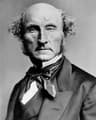
Mill's essay on Coleridge is not a conversion to Romanticism but a calculated argument for intellectual eclecticism. He positions Coleridge as the necessary counterweight to Bentham: where Bentham missed the truths embedded in tradition, Coleridge missed truths that lay outside it. Mill's central claim is that a healthy body politic requires 'antagonist modes of thought,' and that Liberals who dismiss conservative philosophy impoverish their own understanding. The essay defends Coleridge not for his transcendentalism but for his capacity to see into the complexities of feeling and intellect that Bentham's short and easy analysis could not reach.
Key Insights
✦What is the central claim of On Coleridge, and what does it reject?
Mill argues that Coleridge represents one of the two 'seminal minds' of early nineteenth-century England, and that his conservative philosophy contains truths that Liberals systematically overlook. The essay rejects the assumption that a Liberal can afford to dismiss Coleridge as merely reactionary. Mill's argument is tactical and epistemological: Liberals need to understand what tradition preserves, and Coleridge is the thinker who has articulated that understanding most powerfully. He does not endorse Coleridge's transcendentalism or his Tory politics wholesale, but insists that engaging with them strengthens rather than weakens liberal thought. The essay thus rejects intellectual complacency in the service of liberal principles.
✦What does Mill mean by 'antagonist modes of thought,' and why does it matter?
Mill introduces the phrase to describe the necessary tension between opposing philosophical schools. He argues that a clear insight into this necessity is the only rational basis of philosophical tolerance, and that liberality in matters of opinion becomes mere indifference without it. The concept matters because it transforms tolerance from a passive virtue into an active requirement: one must seek out opposing views not out of politeness but because truth is best approached through collision rather than consensus. In the essay, Bentham and Coleridge embody these antagonist modes: Bentham sees the truths of reform, Coleridge sees the truths of continuity and tradition. Mill's eclecticism is an attempt to hold both without collapsing into either.
✦How did Mill's contemporaries react to the essay, and why did it cause friction?
The essay caused a temporary alienation between Mill and his old Radical associates, who saw his sympathetic treatment of a Tory and religious philosopher as a betrayal of utilitarian principles [citation:14]. Mill himself later reflected in his Autobiography that he might have erred by giving undue prominence to the favourable side of Coleridge, just as he had given undue prominence to the unfavourable side of Bentham, and that the impetus of detaching himself from Benthamism may have carried him too far in appearance [citation:8]. He defended the essay on the ground that he was writing for Radicals and Liberals, and it was his business to dwell on what they most needed to learn from a different school [citation:8].
✦How does On Coleridge relate to Mill's earlier essay On Bentham?
The two essays form a deliberate pair, published in 1838 and 1840 respectively in the London and Westminster Review [citation:6]. In On Bentham, Mill criticizes Bentham for missing the truths embedded in traditional opinions; in On Coleridge, he criticizes Coleridge for missing the truths that lie outside tradition and at variance with it [citation:11]. Mill's Autobiography describes the Coleridge essay as an attempt to characterize the European reaction against the negative philosophy of the eighteenth century, and he acknowledges that in both essays the pendulum may have swung too far in reaction against his inherited Benthamism [citation:8]. Together they represent Mill's attempt to synthesize Enlightenment naturalism and Romantic historicism [citation:1].
✦Did Mill fully understand Coleridge's philosophy, or did his empiricism limit his reading?
Scholarship suggests Mill's understanding was partial. Keigaku Kashiwagi argues that Mill's empiricist approach led him to see Coleridge's philosophy as deriving from Kant, which he called the 'Germano-Coleridgean doctrine,' and that in doing so Mill may have failed to grasp the seminal core of Coleridge's romanticism [citation:3]. Mill's engagement was primarily with Coleridge's political and social thought rather than his poetics or metaphysics. He had deep sympathy for Coleridge's 'speculative Toryism' and its progressive elements, but Kashiwagi notes that Mill did not penetrate deeply enough into the politics of the poet, which rested on a view of poetics and philosophy partly historical and partly biblical [citation:3].
✦How does the essay's argument connect to Mill's later work, especially On Liberty?
The essay's defense of antagonist modes of thought anticipates the central argument of On Liberty (1859). Kashiwagi notes that Mill carried the same eclectic philosophical attitude forward twenty years later when he wrote On Liberty [citation:3]. The ideal of 'many-sidedness' that Mill develops in the Coleridge essay—the corrective to the one-sidedness he attributed to Bentham—becomes a precondition for the discovery of truth in On Liberty's defense of free expression. The essay also establishes the template for Mill's later practice of engaging seriously with positions he does not fully adopt, treating them as contributors to a larger truth rather than as errors to be dismissed.
Wealthy Psyche is an intellectual archive. We do not host, distribute, or sell book copies — physical or digital. We provide structured knowledge to help you think better, faster.