



Three Essays on Religion: Nature, The Utility of Religion, and Theism
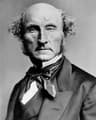
Published posthumously, these essays argue that nature's violence and capriciousness make it morally unfit as a guide for ethics, that supernatural religion is declining in utility as a moral foundation, and that a 'Religion of Humanity'—grounded in human improvement rather than divine command—can supply what is needed. The collection's central contribution is Mill's attempt to subordinate religion to utilitarian calculation: each form of belief is assessed by its tendency to produce human well-being, not by its truth alone. The essays are not a system but a series of calculated interventions in Victorian debates over faith's future.
Key Insights
✦What is the central argument of Three Essays on Religion, and what does it reject?
The collection advances a single utilitarian method applied to three religious questions. 'Nature' rejects the idea that nature provides a moral standard, arguing that natural processes are violent and capricious and that ethical conduct consists precisely in opposing nature's course. 'Utility of Religion' argues that supernatural religion's social utility is declining as human improvement becomes possible through secular means, while 'Theism' examines the evidence for design and concludes that any creator of this world cannot be both omnipotent and perfectly good. What the essays reject collectively is the assumption that religious belief is exempt from utilitarian assessment. Mill treats each form of faith as a practice to be evaluated by its consequences for human well-being.
✦Why did Helen Taylor publish these essays, and what does her editorial role reveal?
Mill died in May 1873, leaving the essays in varying states of readiness. His stepdaughter Helen Taylor assembled and published them in 1874 with Longmans, Green, Reader, and Dyer [citation:1][citation:2]. Her introductory note dates the composition: 'Nature' and 'Utility of Religion' were written between 1850 and 1858, while 'Theism' was written between 1868 and 1870 [citation:2]. Taylor states that Mill intended to publish 'Nature' in 1873 but did not intend the other two for publication at that time. She nonetheless presents them as 'fundamentally consistent' [citation:2]. Her editorial mediation is significant: she made the decision to bring together texts written decades apart and of unequal finish, shaping how Mill's religious views would be received.
✦How did Mill's contemporaries and followers respond to the collection?
Reception was sharply divided, and the divide ran through Mill's own circle. John Morley, a follower who credited Mill's On Liberty with his loss of faith, received the essays with deep disappointment, particularly 'Theism' [citation:4]. On the opposing side, James Fitzjames Stephen mounted a stringent intellectual challenge to Mill's religious views in the same period [citation:4]. The diversity of published responses—from empiricists to idealists, Anglicans to Unitarians—was remarkable enough that Alan P. F. Sell later collected them in Mill and Religion: Contemporary Responses to Three Essays on Religion (1997), noting that the writers were united only in the conviction that what Mill had written mattered [citation:5]. The collection thus became a flashpoint in Victorian debates over secularism and belief.
✦What is the 'Religion of Humanity,' and how does it relate to Auguste Comte's version?
Mill's 'Religion of Humanity' is a non-supernatural moral framework that treats the improvement of human life as the proper object of reverence and commitment, without belief in God or an afterlife [citation:2][citation:3]. It draws on Comte's positivist religion but differs from it significantly. Mill had already criticized Comte's system in Auguste Comte and Positivism (1865), objecting to its authoritarian and anti-individualist tendencies. In 'Utility of Religion,' Mill presents the Religion of Humanity as a functionally adequate substitute for supernatural faith: it can supply the moral sanctions and emotional attachments that religion traditionally provided, while remaining compatible with utilitarian ethics and intellectual freedom. The essay is therefore not an endorsement of Comte but a selective appropriation of one element of his program.
✦Why do some scholars see Mill as inconsistent in these essays, and is that charge fair?
The charge of inconsistency arises because 'Utility of Religion' advocates a natural Religion of Humanity, while 'Theism' appears to engage sympathetically with evidence for a supernatural creator and even with Christianity's moral character. One Korean scholarly analysis argues that this appearance of contradiction dissolves once Mill is recognized as a classical utilitarian who applies the principle of utility consistently to every case [citation:11]. On this reading, Mill does not change his personal position between the essays; he calculates the expected utility of different religious options for different purposes and audiences. The Religion of Humanity is defended for its capacity to perfect moral character in this life, while 'Theism' examines supernatural claims with the same utilitarian standard. Whether this resolution fully succeeds remains debated.
✦How does the collection relate to Mill's Utilitarianism and On Liberty?
The essays extend the project of Utilitarianism (1861) into territory Mill had largely avoided in his published lifetime. In Utilitarianism, Mill argues that utilitarian morality can be taught as a religion; Three Essays supplies the detailed account of what such a religion would look like and why it is needed. The collection also connects to On Liberty (1859) through its concern with the conditions under which individuals can develop their faculties. The Religion of Humanity is presented as an educational and moral resource for a secular age, one that supports rather than constrains individual development. The essays thus fill a gap in Mill's system: they show how a utilitarian society might generate the binding commitments and emotional attachments that supernatural religion once supplied.
Wealthy Psyche is an intellectual archive. We do not host, distribute, or sell book copies — physical or digital. We provide structured knowledge to help you think better, faster.