



Amedee, or How to Get Rid of It
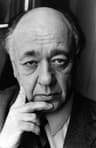
Amédée is a three-act play about a couple trapped with a corpse that has been growing in their spare room for fifteen years. The play's central mechanism is the grotesque literalization of a buried problem: the corpse, which sprouts mushrooms and emits a green glow, is never explained, and the couple's endless arguments over its origin only deepen the mystery. Ionesco's first full-length play and first work he explicitly labeled a 'comedy,' it moves from domestic claustrophobia to a surreal finale in which Amédée drags the body to the Seine and floats away with it, leaving his wife behind.
Key Insights
✦What is the central mechanism of Amédée, and what does it reject?
The play's mechanism is the physical growth of an unexplained corpse in the couple's spare room, which has been there for fifteen years. The corpse sprouts mushrooms, emits a green glow, and eventually forces its enormous feet onto the stage. What this mechanism rejects is the possibility of resolution through explanation. Madeleine suggests the corpse is a lover Amédée murdered; Amédée offers several contradictory alternatives. The audience never learns the truth, and the couple's inability to agree on a story mirrors their inability to communicate at all. The corpse is not a puzzle to be solved but a condition to be endured—a materialization of everything the marriage has refused to confront .
✦How does Amédée differ from Ionesco's earlier one-act plays?
Amédée marks several firsts in Ionesco's career. It is his first full-length play in three acts, and the first he explicitly labeled a 'comedy' rather than an 'anti-play' or 'tragic farce' . It is also the first in which the characters have fixed identities, professions, and a specific address in Paris: Amédée is a writer, Madeleine a switchboard operator, and they live at 29 rue des Généraux . The play gives them a psychological dimension that earlier figures like the Smiths or the Old Man and Old Woman lacked. Geneviève Serreau noted that Madeleine is the first character in Ionesco's theatre with a genuine psychological profile . These developments do not make the play less absurd, but they ground its absurdity in a recognizably domestic setting.
✦What is the significance of the play's ending, in which Amédée floats away?
The ending is a liberation and an abandonment at once. Amédée, having dragged the corpse toward the Seine, becomes entangled in its legs and is carried aloft, floating over the city while Madeleine is left behind . The flight echoes Ionesco's recurring vision of 'evanescence'—a sudden lightness and luminosity that dissolves the weight of the world . But it is also an escape from responsibility. Amédée does not solve the problem of the corpse; he is absorbed into it and removed from the domestic situation entirely. Madeleine, who has borne the burden of the household and the body's growth, is simply left. The ending is therefore ambiguous: a transcendent release for Amédée, a final abandonment for his wife, and an unresolved question about whether escape is freedom or evasion.
✦How has the play's critical reception evolved since its 1954 premiere?
Initial reception was mixed, and the play has never attained the canonical status of The Chairs or Rhinoceros. Martin Esslin, who helped define the Theatre of the Absurd, described Amédée as a 'comedy of liberation, the dream of a new beginning that will abolish the past' . Other critics have been harsher. One study calls the dream scene in Act Two 'technically clumsy and contrived' while still finding the play as a whole a 'moving and convincing study of marriage without communication' . The play's length and its shift from claustrophobic realism to surreal flight have made it difficult to stage effectively. Its reputation rests less on its individual brilliance than on its position as a transitional work in Ionesco's development.
✦What is the relationship between Amédée and Ionesco's later protagonist Bérenger?
Amédée is widely read as a prototype for Bérenger, the recurring figure in Ionesco's later plays. Both are frustrated artists, both experience moments of luminous appreciation for the world around them, and both ultimately fly away leaving their spouses behind . The flight in Amédée anticipates the ending of A Stroll in the Air (1963), the fourth Bérenger play, in which the protagonist similarly ascends. The difference is that Amédée's flight is entangled with the corpse—he does not simply rise but is carried away by the very problem he was trying to dispose of. Bérenger's later flights are more purely transcendent. Amédée thus occupies an intermediate position: more psychologically grounded than the early sketches, less fully realized than the Bérenger cycle.
✦What is the textual and translation history of Amédée?
The play was first performed on April 14, 1954, at the Théâtre de Babylone in Paris, directed by Jean-Marie Serreau . It was based on Ionesco's earlier short story 'Oriflamme' . The first English translation, by Donald Watson, was published by Grove Press in 1958 in a volume collecting Amédée, The New Tenant, and Victims of Duty . Watson's translation remains the standard English version. The play's stage directions are unusually detailed, specifying the periodic jerking of the corpse's feet, the green glow from the bedroom, and the precise physical comedy of the growing body . These directions are essential to the play's effect and pose challenges for translators and directors alike.
Wealthy Psyche is an intellectual archive. We do not host, distribute, or sell book copies — physical or digital. We provide structured knowledge to help you think better, faster.