


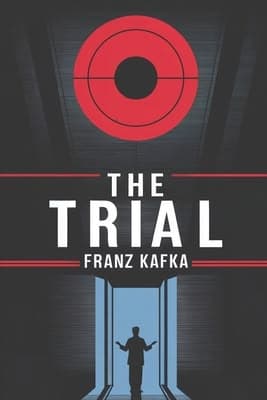
The Trial (Der Process)
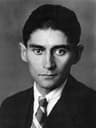
The Trial follows Josef K., a bank clerk arrested one morning without being told his crime, through a legal system whose courts are located in tenement attics and whose officials never specify the charge. Its central mechanism is procedural entrapment: every attempt K. makes to defend himself—hiring a lawyer, appealing to the court painter, dismissing the proceedings as absurd—is absorbed by the apparatus as further evidence of his involvement. The novel's distinctive claim is that the trial does not need a verdict to function; its power lies in making the accused treat his own life as a case to be managed, and the final execution is less a punishment than the completion of a process K. has already internalized.
Key Insights
✦What is the central mechanism of The Trial, and what does it reject?
The novel's mechanism is procedural entrapment. K. is arrested but not imprisoned; he is told he can go about his business, yet every action he takes to clarify his situation—consulting a lawyer, appealing to the court painter Titorelli, dismissing the proceedings as a joke—is absorbed by the system as evidence of his involvement. What The Trial rejects is the assumption that a legal system requires a charge to function. No crime is ever named, no verdict is pronounced until the final page, and the courts operate in tenement attics without jurisdiction K. can identify. The novel's horror lies in the system's indifference to outcomes: it does not need to convict K. because the process itself has already consumed his life, and his execution is less a punishment than the completion of a procedure he has internalized.
✦How did Kafka's work as an insurance lawyer shape the novel's depiction of legal bureaucracy?
Kafka worked for the Workers' Accident Insurance Institute in Prague, where he handled injury claims, wrote legal reports, and navigated a hierarchical bureaucracy. This experience gave him intimate knowledge of how institutions process individuals: the forms, the delays, the layers of officials who never take responsibility, the way a case can become a permanent condition rather than a problem to be solved. The Trial translates this bureaucratic reality into a metaphysical register. The court's attic offices, its petty officials, its obscure documents, and its endless deferrals are not fantastical inventions but exaggerations of what Kafka saw daily. He reportedly laughed aloud when reading drafts of The Trial to friends, finding the comedy in the bureaucratic absurdity that readers often experience as pure nightmare.
✦What is the significance of the parable 'Before the Law' embedded in the novel?
The parable, told by a priest to K. in the cathedral, describes a man from the country who waits his entire life at the gate of the Law, asking to be admitted. The doorkeeper refuses him entry but never forbids it outright, and the man waits until he is dying. Only at the end does the doorkeeper tell him that the gate was meant for him alone. The parable is the novel's interpretive key and its most contested passage. It can be read as a commentary on K.'s own situation—the Law is accessible in principle but blocked by a self-appointed guardian—or as a warning that the man's mistake was waiting at all. The priest tells K. that the doorkeeper is not deceived, but the parable's meaning remains unresolved, and K.'s response is to dismiss it as a trick of the court, refusing the insight it offers.
✦How does The Trial differ from The Castle, Kafka's other novel of an inaccessible system?
Both novels center on a protagonist confronting a system that refuses to explain itself, but their trajectories diverge. In The Trial, Josef K. is accused and prosecuted; the system's goal, however obscure, is to process him, and the novel ends with his execution. In The Castle, K. is not accused of anything. He arrives in a village claiming a position as land surveyor, and the system's response is not punishment but endless deferral. The Castle is more comic in tone, and its unfinished ending leaves open the possibility of acceptance. The Trial is complete, and its completion is death. A contemporary review noted that K. in The Castle 'achieves a degree of recognition,' whereas Josef K. achieves nothing but the knife. The Trial is a nightmare of guilt; The Castle is a farce of belonging.
✦What is the textual history of The Trial, and how did Max Brod's editing shape the novel we read?
Kafka died in 1924 with the manuscript unfinished and asked Max Brod to burn his unpublished work. Brod refused, arranged the chapters, and published the novel in 1925 as Der Process. Brod's editorial interventions were substantial: he ordered the chapters, gave them titles, and in some cases chose between variant drafts. Later scholars, working from Kafka's manuscripts, have produced critical editions that restore the novel's openness—Kafka left the chapters unnumbered and some passages incomplete, and the order in which Brod arranged them is not the only possible one. The novel is therefore not a finished work but a reconstruction. This textual instability is itself a theme: The Trial is a novel about a process without a clear beginning or end, and its publication history mirrors its content.
✦How have English translations of The Trial differed, and which should a serious reader use?
The first English translation, by Willa and Edwin Muir in 1937, shaped Kafka's Anglophone reception for decades but was based on Brod's edited German text and has been criticized for smoothing Kafka's prose. Breon Mitchell's 1998 translation, based on the restored German critical edition, is widely considered the standard scholarly English version. Mitchell returned to Kafka's manuscripts, preserved the novel's unfinished quality, and avoided Brod's editorial interventions where possible. Michael Hofmann's 2009 translation offers a more colloquial, contemporary voice. For scholarly work, Mitchell's translation is the most reliable; for readers seeking literary experience, the Muirs remain elegant, though they present a more polished Kafka than the manuscripts reveal.
Wealthy Psyche is an intellectual archive. We do not host, distribute, or sell book copies — physical or digital. We provide structured knowledge to help you think better, faster.