


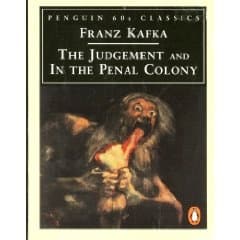
The Judgment
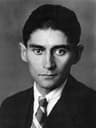
The Judgment is the short story in which a young merchant, Georg Bendemann, is sentenced to death by drowning by his own father, and then carries out the sentence himself. Its central mechanism is the abrupt reversal of domestic normality into metaphysical condemnation: a conversation about a letter and a marriage becomes a trial with no law, and a son who has done nothing clearly criminal accepts a verdict he never questions. The story's distinctive claim is that guilt precedes the charge—Georg's obedience to the father's sentence is so immediate that the reader is forced to ask what he believes he has done, and no answer is given.
Key Insights
✦What is the central mechanism of The Judgment, and what does it reject?
The story's mechanism is the seamless slide from domestic realism into metaphysical condemnation. Georg is writing a letter to a friend in Russia and discussing his engagement; his father, apparently feeble, suddenly grows immense and accuses him of deceit, selfishness, and waiting for his death. The father then pronounces the sentence of drowning, and Georg runs to a bridge and leaps. What The Judgment rejects is the assumption that a verdict requires a crime. No law is cited, no evidence is presented, and Georg never asks why he deserves death. His obedience is immediate and total, suggesting that he recognizes the sentence as something he already knew. The story's power lies in this gap: the guilt is palpable, but the offense remains unnameable .
✦How did Kafka's own relationship with his father shape the story?
Kafka wrote The Judgment in a single sitting on the night of September 22–23, 1912, and later described the experience as 'the total opening of body and soul' . He dedicated the story to Felice Bauer, whom he had met the previous month, and the fiancée Frieda Brandenfeld shares her initials. But the father-son conflict at its center is widely read as a fictionalization of Kafka's strained relationship with Hermann Kafka. The father's accusations—that Georg has deceived him, neglected his friend, and secretly wished him dead—echo the reproaches Kafka later catalogued in his unsent Letter to His Father. Heinz Politzer and other critics have treated the story as a key to Kafka's biography, though later scholars have cautioned against reducing the text to autobiography alone .
✦Why does Georg obey his father's sentence without resistance?
This is the story's central critical problem, and no interpretation has settled it. One line of reading treats Georg's obedience as the fulfillment of a guilt he already harbored: the father only articulates a verdict Georg had unconsciously accepted. Another reading emphasizes the father's performative authority: once the sentence is spoken, it becomes real, and Georg's leap is not a choice but an enactment of a linguistic fact. A third approach, drawing on Wittgenstein, argues that the question 'why does Georg obey?' is itself misguided—the story presents an ethical judgment that cannot be evaluated by ordinary standards of reason or evidence . What remains consistent across readings is that Georg does not argue, plead, or hesitate. He hears the sentence and executes it.
✦How does The Judgment relate to Kafka's later works, particularly The Trial?
The Judgment is widely regarded as Kafka's breakthrough into his mature style, and its structure anticipates The Trial. In both works, a protagonist is condemned by an authority that never specifies the charge. In The Trial, Josef K. spends an entire novel trying to discover his offense; in The Judgment, Georg does not even ask. The difference is compression. The Judgment accomplishes in a few pages what The Trial stretches across hundreds: the arrest, the interrogation, the verdict, and the execution. Kafka himself considered The Judgment one of his most successful works, and he did not include it on the list of writings he asked Max Brod to destroy . Its brevity and intensity have made it a touchstone for critics exploring the origins of the Kafkaesque.
✦What are the major English translations of The Judgment, and how do they differ?
The first English translation, by Willa and Edwin Muir, was published by Schocken Books in 1948 and shaped Kafka's Anglophone reception for decades. Mark Harman's 2024 Selected Stories, published by Harvard University Press, offers a new translation with extensive annotations that highlight Kafka's wordplay and the ambiguities of the German . Harman renders the title as The Judgment, following the standard convention, though The Verdict has also been used. The translation challenges are significant: the German 'Urteil' carries legal, moral, and psychological connotations that no single English word captures, and the father's final sentence involves wordplay that is difficult to reproduce. Harman's edition, with its biographical introduction and notes, is now the most accessible scholarly English version .
Wealthy Psyche is an intellectual archive. We do not host, distribute, or sell book copies — physical or digital. We provide structured knowledge to help you think better, faster.