


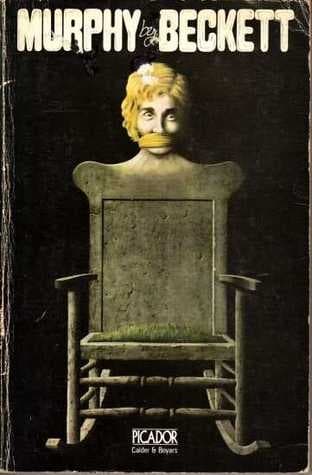
Murphy
Murphy is Beckett's first published novel, following its title character's elaborate efforts to withdraw from the world into the quiet of his own mind. Its central mechanism is comic Cartesian catastrophe: Murphy seeks a state of 'nothing new' where desire ceases, while his fiancée Celia and a cast of eccentric Dubliners try to pull him back into life and work. The novel's distinctive claim is that the mind's retreat from the body and the world is not a solution but a trap, and the famous chess game with the psychotic Mr. Endon—where Murphy realizes he is invisible to the other—ends in a defeat that is also a revelation.
Key Insights
✦What is the central mechanism of Murphy, and what does it reject?
The novel's mechanism is the protagonist's systematic withdrawal from the world. Murphy, an Irishman in London, seeks to escape desire and obligation by retreating into his mind, going so far as to bind himself naked to a rocking chair. What Murphy rejects is the assumption that connection—through love, work, or friendship—is either possible or desirable. His fiancée Celia wants him to find a job so she can join him; his friends want him to engage with life. Murphy resists all of it, seeking a state of 'nothing new' where the mind can be at peace. The novel's comedy lies in the absurdity of this project, and its tragedy in the discovery that even the mind's interior is not a safe haven .
✦What is the 'Cartesian catastrophe' at the heart of the novel?
The phrase, central to Chris Ackerley's annotated study of the novel, refers to Beckett's comic staging of the mind-body problem . Murphy is a would-be Cartesian, attempting to separate his mind from his body and the world. The novel tests this project through his relationships and especially through the chess game with Mr. Endon. If Murphy's mind is truly independent, he should be able to communicate with Endon mind to mind. Instead, Endon's chess moves suggest he is not even aware of Murphy's existence as an opponent—Murphy is invisible to him. The 'catastrophe' is the collapse of Murphy's solipsistic project: he discovers that he cannot even be recognized by another mind, let alone merge with one.
✦What is the significance of the chess game between Murphy and Mr. Endon?
The chess game is the novel's climax and its most debated passage. Murphy, working as a nurse at a mental hospital, plays against Mr. Endon, a patient who is profoundly withdrawn. Murphy hopes the game will establish a connection, a 'solicitation' of the other's mind. Instead, Endon's moves follow their own internal logic, ignoring Murphy's pieces entirely. When Endon moves into check without noticing, Murphy realizes that he does not exist for Endon—he is not even a worthy opponent. Critics have noted that this scene dramatizes the impossibility of communication that Beckett would explore throughout his career. Beckett himself told a friend that the origins of Waiting for Godot could be found in Murphy .
✦How did the novel's publication history shape the text we read?
Murphy was Beckett's first published novel, but it was not his first attempt at fiction. It was written in 1934–1935 and initially struggled to find a publisher. After recommendations from the literary agent George Reavey and critic Herbert Read, Routledge accepted it, but only after substantial cuts to the original manuscript . The first edition appeared in 1938, and Beckett himself later translated the novel into French. This translation is significant because Beckett's bilingual practice shaped his later work: he often wrote in French and translated into English, but Murphy was written in English first. The cuts made for the first edition mean that the novel we read is shorter than Beckett originally intended, and some critics have wondered what was lost .
✦How has Chris Ackerley's annotated edition changed the study of Murphy?
Ackerley's Demented Particulars, first published in 2000 and reissued in an expanded edition in 2010, provides a page-by-page annotation of the novel that documents Beckett's extensive reading in philosophy, theology, and literature . Before Ackerley's work, Murphy was often treated as an apprentice work, interesting mainly as a precursor to the plays. Ackerley demonstrates that the novel is a dense philosophical comedy built from Beckett's reading of Descartes, Geulincx, and other sources. The annotations reveal that what look like throwaway jokes are often precise philosophical references. Ackerley's introduction also outlines the novel's compositional and publishing history, making his edition the essential scholarly resource for the novel .
✦What is the significance of the kite-flying image that closes the novel?
The kite-flying image is Beckett's final image and one he planned from early in composition. In a letter to Thomas McGreevy in September 1935, Beckett described watching old men flying kites in Kensington Gardens and knew this should be the novel's ending . The image is a 'Cartesian emblem': the kite is the mind tenuously attached to the hand of the body, flying 'out of sight' yet still tethered. For Mr. Kelly, Celia's grandfather, the kite represents a kind of detached attention that Murphy sought but never achieved. Unlike Murphy's violent withdrawal, the kite-flyer's absorption is 'absolutely disinterested, like a poem.' The novel ends not with Murphy's death but with this image of quiet, disciplined attention to something almost out of sight—a different kind of retreat, perhaps a more successful one .
Wealthy Psyche is an intellectual archive. We do not host, distribute, or sell book copies — physical or digital. We provide structured knowledge to help you think better, faster.