


The Metamorphosis (Die Verwandlung)
The Metamorphosis follows Gregor Samsa, a traveling salesman who wakes one morning transformed into a monstrous vermin, and whose family's gradual rejection of him exposes the fragility of human worth when it is tied to economic utility. Its central mechanism is the mundane reaction to the impossible: Gregor's first worry is missing his train, and his family's first concern is the disruption to their household. The novella's distinctive claim is that the transformation merely literalizes a dehumanization that was already complete—Gregor had sacrificed his life to a job he hated and a family that valued him only as a provider.
Key Insights
✦What is the central mechanism of The Metamorphosis, and what does it reject?
The novella's mechanism is the mundane reaction to the impossible. Gregor does not marvel at his transformation; he worries about missing his train and losing his job. His family does not question how or why it happened; they worry about the financial burden and the scandal. What The Metamorphosis rejects is the assumption that identity and human worth are stable, intrinsic qualities. Gregor's value to his family was always instrumental—he paid the debts, supported the household, and planned to send Grete to the conservatory. Once he cannot work, he becomes a problem to be managed, then an object to be disposed of . The insect body does not create his alienation; it reveals it.
✦How does the famous opening word 'Ungeziefer' create translation problems, and what do they reveal?
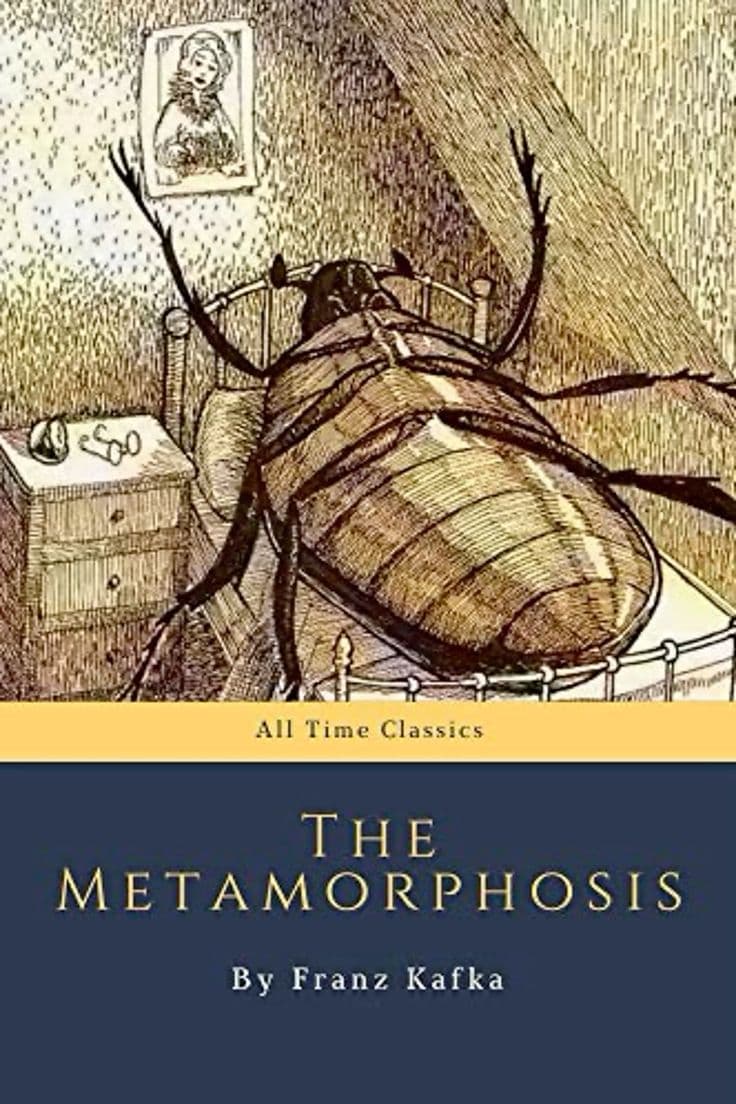
Kafka's German reads 'einem ungeheueren Ungeziefer'—a monstrous vermin. The word Ungeziefer is deliberately imprecise: it means 'vermin' or 'pest,' not a specific biological category like 'insect' or 'cockroach.' Kafka apparently insisted the creature not be depicted on the cover, and he wanted the ambiguity preserved. Translators have struggled with this. The Muirs rendered it 'insect,' Stanley Corngold chose 'monstrous vermin,' Michael Hofmann used 'cockroach,' and Susan Bernofsky opted for 'some sort of monstrous insect' . Each choice narrows the ambiguity Kafka built into the text. The translation problem matters because it illustrates the novella's central method: Kafka presents something horrifying and refuses to explain it, forcing the reader to sit with the inexplicable.
✦How has the critical interpretation of the novella shifted away from purely biographical readings?
Early interpretations, especially Max Brod's, leaned heavily on religious allegory and Kafka's biography—particularly his fraught relationship with his father, Hermann Kafka. Charles Neider's 1948 study popularized the 'father complex' reading . But Vladimir Nabokov rejected such approaches, arguing they failed to honor Kafka's artistry. Nabokov insisted on reading the text at face value, noting that it is Grete, not the father, who proves cruelest by suggesting Gregor must be gotten rid of . Feminist critics like Nina Pelikan Straus have shifted attention to Grete's own metamorphosis, arguing that the story is as much about her emergence into adulthood as about Gregor's decline . These shifts reflect a broader move in Kafka studies away from decoding hidden meanings and toward analyzing the text's formal and narrative strategies.
✦What is the significance of the family's changing treatment of Gregor after his transformation?
The family's behavior traces a clear arc from shock to resentment to relief. Initially, Grete takes on the task of feeding him and cleaning his room, a role that gives her purpose. But as the months pass, she tires of the burden, and her language shifts from pity to disgust. The turning point is when she declares, 'We must try to get rid of it' . After Gregor dies, the family feels an enormous burden lifted and immediately begins planning for the future, discovering that they are financially secure and that Grete has blossomed . The novella's ending is deliberately jarring: it offers no mourning, only the brisk return of ordinary life. This suggests that Gregor's death was not a tragedy for the family but a liberation, confirming that their love was always conditional.
✦How does the novella relate to Kafka's other works, particularly The Trial and The Castle?
The Metamorphosis shares with Kafka's novels a preoccupation with a protagonist confronting an opaque system that refuses to explain itself. In The Trial, Josef K. is prosecuted by a court that never specifies the charge; in The Castle, K. struggles to gain recognition from an authority that is inaccessible and contradictory . Gregor's situation is different in one crucial way: his transformation is not a bureaucratic process but a physical fact. Yet the family's response follows a similar pattern—they manage him, discuss him in his presence as if he were not there, and eventually decide he must be eliminated. The novella can be read as a compressed version of the Kafkaesque predicament: the individual is trapped within a system (the family, the job, the social order) that defines his worth solely by his function within it.
✦What was the novella's publication history, and how did Kafka feel about the ending?
Kafka wrote The Metamorphosis in late 1912 and it was first published in October 1915 in the journal Die Weißen Blätter, edited by René Schickele, after Kafka negotiated with Kurt Wolff Verlag . The first book edition appeared in 1916. Kafka was notoriously dissatisfied with the ending. In his diaries, he recorded that the story was finished but that 'today's ending does not please me at all; it really could have been done better' . The ending he refers to is the final scene in which the family takes a tram into the countryside and contemplates Grete's future marriage, a conclusion that feels jarringly optimistic after Gregor's death. Kafka's dissatisfaction is instructive: he recognized that the ending's banality and falseness were at odds with the story's darker implications, yet he published it anyway.
Wealthy Psyche is an intellectual archive. We do not host, distribute, or sell book copies — physical or digital. We provide structured knowledge to help you think better, faster.