



Collected Papers I: The Problem of Social Reality
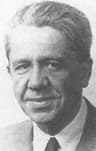
Schutz's central concern in this first volume is the methodological and phenomenological foundation of the social sciences. The essays argue that social reality is constituted through the meanings actors bestow on their actions and the intersubjective understandings that structure the life-world. Schutz develops his analysis of multiple realities, relevance, and symbol across essays on methodology, Husserl, Scheler, Sartre, and language, insisting that scientific constructs are second-order constructs built upon the common-sense constructs of everyday actors. The volume establishes interpretive sociology on a phenomenological footing rather than a naturalistic one.
Key Insights
✦What is the central claim of Collected Papers I, and what does it reject?
The central claim is that social reality is constituted through the meanings actors bestow on their actions and the intersubjective understandings that structure the everyday life-world. Schutz argues that the social sciences must build their constructs upon the common-sense constructs of everyday actors—scientific constructs are second-order constructs, not a privileged access to a reality independent of meaning . He rejects the naturalistic assumption that social phenomena can be studied in the same way as physical objects, without attention to the interpretive work through which actors constitute their social world. The volume's essays on methodology, phenomenology, and symbolism develop this position across a range of interlocutors, from Husserl and Scheler to Sartre and Bergson.
✦What are 'multiple realities,' and why is the concept central to the volume?
The essay 'On Multiple Realities' argues that there are distinct 'finite provinces of meaning'—the everyday life-world, the world of dreams, of art, of scientific theory, of religious experience—each with its own cognitive style and its own accent of reality. The everyday life-world is the 'paramount reality' because it is the province in which we act and communicate with others, and the other provinces are modifications of it . The concept is central because it explains how social reality is not a single, homogeneous domain but a stratified structure of meaning. Schutz's analysis of multiple realities influenced later sociological work on the constitution of social worlds, including Berger and Luckmann's The Social Construction of Reality.
✦How does Schutz's relationship to Husserl play out in this volume?
Schutz accepts Husserl's analyses of consciousness, intentionality, and the life-world, but he does not follow Husserl into the transcendental reduction. The essays on Husserl's importance for the social sciences and on Scheler's theory of intersubjectivity show Schutz working through phenomenological resources while insisting that intersubjectivity is a given of the natural attitude, not a transcendental achievement. He treats the life-world as the paramount reality of everyday life, described from the perspective of actors immersed in it, rather than as a problem to be recovered through the epochē . The volume thus represents a 'mundane' phenomenology oriented toward the social sciences rather than a contribution to transcendental philosophy.
✦What is the editorial history of the volume, and who shaped its contents?
Collected Papers I: The Problem of Social Reality was edited and introduced by Maurice Natanson, with a preface by H. L. van Breda, and published by Martinus Nijhoff in The Hague in 1962 as volume 11 of the Phaenomenologica series . Schutz died in 1959, so the collection was assembled posthumously. Natanson selected essays Schutz had published in various journals and anthologies, organizing them into three parts: methodology of the social sciences, phenomenology and the social sciences, and symbol, reality, and society . The volume was reprinted in multiple editions, including a 1967 edition and a 1972 edition . A fourth volume of collected papers appeared in 1996.
✦How was the volume received by reviewers and scholars?
The volume was recognized as a major contribution to phenomenological sociology and to the foundations of interpretive social theory. A review on Douban noted that Schutz appears more as a philosopher than a sociologist in these essays, engaging extensively with other theorists, particularly Husserl, whose influence is palpable throughout . The same reviewer observed that the collection's weakness is its repetitiveness—many points are explained and introduced multiple times, almost as if copy-pasted—and that the phenomenological system remains somewhat unclear and abstract . The volume's influence has been substantial, particularly through its account of multiple realities and its critique of naturalistic methodology in the social sciences.
✦What is a common misconception about the volume's scope?
A frequent misconception is that Collected Papers I is a unified treatise on social reality. It is a collection of essays written for different occasions and audiences, and the volume's unity is thematic rather than systematic. Schutz did not write it as a book; Natanson assembled it from previously published pieces after Schutz's death . The essays vary in technicality and in their engagement with other philosophers. Reading the volume as a single argument risks missing the exploratory, occasional character of many of its chapters. It is best approached as a repository of Schutz's key essays on method, phenomenology, and symbolism rather than as a continuous exposition of a single thesis.
Wealthy Psyche is an intellectual archive. We do not host, distribute, or sell book copies — physical or digital. We provide structured knowledge to help you think better, faster.