



Reflections on the Problem of Relevance
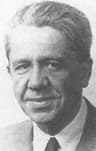
Schutz's central claim is that relevance is the selective principle through which consciousness organizes the life-world, determining what becomes a theme, how it is interpreted, and what motives drive action. The book distinguishes three intertwined types—thematic, interpretational, and motivational relevance—each of which can be either 'free' (voluntarily adopted) or 'imposed' (forced upon us by the world or by our own past commitments). Left unfinished at Schutz's death, the manuscript was edited and annotated by Richard M. Zaner, who presents it as a phenomenological psychology of the natural attitude rather than a transcendental inquiry.
Key Insights
✦What is the central claim of Reflections on the Problem of Relevance, and what does it reject?
The central claim is that relevance is the selective principle through which consciousness organizes the life-world. Schutz distinguishes three interconnected types of relevance—thematic (what becomes a theme), interpretational (how it is explicated), and motivational (why we act)—and further divides each into 'free' (intrinsic, voluntarily adopted) and 'imposed' (bound, forced upon us) variants . The book rejects the view that relevance is a merely subjective or arbitrary matter; relevance structures are intersubjectively shared and form the ground of the natural attitude. It also rejects a purely transcendental treatment of relevance, approaching it instead as a phenomenological psychology of everyday life, as Zaner notes in his introduction to the posthumous edition .
✦What is the publication and editorial history of the book, given that Schutz died before completing it?
The book is a posthumous publication assembled from Schutz's unfinished manuscripts. Schutz had been working on what was to be his second book, The World as Taken for Granted, of which this material forms a part . After his death in 1959, Richard M. Zaner edited, annotated, and wrote an introduction for the manuscript, which Yale University Press published in 1970 . A Greenwood Press reprint appeared in 1982 . The original manuscript was written in English during Schutz's later years in the United States. The volume runs 186 pages and includes Zaner's substantial editorial apparatus, which situates the fragments within Schutz's broader phenomenological project.
✦What are the three types of relevance, and how do they relate to one another?
Schutz distinguishes thematic relevance (what is selected as a theme of attention), interpretational relevance (the schemes through which the theme is explicated and understood), and motivational relevance (the in-order-to and because-motives that explain action) . These are not separate faculties but interdependent moments of a single process. A theme is grasped through interpretational schemes that are themselves sedimented from past thematic selections, and the motives that drive action are shaped by the relevance structures already in place. Cox's 1978 study of Schutz's theory of relevance devotes a chapter to the 'interdependency of the kinds of relevance,' treating this interconnection as central to understanding how the stock of knowledge is formed and how relevance functions in everyday life .
✦What is the distinction between 'free' and 'imposed' relevance, and why does it matter?
Schutz distinguishes free (intrinsic) relevance, where we voluntarily adopt a theme or interpretation, from imposed (bound) relevance, where something forces itself on our attention or constrains us from the past . For thematic relevance, the criterion is familiarity versus unfamiliarity: familiar topics are freely attended to, while unfamiliar ones interrupt our assumptions and impose themselves. For motivational relevance, the criterion is temporal: because-motives are imposed (constituted in the past, determining present action), while in-order-to motives are free (projected into a future that can still be changed) . The distinction matters because it shows that relevance is not simply a matter of choice; our relevance structures are shaped by sedimentation, habit, and the world's resistance to our projects.
✦How does this book relate to Schutz's later The Structures of the Life-World?
Reflections on the Problem of Relevance is the unfinished groundwork for the systematic treatment Schutz planned, which Thomas Luckmann later completed and published as The Structures of the Life-World (1973). Luckmann's edition draws on the relevance manuscripts but, as critics have noted, his treatment of socially imposed relevance remains sparse and does not fully develop the phenomenological description Schutz had begun . The relevance book thus provides the conceptual raw material that Structures organizes and extends. For scholars, the unfinished manuscript is valuable precisely because it shows Schutz working through the problem in greater detail than the published Structures, particularly on the interconnections among thematic, interpretational, and motivational relevance.
✦What is a common misconception about the book's status and completeness?
A frequent misconception is that Reflections on the Problem of Relevance is a finished treatise, comparable to Schutz's 1932 book or the posthumous Structures. It is not. It is a draft of the first part of a book Schutz never completed, edited from manuscripts after his death . Zaner's introduction and annotations are essential to understanding the fragments, and the book's argument is sometimes elliptical or repetitive in ways that reflect its unfinished state. Reading it as a standalone statement of Schutz's theory of relevance without attending to its editorial mediation would give a misleading impression of completeness. It is best approached as a laboratory for the ideas that Structures and the Collected Papers would later systematize.
Wealthy Psyche is an intellectual archive. We do not host, distribute, or sell book copies — physical or digital. We provide structured knowledge to help you think better, faster.