



Experience and Judgment: Investigations in a Genealogy of Logic
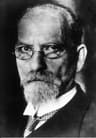
Husserl's central project is a genealogy of logic: tracing the origins of logical forms and predicative judgment back to their roots in prepredicative experience. The book argues that even the most abstract logical structures are founded on the passive syntheses of receptivity—the ways objects are given to consciousness before any active judgment is made. Through analyses of attention, association, similarity, and the constitution of sets and states of affairs, Husserl shows that logic demands an underlying theory of experience. The work was edited from manuscripts by Ludwig Landgrebe after Husserl's death.
Key Insights
✦What is the central claim of Experience and Judgment, and what does it reject?
The central claim is that logic demands an underlying theory of experience. Even at its most abstract, logical judgment is founded on the prepredicative experience of receptivity—the passive syntheses through which objects are first given to consciousness . Husserl sketches a genealogy of logic in three parts: prepredicative experience, the structure of predicative thought, and the origin of general conceptual thought . He rejects the assumption that logical forms can be understood in isolation from the experiential processes that constitute them. The book fills out some of the terse analyses of Formal and Transcendental Logic (1929), showing how the objects of the understanding—sets, states of affairs, propositions—are preconstituted by activities of collecting and relating that have their roots in passive experience .
✦What is the editorial history of the work, and who shaped its final form?
Experience and Judgment was not published in Husserl's lifetime. It results from the devoted editing and refashioning by Ludwig Landgrebe of manuscripts closely related to Formal and Transcendental Logic (1929), many written by Husserl between that work and his death in 1939 . With close consultation and advice from Husserl, Landgrebe organized the manuscripts into three parts: 'Receptive Experience,' 'Predicative Thought and the Objectivities of the Understanding,' and 'The Constitution of General Objectivities and Forms of Judging in General' . The German edition appeared in 1939 as Erfahrung und Urteil: Untersuchungen zur Genealogie der Logik . This posthumous, edited character means the book is a collation of texts written at different periods, and it sometimes betrays a lack of connection or development of a theme .
✦How does the book relate to Husserl's earlier Formal and Transcendental Logic?
Experience and Judgment is a direct extension and filling-out of the project announced in Formal and Transcendental Logic. The earlier work had distinguished the logic of consistency from the logic of truth and argued that formal logic requires a transcendental grounding. The later book provides the concrete genetic analyses that the earlier work had sketched only in outline . It traces how the categorial objectivities studied by formal logic—states of affairs, sets, propositions—are constituted through prepredicative experience. Where Formal and Transcendental Logic was systematic and programmatic, Experience and Judgment is descriptive and genealogical, showing the experiential roots of logical forms in detail.
✦How was the English translation received, and what are its weaknesses?
The 1973 English translation by James S. Churchill and Karl Ameriks was generally well received for its readability, though reviewers noted specific problems. A review in The Modern Schoolman praised Lothar Eley's afterword but judged the translation itself to be 'poor': 'not only too germanic, as is Churchill's inelegant and unhelpful Introduction, but also unexpectedly inaccurate' . A review in Review of Metaphysics was more positive, calling the translation 'easy to read and proved accurate in places where I compared it to the German,' while noting a few specific errors (e.g., 'this synthesis' should be 'this unity' on page 208) and suggesting that 'Evidenz' might better be translated as 'evidence' rather than 'self-evidence' . The translation remains the standard English edition despite these criticisms.
✦What is a common misconception about the book's structure and accessibility?
A frequent misconception is that Experience and Judgment is an accessible introduction to Husserl's thought. In fact, it is a difficult and uneven work that should be recommended only to advanced students of phenomenology. The radical shifts in viewpoint characteristic of Husserl demand the closest attention to keep clear the intent and measure of the conceptual apparatus, and these difficulties are increased by the collation of manuscripts written at different periods . The book sometimes betrays a lack of connection or development of a theme and an unevenness in quality . It presupposes familiarity with Husserl's earlier work, particularly Formal and Transcendental Logic and the Logical Investigations, and it is best read after those foundational texts rather than as an entry point.
✦How does the book treat the relationship between prepredicative and predicative experience?
The relationship is one of founding. Prepredicative experience is the passive, receptive layer in which objects are given to consciousness before any active judgment is made. In this layer, certain aspects come to prominence against others, similarities arise, and a prepredicative sense of attribution occurs . Predicative thought is founded on this passivity but transforms it: judgment explicitly posits relations, predicates, and sets that were only implicit in receptivity. Husserl's analysis shows that the objects of the understanding—sets, states of affairs, propositions—are not given in receptivity as such but are preconstituted by activities of collecting and relating that have their roots in passive experience . The genealogy of logic thus moves from the passive syntheses of receptivity to the active syntheses of predicative judgment without positing a sharp break between them.
Wealthy Psyche is an intellectual archive. We do not host, distribute, or sell book copies — physical or digital. We provide structured knowledge to help you think better, faster.