



Signs
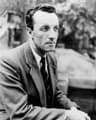
Merleau-Ponty's central claim in this collection is that expression is the fundamental category of human existence, broader than language alone. Speech tears a meaning out of an undivided whole; it does not merely translate a pre-existing thought. The essays gathered here—on language, painting, politics, and other philosophers—develop a phenomenology of expression in which the body, gesture, and silence are already meaningful before any explicit signification. Merleau-Ponty argues that the speaking subject is situated within language, not standing outside it as a sovereign constituting consciousness.
Key Insights
✦What is the central claim of Signs, and what does it reject?
The central claim is that expression is a category of human behavior and existence much broader than language alone. Man is essentially expressive even prior to speaking: in silence, gestures, and lived behavior . Speech is described as a way of tearing out a meaning from an undivided whole, which rejects the view that speech merely translates a pre-existing thought into words . Merleau-Ponty also rejects the conception of the philosopher as a sovereign constituting consciousness standing outside language. The philosopher is 'the one who realizes that he is situated in language, that he is speaking' . Expression is thus not a secondary operation performed on primary experience but the very medium through which experience becomes meaningful.
✦What role does the essay on Husserl play in the collection?
The essay 'The Philosopher and His Shadow' is one of the volume's most influential pieces, offering Merleau-Ponty's reading of Husserl's late thought. He argues that Husserl's unfinished work, particularly the manuscripts on intersubjectivity and the life-world, contains resources that Husserl himself did not fully develop. Merleau-Ponty suggests that the 'natural attitude' involves a higher truth that must be regained, and that prior to all reflection we maintain a 'personalist attitude' that naturalism cannot account for . The essay shows Merleau-Ponty reading Husserl against the grain, drawing out a philosophy of the pre-theoretical and the embodied that would inform his own later ontology.
✦How does the book treat politics, and how does that relate to Merleau-Ponty's break with Sartre?
The political essays in Signs, particularly the long preface and the writings on Marxism, reflect Merleau-Ponty's growing distance from Sartre's revolutionary politics. The preface rejects the exclusive disjunction between Marxism and anti-Marxism, defending a philosophy that is 'neither history's servant nor its master' and that operates through 'action at a distance' . This position was already implicit in texts from the late 1940s, where Merleau-Ponty distinguished classical, ossified party Marxism from a new, philosophical, 'heuristic' Marxism . The essays in Signs thus document a political and philosophical divergence that would culminate in the open break with Sartre, with Merleau-Ponty insisting on philosophy's autonomy from political engagement even as he acknowledges its historical situatedness.
✦What is the publication and translation history of Signs?
Signs was first published in French as Signes by Librairie Gallimard in Paris in 1960 . The English translation by Richard C. McCleary was published by Northwestern University Press in Evanston in 1964, as part of the Northwestern University Studies in Phenomenology and Existential Philosophy . The translation runs 355 pages and includes McCleary's introduction . The volume collects essays and articles written during the last decade of Merleau-Ponty's life, and it was the last major work he saw through publication before his death in 1961. The English edition has remained in print continuously and is the standard version through which Signs is known in Anglophone philosophy.
✦How does Signs relate to Merleau-Ponty's earlier Phenomenology of Perception?
Signs extends the programme of Phenomenology of Perception (1945) into new domains. Where the earlier book focused on perception and the embodied subject, the later collection turns to language, expression, and the situatedness of speech. Merleau-Ponty's account of speech as 'tearing out a meaning from an undivided whole' develops the thesis of the earlier book that meaning arises through the body's engagement with the world rather than through a constituting consciousness. The essays on painting and literature apply this embodied account of meaning to artistic expression, while the political essays extend it to historical action. Signs thus represents a broadening of the phenomenological project rather than a departure from it, applying the analysis of embodied intentionality to the linguistic and political dimensions of human existence.
✦What is a common misconception about Merleau-Ponty's philosophy of language in this book?
A frequent misconception is that Merleau-Ponty is offering a philosophy of language in the analytic sense, a theory of meaning, reference, or syntax. His concern is phenomenological: he asks how speech and expression disclose a world and constitute intersubjective meaning. The essay 'On the Phenomenology of Language' argues that the speaking subject is enveloped and situated within language, not standing outside it as a pure thinker . This does not mean language is a closed system that determines speech; Merleau-Ponty distinguishes between 'sedimented language' and speech that 'creates itself in its expressive acts' . His target is the Cartesian picture of a disembodied cogito that uses language as a tool. For Merleau-Ponty, we are linguistic beings through and through, and speech is the enactment of our bodily being in the world.
Wealthy Psyche is an intellectual archive. We do not host, distribute, or sell book copies — physical or digital. We provide structured knowledge to help you think better, faster.