



Collected Papers III: Studies in Phenomenological Philosophy
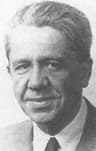
Schutz's central concern in this final volume is the viability of Husserl's transcendental phenomenology for grounding the social sciences. The essays cluster around a sustained critique: Husserl's attempt to constitute transcendental intersubjectivity through the operations of a solitary ego fails, because the 'pairing' analysis in the Cartesian Meditations cannot account for the constitution of another psychophysical ego within my own conscious life. Schutz concludes that intersubjectivity cannot be derived from a transcendental starting point; it is a given of the natural attitude. The volume also includes analyses of the life-world, typification, and Max Scheler's ethics.
Key Insights
✦What is the central claim of Collected Papers III, and what does it reject?
The central claim is that Husserl's attempt to constitute transcendental intersubjectivity from within the solitary transcendental ego fails. Schutz argues that the 'pairing' analysis in Husserl's Cartesian Meditations does not succeed in showing how another psychophysical ego can be constituted in my ego, and therefore does not avoid solipsism . He rejects the view that intersubjectivity can be derived from transcendental operations. For Schutz, the existence of other subjects is an unquestioned datum of the natural attitude: we are born into a world already shared with others, and the 'We-relationship' is the foundational structure of social experience . The volume's essays apply this critique to Husserl's late philosophy while also addressing the life-world, typification, and Scheler's ethics.
✦What is the specific argument of 'The Problem of Transcendental Intersubjectivity in Husserl'?
Schutz's essay pinpoints a difficulty at the heart of Husserl's project: since it is impossible to experience another person's original mental content, how can another psychophysical ego be constituted within my own conscious life? How is solipsism avoided? Schutz examines Husserl's notion of 'pairing' in the Cartesian Meditations and concludes that it does not succeed in constituting a genuinely transcendental intersubjectivity through the conscious operations of a transcendental ego . The essay includes a discussion with Eugen Fink and Schutz's response to Fink and other critics . The argument is significant because it marks Schutz's decisive break with the transcendental framework and his turn toward a phenomenology of the natural attitude as the proper foundation for the social sciences.
✦How does this volume relate to Schutz's earlier The Phenomenology of the Social World?
Collected Papers III extends and deepens the critique of Husserl that Schutz had begun in his 1932 book. In The Phenomenology of the Social World, Schutz had already argued that intersubjectivity is a given of the natural attitude rather than something to be constituted transcendentally, but his engagement with Husserl's late texts in this volume is more sustained and technical. The essays collected here, originally published between 1953 and 1958, represent Schutz's mature assessment of Husserl's later philosophy, including the Ideas volumes and the Crisis . Together with the earlier book and the first two volumes of Collected Papers, this volume completes what one publisher description calls a 'comprehensive and consistent theory of the world of everyday life' .
✦What is the editorial history of this volume, and who shaped its contents?
Collected Papers III: Studies in Phenomenological Philosophy was edited by Ilse Schutz, the author's widow, and published posthumously by Martinus Nijhoff in The Hague in 1966, as volume 22 of the Phaenomenologica series . It includes an introduction by Aron Gurwitsch . Schutz died in 1959, and the volume was assembled from essays he had published between 1953 and 1958. A reprint of the 1964–1966 edition appeared in 1970 . The volume runs xxxiii + 191 pages and includes an index . It is the third and final volume of Schutz's collected papers, following Volume I (edited by Maurice Natanson, 1962) and Volume II (edited by Arvid Brodersen, 1964).
✦How does the volume treat the life-world, and how does this relate to Husserl's Crisis?
The essay 'Some Structures of the Life-World' considers the Lebenswelt with an eye toward establishing its relevance to the social sciences . Schutz's treatment of the life-world is indebted to Husserl's late work, particularly the Crisis, but it diverges in emphasis. Where Husserl treated the life-world as a problem for transcendental philosophy—something to be recovered through the epochē—Schutz treats it as the paramount reality of everyday life, the unquestioned background against which all social action and interpretation take place. Aron Gurwitsch's introduction to the volume notes that Schutz's work on the life-world holds a central position in contemporary philosophical thought and indicates his originality in this area . The essay on typification and eidos in Husserl's late philosophy further develops this analysis.
✦What is a common misconception about Schutz's relationship to Husserl in this volume?
A frequent misconception is that Schutz was a faithful Husserlian who simply applied transcendental phenomenology to sociology. The essays in this volume make clear that Schutz's relationship to Husserl was critically productive rather than discipleship. He accepted Husserl's analyses of consciousness and intentionality but rejected the transcendental reduction as a valid basis for social theory. The critique of transcendental intersubjectivity is the decisive evidence: Schutz concludes that Husserl's project fails on its own terms, and that a phenomenology of the natural attitude is required instead . However, Schutz did not simply abandon Husserl; he continued to engage with his late texts and to draw on phenomenological method while insisting that the social world is a given, not a constituted achievement.
Wealthy Psyche is an intellectual archive. We do not host, distribute, or sell book copies — physical or digital. We provide structured knowledge to help you think better, faster.