



Essays, Moral, Political, and Literary
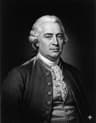
Hume's Essays are not a systematic treatise but a career-long public experiment in applying his science of man to commerce, parties, taste, and the British constitution. The collection's distinctive mechanism is its essayistic form: Hume deliberately disclaims any connective system among the pieces, yet the essays collectively enact a naturalistic, anti-speculative outlook that treats political and moral life as objects of empirical observation rather than abstract principle. The political essays, especially those on party and the balance of trade, are where this method yields its most consequential interventions.
Key Insights
✦What unifies Hume's Essays, given his own disclaimer that they form no system?
Hume advises readers in the 1741 advertisement not to look for any connection among the essays but to consider each as a work apart . Yet a shared method and outlook runs through the collection: a naturalistic commitment to understanding human affairs through observation, history, and experience rather than abstract speculation. The essays on politics treat parties, constitutions, and commerce as empirical phenomena to be anatomized, not as occasions for deducing principles. The essays on taste and the passions extend the moral psychology of the Treatise into accessible prose. The collection's unity is thus methodological and temperamental rather than doctrinal—an Enlightenment confidence that human life can be understood and improved without superstition or metaphysical system-building .
✦How do the political essays engage with party conflict, and what position does Hume take?
Hume's essays on party, particularly 'Of Parties in General' and 'Of the Parties of Great Britain,' attack parties founded on abstract speculative principle as uniquely modern and uniquely dangerous. He argues that such parties threaten civil war by turning debates over the first principles of government into irreconcilable conflicts, leading zealous combatants to align law with their own constitutional interpretations . Hume positions himself as a historically minded anatomist of political society who takes human beings as they are, not as an armchair philosopher imagining ideal republics . His stance has been read as conservative in its defense of the established mixed monarchy, yet scholars note that what Hume conserves is a liberal vision of justice inherited from Hobbes, Locke, and Bayle .
✦How did the collection's contents evolve across Hume's lifetime, and what does that reveal?
The Essays grew and contracted through eleven editions between 1741 and 1777. Hume withdrew eight earlier essays for the final edition, including pieces he judged too frivolous, and added twenty others, leaving thirty-nine essays in the 1777 version . He suppressed some essays not because they were offensive but because he thought they could neither give pleasure nor instruction . Later additions such as 'Of the Jealousy of Trade' and 'Of the Coalition of Parties' (1760) and 'Of the Origin of Government' (1777) kept the collection aligned with his ongoing political and economic concerns . The final edition, which Hume carefully corrected before his death in 1776, represents his considered judgment about which of his occasional pieces deserved to survive.
✦What is the textual history of the Essays, and why does it matter for interpretation?
No critical edition of Hume's Essays existed until the Beauchamp and Box edition of 2021, which collates the copy-text with all lifetime editions and provides a complete record of variants . Earlier scholarly practice relied on the 1777 posthumous edition, but as Cambridge's edition notes, scholars cannot be certain which changes in that edition were Hume's own and which came from publishers or printers; the last edition for which we can be sure Hume had full responsibility is 1772 . T. H. Green and T. H. Grose made an incomplete collation in the nineteenth century, and Eugene F. Miller's 1987 edition added fuller variant readings against the 1772 text . Readers using modern editions should be aware that they are encountering a text shaped by editorial reconstruction as well as Hume's revisions.
✦How do the Essays relate to Hume's Treatise and Enquiries?
The Essays extend the naturalistic programme of the Treatise into public, occasional prose, but they are not simply popularizations. The moral essays on taste, the passions, and the standard of taste develop positions from Book II and III of the Treatise in a more accessible register. The political and economic essays on commerce, money, interest, and the balance of trade have no direct counterpart in the Treatise; they represent Hume's independent contributions to eighteenth-century political economy, and the Political Discourses of 1752 were, by Hume's own account, the only work of his that was successful on first publication . Scholars have argued that the Essays and the Treatise form parts of the same philosophical project, founded on the science of man, even where the essayistic form and subject matter differ .
✦How has the collection been read politically, and is the conservative or liberal label more accurate?
Both labels have been applied, and both capture something real. Conservative readers emphasize Hume's defense of the British mixed monarchy, his pessimism about improving government beyond what experience supports, and his late-life prioritization of authority over liberty . Liberal readers emphasize his progressive narrative of civilizational development, his critique of speculative party principle, and his economic essays' case for commerce and refinement. The scholarly consensus is that Hume did not understand himself in these terms, and that his thought shaped both traditions without belonging fully to either . The conservative reading requires redefining conservatism in light of a liberal vision of justice and society—which suggests that the liberal elements are more fundamental to his outlook than the conservative ones.
✦What is a common misconception about the Essays' status within Hume's corpus?
A persistent misconception treats the Essays as minor occasional pieces, stylistically elegant but philosophically lightweight compared to the Treatise and the two Enquiries. This view was more defensible before the late twentieth century, when the Essays received little sustained scholarly attention. Margaret Watkins's work argues that the Essays provide important insights into Hume's perspective on the breadth and depth of human life, and that they reveal his continued commitment to philosophy as a discipline promoting social and individual progress . The Notre Dame Philosophical Reviews assessment concurs that however uneven the essays may be in quality, their range and substance justify continued interest, and that they shed considerable light on Hume's more systematic works .
Wealthy Psyche is an intellectual archive. We do not host, distribute, or sell book copies — physical or digital. We provide structured knowledge to help you think better, faster.