



The World, or Treatise on Light
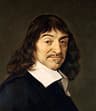
Descartes's suppressed masterpiece presents a complete mechanistic physics under the guise of a fable about an imaginary new world. The central mechanism is the doctrine that matter is pure extension, entirely inert, and that all natural phenomena—light, heat, planetary motion—can be explained through matter and motion alone, governed by quantitative laws of nature. By describing a hypothetical world rather than the actual one, Descartes could develop his heliocentric cosmology and vortex theory while maintaining plausible deniability. He withheld the work upon learning of Galileo's condemnation, and it appeared only posthumously.
Key Insights
✦What is the central claim of The World, and what does it reject?
The central claim is that all natural phenomena—light, heat, gravity, planetary motion—can be explained through matter and motion alone, without appeal to occult qualities, substantial forms, or teleological purposes. Descartes argues that matter is pure extension, completely inert, and that the universe operates according to quantitative laws of nature. He rejects the Aristotelian-Scholastic physics that dominated the schools, substituting a mechanistic cosmology in which swirling vortices of subtle matter carry the planets around the sun. The work's literary device—describing an imaginary world rather than the actual one—was designed to present this radical physics while maintaining distance from theologically dangerous conclusions about the real cosmos.
✦Why did Descartes suppress the work, and what does his decision reveal?
Descartes withheld The World after learning in November 1633 that Galileo had been condemned by the Roman Inquisition for defending the earth's motion . He wrote to Mersenne that the heliocentric view was 'so closely interwoven in every part of my treatise' that removing it would ruin the whole work, and he preferred to suppress it rather than publish a mutilated version . His decision was not purely obedient: he believed the cardinals had made a mistake, and he hoped the condemnation would be reversed . But he also calculated that publishing would endanger his 'repose and peace of mind' . The episode reveals the precarious position of natural philosophy in Counter-Reformation Europe and Descartes's strategic caution.
✦How does The World relate to Descartes's later Discourse and Principles of Philosophy?
The World is the most ambitious systematic project Descartes ever undertook, written between 1629 and 1633, and its core doctrines were later reworked in published form . The Discourse on the Method (1637) contains a précis of The World in Part Five, but it is silent on Copernicanism—a strategic omission reflecting the same caution that led to the treatise's suppression . The Principles of Philosophy (1644) presents Descartes's physics in textbook form, but with crucial differences born of his growing awareness of theological controversy. The World is thus the lost foundation of Cartesian natural philosophy, valuable for understanding what Descartes actually thought before he learned to be careful.
✦What is the publication history of The World, and how do the posthumous editions differ?
The World was first published in Paris in 1664 as Le Monde de M. Descartes ou le Traité de la Lumière, based on a copy of the manuscript rather than the original . In 1677, Claude Clerselier produced a more faithful edition based on the original manuscript, complaining that the first edition had been 'too precipitous' and lacked accurate figures . The Treatise on Man, the companion piece, had appeared earlier: in Latin at Leiden in 1662, translated by Florentius Schuyl, and in French at Paris in 1664, edited by Clerselier . The standard modern edition is in volumes 10 and 11 of Adam and Tannery's Oeuvres de Descartes. Michael Sean Mahoney's English translation, with facing French text, appeared in 1979.
✦What is the 'fable' device, and why does it matter for interpreting the work?
Descartes presents his physics as a fable about an imaginary world, created by God in a hypothetical space, governed purely by the laws of nature he has established . This literary framing serves a double purpose: it allows him to develop a complete mechanistic cosmology without directly claiming that the actual world operates this way, and it invites the reader to recognize that the imaginary world's phenomena match our experience so closely that it might as well be the real one . As one scholarly analysis puts it, the imaginary world 'ends up accounting for all effects in the real world of our experience' . The fable is thus both a protective device and a rhetorical strategy, designed to lead the reader toward the Copernican conclusion without stating it explicitly.
✦What is a common misconception about The World's relationship to Galileo?
A frequent simplification treats Descartes's suppression of The World as a straightforward act of Catholic obedience to the Galileo condemnation. In fact, Descartes's response was more complex and ambivalent. He believed the Church's decision was based on a misunderstanding of the Bible's role in scientific matters, and he did not accept it as a matter of faith . He held out hope that the condemnation would be reversed and that he could publish later . His suppression was a tactical retreat rather than a conversion: he preserved the manuscript, circulated parts of it, and eventually published its core doctrines in safer forms. The episode illustrates not pious submission but the calculated caution of a philosopher navigating dangerous intellectual terrain.
Wealthy Psyche is an intellectual archive. We do not host, distribute, or sell book copies — physical or digital. We provide structured knowledge to help you think better, faster.