



Treatise on Man
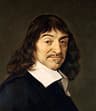
Descartes's unfinished treatise, withheld after Galileo's condemnation, presents the human body as a machine created by God, with functions explicable through purely mechanical principles. The central mechanism is the reduction of physiology to matter in motion: blood circulates as a hydraulic fluid, nerves operate like cords, muscles inflate and deflate, and the pineal gland mediates between body and soul. The work deliberately brackets the soul's nature, presenting its account as a thought experiment about hypothetical machine-beings. It rejects Aristotelian substantial forms and vital spirits in favor of a thoroughgoing mechanism that treats the body as an automaton.
Key Insights
✦What is the central claim of the Treatise on Man, and what does it reject?
The central claim is that the human body is a machine created by God, and that its functions—digestion, circulation, sensation, movement—can be explained entirely through the mechanical principles of matter in motion. Descartes explicitly rejects the Aristotelian tradition of explaining bodily processes through substantial forms and vital spirits, substituting a model drawn from contemporary engineering: the heart as a heat-driven pump, nerves as cords or pipes, muscles as inflating bellows, and the pineal gland as the point where the soul interacts with the bodily machine . The work is presented as a thought experiment about hypothetical beings composed of body and soul, allowing Descartes to develop his materialist physiology while bracketing theological questions about the soul's nature.
✦Why was the Treatise not published during Descartes's lifetime, and what is its publication history?
Descartes composed the Treatise in French between 1629 and 1633 as part of a larger work that also included The World, a treatise on physics. In November 1633, upon learning that Galileo had been condemned by the Roman Inquisition for defending the earth's motion, Descartes informed Marin Mersenne of his decision to withhold the entire work . It remained unpublished until after his death. The first edition appeared in a Latin translation by Florentius Schuyl, published in Leiden in 1662 as De Homine . The French original, L'Homme, edited by Claude Clerselier, followed in Paris in 1664 . The two editions differ in their illustrations, which were created after Descartes's death by his disciples, since the surviving manuscripts contained no images .
✦How does the Treatise relate to Descartes's later Discourse on the Method and Meditations?
The Treatise is the detailed physiological working-out of positions Descartes later summarized in the Discourse on the Method (1637), particularly in Part Five, where he describes the body as a machine and outlines the circulation of the blood and the functions of the nerves . The Meditations (1641) develops the metaphysical framework—the cogito, the proof of God, the real distinction between mind and body—that the Treatise presupposes without arguing for. The Treatise thus occupies a peculiar position in the Cartesian corpus: it is the most sustained application of the mechanistic physics to living beings, written before the metaphysical foundations were publicly established. Its posthumous publication meant that its influence on seventeenth-century physiology was mediated through the Discourse and through the editions of Schuyl and Clerselier.
✦What role do the illustrations play in the Treatise, and why are they controversial?
The illustrations are a central interpretive problem because Descartes left no images in his surviving manuscripts. Both Schuyl's Latin edition (1662) and Clerselier's French edition (1664) had to commission illustrations from Descartes's disciples—Louis de la Forge and Gérard van Gutschoven—to clarify the fragmented and often vague text . Scholarly analysis has shown that the images 'spoke louder than the text,' imposing interpretive decisions that Descartes himself never made. Schuyl's illustrations, in particular, represent Descartes's man in a highly stylized manner that reflects the editor's own understanding rather than a transparent rendering of the author's intentions . Readers of modern editions should be aware that they are encountering a text whose visual apparatus is the product of posthumous editorial mediation.
✦What is a common misconception about the Treatise's mechanistic account of the body?
A frequent misreading treats the Treatise as a straightforward statement of materialist reductionism, as if Descartes were claiming that the human being is nothing but a machine. In fact, Descartes is careful to describe the body 'on its own' as a preliminary to showing how the soul is joined to it; the machine is a conceptual model for understanding bodily functions, not a complete account of the human being . He also strategically avoids discussing the soul's role in the Treatise, presenting his account as a thought experiment about hypothetical beings rather than a claim about actual humans, which allowed him to develop his physiology while sidestepping theological controversy . The work is a contribution to natural philosophy, not a denial of the immaterial soul that Descartes defended elsewhere.
Wealthy Psyche is an intellectual archive. We do not host, distribute, or sell book copies — physical or digital. We provide structured knowledge to help you think better, faster.