



Letter to His Father
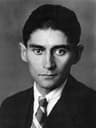
Kafka's Letter to His Father is a 45-page typewritten indictment addressed to Hermann Kafka in November 1919, never delivered and published posthumously. Its central mechanism is forensic: Kafka builds a 'lawyer's letter' that documents his father's emotional abuse through accumulated evidence—the night of crying for water, the humiliation in front of customers, the father's contempt for his son's friends and writing. The letter's distinctive claim is that the father's power was never physical but rhetorical, and that Kafka's adult paralysis—his failure to marry, to leave home, to become the man his father demanded—is the direct product of a fear instilled in childhood and never dispelled.
Key Insights
✦What is the central mechanism of the Letter, and what does it reject?
The Letter's mechanism is forensic accumulation. Kafka does not present a single grievance but builds a case, moving from his earliest memory—crying for water at night and being carried outside in punishment—through the humiliations of childhood and adolescence to his adult failures. He explicitly describes the text as a 'lawyer's letter' full of 'lawyerly ruses' aimed at refuting his father's reproaches with a 'system that would be fully convincing' . What the Letter rejects is the father's own narrative: that he worked hard, sacrificed everything, and produced a son who lived 'like a lord' in ingratitude. Kafka inverts this account, arguing that the father's sacrifices were accompanied by a contempt that paralyzed the son, and that the 'lordly' life was a cage built by fear.
✦Why was the Letter never delivered, and how did it reach publication?
According to Max Brod, Kafka gave the letter to his mother, Julie, to pass to his father, but she never delivered it and returned it to Kafka . The manuscript remained among his papers. It was first published posthumously in 1952 in Die Neue Rundschau, nearly thirty years after Kafka's death . A book edition followed, and the first English translation by Ernst Kaiser and Eithne Wilkins appeared in 1954 in the Schocken collection Dearest Father: Stories and Other Writings . The non-delivery is not incidental to the text's meaning. Kafka wrote it knowing it might never be read by its addressee, which means the Letter functions simultaneously as a private reckoning and a literary construction—a case argued before an imaginary court.
✦How does the Letter relate to Kafka's fiction, particularly The Judgment and The Metamorphosis?
The Letter is the autobiographical substrate of Kafka's central literary obsession: the father who condemns and the son who accepts the condemnation. The Judgment, written seven years earlier, stages a father's arbitrary death sentence and a son's immediate self-execution; the Letter provides the psychological grammar of that scene. The Metamorphosis similarly turns on a son whose worth to his family is entirely instrumental, and whose rejection follows inevitably once he can no longer work. Reading the Letter alongside the fiction does not 'explain' the stories away, but it shows how rigorously Kafka transformed personal material into literary form. The Letter is the raw material; the fiction is the finished architecture.
✦What does the Letter reveal about the role of writing in Kafka's relationship with his father?
Writing is both the subject of the conflict and the means by which Kafka attempts to resolve it. His father despised his literary interests as impractical and effeminate; Kafka's absorption in writing was a withdrawal from the family business and from the masculine world his father represented. The Letter is therefore an attempt to use the very activity his father condemned as the instrument of accusation and self-defense. Kafka describes his writing as a 'little island' he occupied alone, the one domain in which he was not paralyzed by his father's dominance . The Letter is the most sustained attempt to bring that island into the father's territory—and it failed, because it was never sent.
✦How have translators handled the Letter's title and tone, and what do those choices reveal?
The German title Brief an den Vater is straightforward, but English translations have varied. The 1954 Kaiser and Wilkins translation was published under the collection title Dearest Father, which softens the forensic tone of the original opening address. A 2008 translation by Hannah and Richard Stokes was also published as Dearest Father . Karen Reppin's 2016 translation, published in Prague, used Letter to Father . The choice matters because 'Dearest Father' frames the text as a personal appeal, while 'Letter to His Father' preserves its status as a document addressed to a specific man against whom a case is being made. The Letter's opening word in German is 'Lieber Vater'—literally 'Dear Father'—but the body of the text is anything but affectionate.
✦What is the Letter's relationship to Kafka's own description of his writing as a form of self-therapy?
Kafka and his commentators have both described the Letter as an attempt at self-therapy. Ritchie Robertson writes that the letter is 'first and foremost an attempt at self-therapy,' a means of making sense of the relationship in order to distance himself from it . This framing is useful but incomplete. The Letter is therapeutic in its method—it organizes experience into a coherent narrative—but it is also an accusation, and Kafka does not pretend otherwise. The final pages, which Kafka never typed up, oscillate between self-abasement and defiant self-assertion, as if the therapeutic work and the accusatory work are inseparable. The Letter heals nothing; it constructs a version of the past that Kafka could live with, and it does so by assigning blame with lawyerly precision.
Wealthy Psyche is an intellectual archive. We do not host, distribute, or sell book copies — physical or digital. We provide structured knowledge to help you think better, faster.