


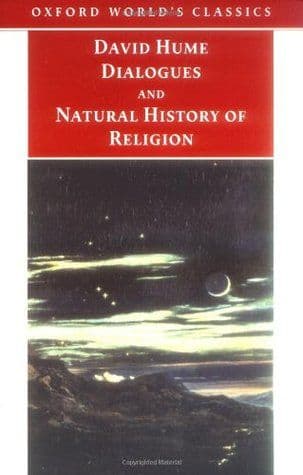
The Natural History of Religion
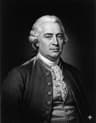
Hume's dissertation advances a naturalistic, conjectural history of religious belief: religion originates not in reason or philosophical argument but in fear and ignorance, producing polytheism first, with monotheism emerging later through competition and flattery. The work's distinctive mechanism is its inversion of the standard sacred history—polytheism is primary, monotheism derivative—and its psychological account of theism's instability, as the mind oscillates between anthropomorphic idolatry and abstract refinement. Hume concludes that popular religion corrupts morality and that monotheism breeds intolerance.
Key Insights
✦What is the central claim of The Natural History of Religion, and what does it reject?
The work's central claim is that religious belief originates not in reason or philosophical argument but in the passions—particularly fear of uncontrollable natural events—and that polytheism is the primary, original form of religion. Hume explicitly rejects the rationalist and Christian apologetic view that monotheism is humanity's earliest and most natural religion, and he rejects the argument from design as the actual cause of popular belief. He also inverts the standard hierarchy: while conceding that philosophical theism is intellectually superior to vulgar polytheism, he argues that polytheism was relatively tolerant whereas monotheism generates dogmatism and intolerance. The work is a naturalistic, conjectural history rather than a theological treatise.
✦What specific framework did Hume introduce, and how has it influenced later thought?
Hume pioneered a naturalistic, psychological account of religion's origins and development, treating religious belief as a product of human nature and social conditions rather than divine revelation or rational inference. He employed what Dugald Stewart later called 'conjectural history,' reconstructing the probable development of religious ideas from primitive fear to polytheism to monotheism . This approach—explaining religion as a natural phenomenon subject to empirical and psychological investigation—became foundational for later anthropological and sociological studies of religion. Hume's argument that monotheism arises through competition among deities and the flattery of worshippers seeking to elevate their own god above rivals anticipates later theories of religious evolution and the social functions of belief.
✦How does The Natural History of Religion relate to Hume's Dialogues Concerning Natural Religion?
The two works are complementary but distinct in aim. The Dialogues, written around the same period but published posthumously in 1779, attacks the rational foundations of theism—specifically the argument from design—by demonstrating that the evidence of the universe cannot support inferences about a benevolent, omnipotent creator . The Natural History brackets the question of whether theism is rationally defensible and instead asks why people believe at all, tracing belief to psychological causes. Together they constitute Hume's two-pronged critique: the Dialogues undermines the intellectual case for natural religion, while the Natural History explains the persistence of religion despite its lack of rational foundation. Hume suppressed the Dialogues during his lifetime but published the Natural History in 1757, provoking immediate controversy.
✦What was the publication history of the work, and why was it controversial?
The Natural History of Religion first appeared in 1757 as the opening essay in Four Dissertations, published by A. Millar in London . The publication was fraught: Hume withdrew two essays on religion (on suicide and the immortality of the soul) under pressure, and the volume's dedication to John Home was cancelled after objections . The work immediately provoked hostile responses. William Warburton, later Bishop of Gloucester, wrote to Millar urging suppression, calling Hume's mind 'wickeder' than any he had known and accusing him of 'establishing Atheism' . A pamphlet attack, largely written by Warburton and published under Richard Hurd's name, followed. Hume noted in his autobiography that the work's first reception was 'rather obscure' apart from this attack. The work was later incorporated into editions of his Essays and Treatises.
✦What is a common misconception about the work's argument regarding monotheism and polytheism?
A frequent misreading assumes Hume simply prefers polytheism to monotheism or that he regards monotheism as an advance. In fact, his position is more complex. He concedes that philosophical theism—the idea of a perfect, infinite, benevolent creator—is intellectually superior to the crude anthropomorphism of pagan polytheism. His critique targets popular religion in all its forms, which he regards as corrupting to morality regardless of whether it is polytheistic or monotheistic. What he does argue is that polytheism was relatively tolerant because it admitted multiple deities, whereas monotheism's exclusive claims generate persecution. The 'flux and reflux' of the human mind between anthropomorphism and abstract refinement means that theism is inherently unstable, constantly sliding back toward idolatry . The work is not a defense of polytheism but a diagnosis of religion's psychological roots.
✦How has the work's argument been received by later scholars, and what are the main criticisms?
The work is widely recognized as a pioneering contribution to the naturalistic study of religion. A mid-twentieth-century assessment called it 'truly a work of scholarship' and credited Hume with being 'the first great modern to treat of it systematically,' noting that much modern thinking on the subject derives from it . The Stanford Encyclopedia of Philosophy describes it as offering a 'philosophical or conjectural history' that exposes the nonrational origins of religion and the pathology of its current forms . Critics have questioned the conjectural method itself—the reconstruction of primitive religion from psychological principles rather than evidence—and some have challenged Hume's claim that polytheism was the original religion, though Christian thinkers of his own time were surprisingly willing to accept the historical priority of polytheism without difficulty .
✦What is the textual history of The Natural History, and which edition should scholars use?
The original manuscript of the Natural History is lost, though bound proof sheets survived long enough to be used by Green and Grose in the nineteenth century . The work was reprinted eight times with Hume's own corrections during his lifetime. A. Wayne Colver's 1976 edition for Oxford's Clarendon Press based its text on the earliest printed version of 1757 and recorded all variants in its critical apparatus . The definitive modern scholarly edition is Tom L. Beauchamp's critical edition for the Clarendon Hume series, published in 2007, which includes A Dissertation on the Passions alongside the Natural History and provides extensive historical and textual annotation . Readers using older editions should be aware that some cheap nineteenth-century reprints mutilated the text, suppressing passages deemed irreligious .
Wealthy Psyche is an intellectual archive. We do not host, distribute, or sell book copies — physical or digital. We provide structured knowledge to help you think better, faster.