



Acaranga Sutra
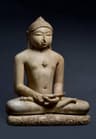
The Acaranga Sutra, the first and linguistically oldest Anga of the Svetambara Jaina canon, is organized around a single governing concern: the meticulous regulation of monastic conduct as the practical realization of nonviolence. Its distinctive mechanism is not abstract ethics but concrete, almost forensic prescriptions—how a mendicant walks, speaks, begs, and restricts possessions—each framed to prevent harm to even the smallest forms of life. The text also preserves the earliest extended account of Mahavira's own austerities, making it a foundational witness to Jain ascetic practice rather than a systematic treatise.
Key Insights
✦What makes the Acaranga Sutra distinctive among the Jaina Agamas?
The Acaranga is not a doctrinal compendium but a conduct manual, and its specificity sets it apart. Where other Angas address metaphysics, polemics, or cosmology, the Acaranga focuses almost exclusively on the bodily and verbal discipline of the mendicant. It regulates the mode of begging, the handling of the alms bowl, the manner of walking to avoid crushing insects, the quantity of food consumed, and the restriction of possessions. This granular attention to conduct is the text's signature contribution: nonviolence is not asserted as a principle but operationalized as a set of repeatable practices. It is also the oldest Jain text linguistically, preserving an archaic Ardhamagadhi form .
✦How does the Acaranga's account of Mahavira differ from later hagiographies?
The Acaranga preserves what is generally regarded as the earliest extended narrative of Mahavira's ascetic career, emphasizing his endurance of severe austerities and indifference to bodily comfort. Unlike the Kalpa Sutra, which develops a more elaborate biographical and cosmological frame, the Acaranga's Mahavira is primarily a model of practice rather than a miraculous figure. The text describes his penances, his exposure to harsh conditions, and his equanimity under duress. This relative restraint in narration, coupled with the text's antiquity, makes it a crucial source for reconstructing early Jain understandings of what constituted authentic asceticism before later hagiographic elaboration.
✦What is the textual relationship between the Acaranga and the Digambara tradition?
The Acaranga is a Svetambara canonical text. The Digambara tradition does not recognize the existing recension, holding that the original Angas were lost. The Digambara Mulachara is traditionally regarded as derived from the original Acaranga and addresses monastic conduct from a Digambara perspective. The extant Svetambara text was recompiled and edited by Devardhigani Kshamashraman at the Valabhi council, traditionally dated about 980 years after Mahavira's death, though the core of the first book is much older . This editorial mediation is essential context: the Acaranga as read today is not a verbatim transcript of Mahavira's words but a redacted canonical text.
✦How have modern editors differed in their treatment of the Acaranga's Prakrit?
Hermann Jacobi's 1882 edition and 1884 translation were followed by Walther Schubring's 1910 edition of the first Srutaskandha, and the two differ markedly in editorial method. Schubring applied Prakrit grammatical rules associated with Maharashtri, systematically eliding medial consonants, whereas Jacobi retained manuscript readings that preserved archaic forms. K. R. Chandra has argued that Schubring's approach converted the original Ardhamagadhi into a later Maharashtri-influenced text and that Jacobi's edition is linguistically more faithful to the manuscripts . This is not a minor philological quibble: the linguistic form of the Acaranga is central to dating it and situating it within the history of Middle Indo-Aryan.
✦How does the Acaranga relate to Umasvati's Tattvartha Sutra?
The relationship is one of historicization and systematization. The Acaranga presents Jain physics and ethics in a diffuse, practical mode, discussing elemental bodies and harm in the context of monastic conduct without a unified philosophical apparatus. Umasvati's Tattvartha Sutra, composed centuries later, systematizes Jain metaphysics with a developed atomic theory and a concise doctrinal framework. Where the Acaranga describes what a monk must do, the Tattvartha explains the ontological categories that make those practices intelligible. Reading the two together shows the trajectory of Jain thought from conduct-centered canonical literature to scholastic philosophy .
✦What is the most common misreading of the Acaranga's ahimsa?
A frequent oversimplification treats the Acaranga's nonviolence as a generalized ethical principle that can be detached from its monastic context. In the text, ahimsa is not primarily a universal moral law addressed to all persons; it is a vocational discipline for mendicants, enforced through minute rules about movement, speech, and consumption. The famous passage declaring that no living being should be harmed is embedded within this regulatory framework, not presented as a standalone philosophical axiom. Reading the Acaranga as a treatise on universal ethics obscures its function as a training manual for a specific ascetic community and flattens the text's distinctive contribution.
✦How reliable is Jacobi's English translation of the Acaranga?
Jacobi's 1884 translation, published by Clarendon Press as volume 22 of the Sacred Books of the East, remains the standard complete English rendering and has been reprinted by Motilal Banarsidass and Dover . It is careful and scholarly, based on his own Prakrit edition and informed by traditional commentaries. Its limitations are those of its era: it predates Schubring's textual work and the subsequent philological debates about Ardhamagadhi, and its interpretive choices reflect nineteenth-century assumptions. Later scholars have refined specific readings, but no full replacement translation has superseded it. For readers without Prakrit, Jacobi remains the indispensable entry point, though his renderings should be checked against more recent scholarship where precision matters.
Wealthy Psyche is an intellectual archive. We do not host, distribute, or sell book copies — physical or digital. We provide structured knowledge to help you think better, faster.