


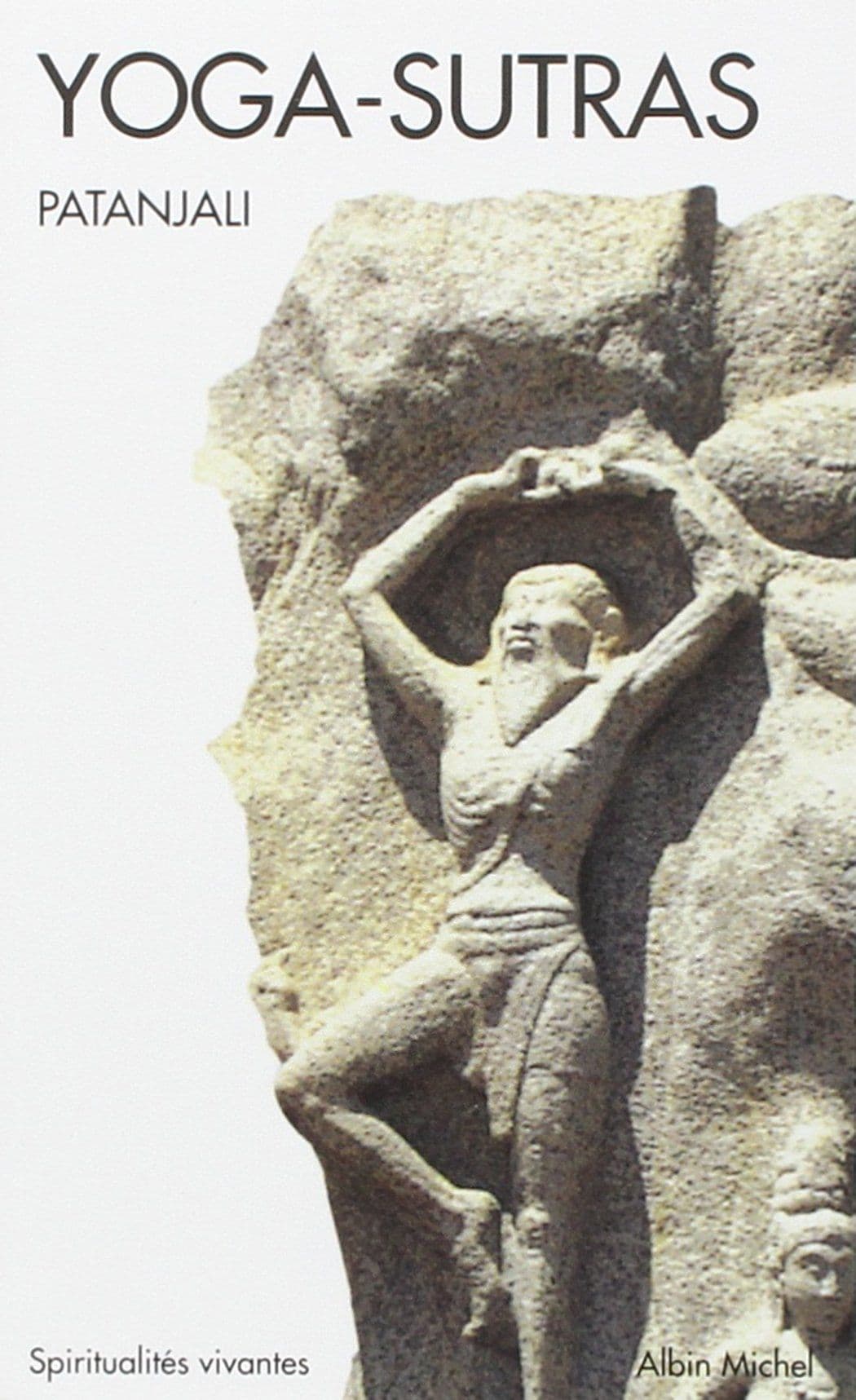
Yoga Sutras

The Yoga Sutras is a compact treatise of fewer than two hundred aphorisms that defines yoga as the cessation of the fluctuations of the mind (citta-vṛtti-nirodha) and maps a systematic path to liberation through the eight limbs. Its distinctive mechanism is not the promotion of physical postures—the text devotes only a few sutras to āsana—but a dualist metaphysics of puruṣa (pure consciousness) and prakṛti (matter), in which suffering arises from the misidentification of the seer with the seen. The text's authority rests less on its obscure verses than on the commentarial tradition, particularly Vyāsa's Bhāṣya, which became inseparable from the sutras.
Key Insights
✦What is the central claim of the Yoga Sutras, and what does it reject?
The text's governing definition is that yoga is the cessation (nirodha) of the fluctuations of the mind (citta-vṛtti), and that when this cessation is achieved, the seer abides in its own nature . What the Yoga Sutras rejects is the ordinary identification of consciousness with mental content—the mistaken notion that the self is its thoughts, perceptions, and afflictions. Liberation (kaivalya) is not the annihilation of the mind but the isolation of pure consciousness (puruṣa) from the misidentification with matter (prakṛti). This dualist framework distinguishes Patañjali's project from non-dual systems: the goal is not union with a universal principle but the discriminative recognition (viveka) that puruṣa has never truly been bound.
✦Is the Yoga Sutras a unified work by a single author, or a compilation?
This is a genuine scholarly controversy. Some scholars have argued that the text was patched together from multiple earlier sources, while Georg Feuerstein argued cogently that it is a unified discourse . More recently, textual-critical work has proposed that the Yoga Sutras as received may be a composite of distinct parts: a core by Patañjali (Part P), an imitator's addition of a minor eightfold path (Part B), a section on siddhis (Part C), and a gatherer's miscellanies (Part D) . This redactional hypothesis suggests that the text's apparent inconsistencies reflect layered composition rather than a single authorial vision, though the traditional attribution to Patañjali remains the basis for all commentarial reading.
✦Did the same Patañjali write both the Yoga Sutras and the Mahābhāṣya?
The traditional identification of the grammarian Patañjali (author of the Mahābhāṣya) with the yoga author rests on late evidence. The oldest external testimony to this identity is a stanza from Bhoja's Rājamārtaṇḍa, which is not earlier than the tenth century CE—a thousand years after the grammarian . A comparison of philosophical concepts reveals inconsistencies: the discussion of substance (dravya) in the Yoga system and in the Mahābhāṣya defines the term differently and in incompatible ways . This suggests that the two Patañjalis are distinct figures, and the tradition of their identity is a later scholarly construction rather than a historical fact.
✦What is the relationship between the Yoga Sutras and Vyāsa's Bhāṣya?
Most scholars regard the Yoga Bhāṣya, attributed to Vyāsa, as an integral part of the Pātañjalayogaśāstra rather than a separate commentary . Early commentaries such as the Vivaraṇa treat sutra and bhāṣya as a single treatise, and authors including Śrīdhara and Abhinavagupta considered Patañjali the author of both layers . The idea that Vyāsa was a distinct author of the Bhāṣya appears to originate with Vācaspatimiśra's Tattvavaiśāradī in the tenth century, and even then his attitude was ambiguous . For readers, this means the Yoga Sutras as traditionally studied is not a bare text but a sutra-commentary complex in which Vyāsa's prose supplies much of the doctrinal content.
✦How did the Yoga Sutras become the iconic text of modern yoga, and is that status historically accurate?
David Gordon White's reception history demonstrates that the Yoga Sutras was virtually forgotten in India for centuries and maligned when first discovered in the West . Its elevation to iconic status—and translation into more than forty languages—occurred only in the past forty years, largely through English-language revivals in Europe and America . The text itself devotes minimal attention to physical postures (āsana), which occupy only a few sutras, and its goal of isolation (kaivalya) bears little resemblance to the embodied practice of contemporary postural yoga. White's account shows that the Yoga Sutras's current prestige is a modern construction, not a continuous inheritance from classical India.
✦What are the main English translations of the Yoga Sutras, and how do they differ?
English translation history begins with an indirect rendering: William Ward's early nineteenth-century version was based on an oral commentary rather than the Sanskrit text and was criticized for insufficient philology . The first complete scholarly translations were those of Ballantyne and Govind Shastri (gathered in 1882) and Rājendralāla Mitra (1883), followed by J. H. Woods's Harvard Oriental Series edition in 1914, which remains a standard scholarly reference . Modern translations vary widely in interpretation: Rama Prasād rendered samādhi as 'trance' (conceptually problematic), Jhā as 'meditation' (also imprecise), and Woods as 'concentration' (closer) . A recent Harrassowitz edition (2025) applies textual criticism to reconstruct the Urtext, offering a new translation based on source-critical methods .
Wealthy Psyche is an intellectual archive. We do not host, distribute, or sell book copies — physical or digital. We provide structured knowledge to help you think better, faster.