



Uttaradhyayana Sutra
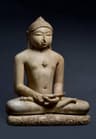
The Uttaradhyayana Sutra is a composite Mulasutra of the Svetambara Jaina canon, traditionally regarded as Mahavira's final sermon. Its distinctive character lies in its pedagogical function: rather than systematic doctrine, it assembles 36 chapters of verse and prose—disciplinary instructions, ascetic ballads, and legendary exempla—designed to form a young monk in Jain conduct. The text is especially known for its narratives redefining brahminhood by conduct rather than birth, and for chapters that parallel Buddhist Jataka literature.
Key Insights
✦What is the central pedagogical purpose of the Uttaradhyayana Sutra?
Unlike Agamas oriented toward doctrinal polemic, the Uttaradhyayana is structured as a curriculum for a new monastic. Hermann Jacobi, its first English translator, characterized its aim as instructing a young monk in his principal duties, commending the ascetic life through both precepts and examples, and warning him against the dangers of religious life. This is why the text opens with a chapter on vinaya—discipline and deference to a preceptor—before moving through doctrinal essentials, monastic rules, and finally a series of legendary biographies illustrating renunciation. The composite structure serves formation rather than systematic theology.
✦How does the Uttaradhyayana redefine 'brahmin' against Vedic ritual tradition?
Two chapters, the Harikesiya and the Yajniya, stage encounters between Jain mendicants and brahmin householders performing Vedic sacrifice. In each, the monk is refused alms and abused, then responds by redefining brahminhood in terms of ethical conduct rather than birth or ritual performance. The true brahmin is one free from love, hatred, and fear, who injures no living being and takes nothing not given. This internalization of sacrifice and conduct-based redefinition of status was a significant move in early Jain self-articulation against brahminical claims, making caritra rather than jati the measure of religious worth.
✦What is the relationship between the Uttaradhyayana and Buddhist Jataka literature?
Several chapters have close parallels in Pali Jataka tales. The Harikesa story (chapter 12) closely resembles the Matanga Jataka (no. 497); the Citta and Sambhuta legend (chapter 13) parallels the Citta-Sambhuta Jataka (no. 498); and the Isukara chapter (14) has been traced by Ernst Leumann to the Hutthipala Jataka (no. 509). Winternitz noted that the oldest nucleus of the Uttaradhyayana resembles the Suttanipata in character. These parallels indicate a shared pool of ascetic poetry circulating in ancient India, adapted independently by Jain and Buddhist compilers rather than direct borrowing in either direction.
✦How reliable is the tradition that this was Mahavira's final sermon?
Jain tradition holds that Mahavira delivered the 36 chapters of the Uttaradhyayana without any question being posed, and that while expounding a 37th chapter, the Pradhana, he attained liberation. This narrative confers immense prestige on the text as the Teacher's last words. However, modern scholarship regards the work as a compilation of material from different periods rather than a single delivered discourse. Jacobi and Winternitz both treated it as a composite of old ballads, doctrinal verses, and monastic rules. The 'final sermon' framing is best understood as a traditional claim about the text's authority, not as a historical account of its composition.
✦How faithful is Hermann Jacobi's translation, and what editions exist?
Jacobi's translation, first published by Clarendon Press in 1895 as volume 45 of the Sacred Books of the East, remains the standard complete English rendering. It was based on the traditional commentaries and benefited from his broader philological work on Jain texts. The translation has been reprinted many times, including by Motilal Banarsidass and Dover, indicating its enduring scholarly utility. Like any nineteenth-century translation, it reflects its era's assumptions, but Jacobi's careful rendering of the Prakrit and his extensive introduction remain foundational. Later scholarship has refined specific points but has not replaced his translation as the primary English access to the text.
✦What misconception about the Uttaradhyayana's unity should readers avoid?
A common oversimplification treats the Uttaradhyayana as a single unified composition delivered by Mahavira, and therefore reads every chapter as expressing one consistent doctrinal voice. In fact, the text is a compilation drawing on multiple genres and periods: monastic rule material, dogmatic verses on karma and the four essentials, and ascetic ballads that circulated widely and appear in Buddhist and brahminical literature as well. Recognizing this composite character is essential for interpretation—passages that seem inconsistent or digressive often reflect the text's nature as an anthology assembled for pedagogical use rather than a single authorial argument.
Wealthy Psyche is an intellectual archive. We do not host, distribute, or sell book copies — physical or digital. We provide structured knowledge to help you think better, faster.