


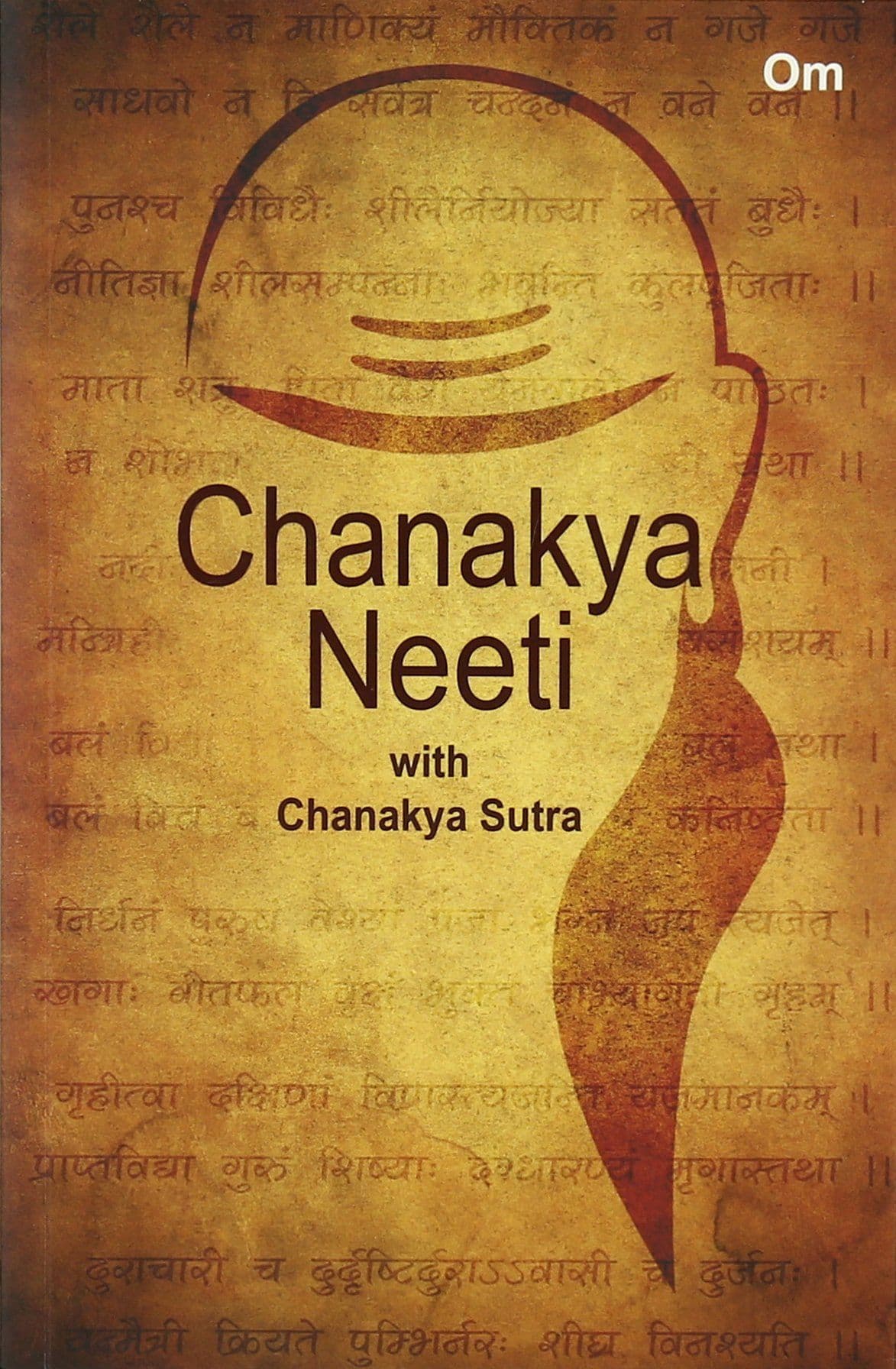
Chanakya Niti

Chanakya Niti is not a single authored treatise but a fluid textual tradition of Sanskrit maxims (niti) attributed to Chanakya, transmitted in multiple recensions that vary in verse count and content. Its central concern is practical wisdom for worldly life—duty, wealth, friendship, speech, and statecraft—presented as memorable aphorisms rather than systematic philosophy. The work's authority derives from the legendary figure of Chanakya, the supposed kingmaker of the Mauryan empire, though the attribution is traditional and the textual boundaries of the corpus remain unsettled.
Key Insights
✦What is Chanakya Niti, and how does it relate to the Arthashastra?
Chanakya Niti is a collection of Sanskrit maxims (niti) on practical wisdom—covering duty, wealth, friendship, speech, and conduct—attributed to Chanakya. It is distinct from the Arthashastra, which is a systematic treatise on statecraft and political economy. The two works belong to different genres: the Arthashastra is a coherent prose treatise, while the Niti is an aphoristic tradition transmitted in multiple versions. Modern compilations often present them together as expressions of Chanakya's wisdom, but scholarship treats them as separate textual traditions. The Arthashastra's own authorship is debated, and its identification with Chanakya is a late development, not a secure historical fact .
✦Is the Chanakya Niti a single authentic work by the historical Chanakya?
No. Chanakya Niti is better understood as a textual tradition than as a single authored book. A scholarly edition published by the Vishveshvaranand Vedic Research Institute identified six distinct versions of Chanakya's maxim collections, including the Vriddha-Chanakya (in ornate and simple versions), the Chanakya-Niti-Shastra, the Chanakya-Sara-Samgraha, the Laghu-Chanakya, and the Chanakya-Raja-Niti-Shastra . These versions vary in verse count and content, and attempts to reconstruct an original 'Ur-text' remain speculative. The attribution to Chanakya is traditional, but the historical connection between the legendary figure and these collections cannot be verified. Readers should treat 'Chanakya Niti' as a label for a family of related texts rather than a fixed work.
✦Why is the attribution of these texts to Chanakya historically uncertain?
The uncertainty stems from two related problems. First, even the Arthashastra—the work most confidently linked to Kautilya—has been shown by scholars such as Thomas Trautmann to be a composite product of multiple authors and redactors, and the identification of Kautilya with Chanakya appears to be a relatively late innovation, likely post-dating the second century CE . Second, the Niti collections are even more fluid: they were transmitted orally and in manuscript over centuries, with verses added, removed, and rearranged. The name 'Chanakya' functioned as a label of authority for practical wisdom, much as 'Aesop' did for fables, rather than as a reliable indicator of single authorship. The historical Chanakya, if he existed as tradition describes, left no verifiable autograph.
✦What themes do the Chanakya Niti maxims address?
The maxims address the practical conduct of life: how to choose friends and associates, how to speak and when to remain silent, the dangers of wealth and the value of knowledge, duties toward family and rulers, and the cultivation of character. A contemporary academic study describes the Niti as emphasizing virtue and values as the path to material, psychological, moral, and spiritual development, with 'good character' as the cornerstone of personal effectiveness and leadership . The tone is pragmatic and worldly rather than devotional or metaphysical. Unlike the Arthashastra's focus on the state, the Niti is addressed to the individual navigating social and material life.
✦How have modern publications shaped the reception of Chanakya Niti?
Modern English-language publications have transformed a fluid manuscript tradition into accessible, standardized books, often merging the Niti with the Arthashastra and with 'Sutras' under a single Chanakya brand. Popular editions such as those from Diamond Pocket Books present 'Chanakya Neeti' as a set of tenets for success in life, with translations and commentary aimed at general readers . This packaging has given the tradition wide reach but has also obscured its textual complexity: the boundaries between what is 'Chanakya Niti,' what is 'Chanakya Sutras,' and what is genuinely from the Arthashastra are often blurred. Readers seeking scholarly accuracy should consult the Vishveshvaranand edition or studies of the individual recensions rather than popular compilations.
✦What is a common misuse of Chanakya's name in contemporary discourse?
A pervasive misuse is the attribution of fabricated or unverifiable quotations to Chanakya, often for political or rhetorical purposes. Fact-checking organizations have documented viral quotes—such as 'when the entire opposition unites, the king is honest'—that appear in no authentic text and contradict positions found in the Arthashastra . This phenomenon exploits Chanakya's reputation as a symbol of shrewd insight to lend authority to modern claims. The problem is compounded by the fluidity of the Niti tradition itself: because there is no single canonical text, almost any pithy saying can be presented as 'Chanakya Niti' without immediate contradiction. Verification requires tracing a quotation to a specific edition and verse, which popular attributions rarely provide.
Wealthy Psyche is an intellectual archive. We do not host, distribute, or sell book copies — physical or digital. We provide structured knowledge to help you think better, faster.