



Collected Papers of Charles Sanders Peirce
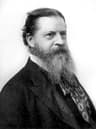
This eight-volume edition, published by Harvard University Press between 1931 and 1958, assembled Peirce's published essays and unpublished manuscripts into the first comprehensive corpus of his philosophy. Edited by Charles Hartshorne and Paul Weiss (volumes 1–6) and Arthur W. Burks (volumes 7–8), the collection is organized thematically rather than chronologically: logic, mathematics, pragmatism, metaphysics, and reviews. Its paragraph-numbering system (CP volume.paragraph) became the standard citation apparatus for Peirce scholarship, and the edition remains the primary vehicle through which his semiotic, pragmaticism, and evolutionary cosmology reached later readers.
Key Insights
✦What is the Collected Papers, and why does it matter for Peirce scholarship?
The Collected Papers is the eight-volume Harvard University Press edition that first gathered Peirce's published essays and a large selection of his unpublished manuscripts into a single corpus . Before its appearance, Peirce's philosophy was scattered across journals, lecture notes, and manuscripts that few scholars could access. The edition's most consequential innovation was its paragraph-numbering system: every passage is cited as CP followed by volume and paragraph (e.g., CP 5.411), a convention that remains standard in Peirce scholarship today . The first two volumes appeared in 1931, seventeen years after Peirce's death, and a contemporary review described the publication as "a notable event in the intellectual history of America" .
✦Who edited the Collected Papers, and how were the volumes divided?
Charles Hartshorne and Paul Weiss edited volumes 1 through 6, published between 1931 and 1935. Arthur W. Burks edited volumes 7 and 8, which appeared in 1958 . The organization is thematic rather than chronological. Volume 1 covers principles of philosophy; volume 2, elements of logic; volume 3, exact logic; volume 4, the simplest mathematics; volume 5, pragmatism and pragmaticism; volume 6, scientific metaphysics; volume 7, science and philosophy; and volume 8, reviews, correspondence, and bibliography . This thematic arrangement was designed to present Peirce's system as coherent, but it also separated texts that Peirce had written in close succession, a decision later editors have sought to correct.
✦What are the main criticisms of the Collected Papers as an edition?
The most persistent criticism concerns the thematic arrangement, which cuts across the chronological development of Peirce's thought. Hartshorne and Weiss acknowledged in their editorial preface that selection was difficult and that some manuscripts were included despite the editors' certainty that Peirce "would not have printed them in their present condition" . The edition also excluded a substantial portion of Peirce's manuscripts, and its dating of undated papers has been revised by later scholarship. These limitations motivated the Peirce Edition Project, founded in 1976, to produce a chronological edition (Writings of Charles S. Peirce) intended to supersede the Collected Papers for scholarly purposes . Nonetheless, the CP remains the most widely cited Peirce edition.
✦How does the Collected Papers relate to the later chronological edition, Writings of Charles S. Peirce?
The Writings is a chronological edition undertaken by the Peirce Edition Project at the University of Indianapolis, begun in 1976 and still incomplete. Its editorial principles differ sharply from the Collected Papers: where the CP organizes material by topic, the Writings presents texts in the order Peirce wrote them, with fuller textual apparatus and annotation . The two editions are complementary rather than simply rival. Scholars often cite the CP for its paragraph system and accessibility, while consulting the Writings for accurate dating and textual context. The existence of both editions reflects a broader tension in Peirce studies between the convenience of the thematic CP and the historical precision of a chronological arrangement.
✦What role did the Collected Papers play in the reception of Peirce's pragmatism?
The CP was the primary vehicle through which Peirce's pragmatism became available as a systematic body of work rather than a scattered set of essays. Volume 5, "Pragmatism and Pragmaticism," collected his Monist essays of 1905–06, including "What Pragmatism Is" and "Issues of Pragmaticism," alongside earlier and later statements . The edition thus made it possible for readers to trace the divergence between Peirce's pragmaticism and the Jamesian pragmatism that had dominated public discussion. A 1937 review by John Dewey in The New Republic drew further attention to the collection, though Dewey's reading of Peirce was shaped by his own pragmatist commitments . The CP's availability contributed substantially to the post-war revival of Peirce as a canonical figure.
✦Is there a common misconception about the Collected Papers that readers should avoid?
A frequent misconception is that the CP represents Peirce's final or definitive intentions for his corpus. It does not. Peirce died in 1914 without having assembled his manuscripts into books, and the editors made substantial decisions about inclusion, arrangement, and even emendation. The editorial preface notes that some papers contain "infelicities of style" that Peirce himself would not have allowed to remain in final published form . Readers should therefore treat the CP as a scholarly construction—an indispensable one, but not a transparent window into Peirce's intentions. For any text where precise wording or dating matters, consulting the Writings or the manuscripts themselves is advisable.
Wealthy Psyche is an intellectual archive. We do not host, distribute, or sell book copies — physical or digital. We provide structured knowledge to help you think better, faster.