



The Law of Mind
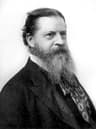
Published in The Monist in 1892, this essay is Peirce's most sustained attempt to state the law governing mental phenomena: ideas spread continuously, lose intensity, and gain generality, forming habits that are themselves living realities. Peirce argues that consciousness extends over an infinitesimal interval of time, that feelings have both intensive and spatial continuity, and that personality is a coordination of ideas rather than a simple substance. The essay extends his synechism—the doctrine that continuity governs all reality—into psychology and metaphysics, treating matter as "effete mind" and law as evolving habit.
Key Insights
✦What is the central claim of "The Law of Mind," and what does it reject?
Peirce argues that mental phenomena are governed by a law of continuity: ideas are not discrete atoms but continuous feelings that spread, affect one another, lose intensity, and acquire generality, thereby forming habits. This law is the psychological expression of synechism, Peirce's broader metaphysical doctrine that continuity governs all reality. The essay rejects the associationist psychology that treats ideas as separable units linked by external relations, and it rejects the substance view of the self according to which personality is a simple, unchanging entity. Instead, personality is a coordination or connection of ideas—itself a general idea, and therefore a living feeling that develops over time and is oriented toward a future it does not fully determine .
✦How does Peirce argue that a past idea can be present to consciousness?
This is the essay's pivotal epistemological argument. Peirce asks how a past idea can be present now, and he rejects the vicarious or representative answer as incoherent: if the past idea is only represented by a present one, the relation between them must exist in some consciousness, but the past idea belonged only to a past consciousness that did not contain the representation. His solution is that consciousness must immediately embrace an infinitesimal interval of time. In that interval, the beginning, middle, and end are directly felt as a continuous spread, and each successive infinitesimal interval overlaps with the one before it. The past is therefore not wholly past; it is "going, infinitesimally past," and the present is connected to the past by a series of real infinitesimal steps .
✦How does "The Law of Mind" relate to Peirce's earlier essay "The Architecture of Theories"?
"The Law of Mind" is the fourth in a series of five essays Peirce published in The Monist between 1891 and 1893, following "The Architecture of Theories" (1891) and "The Doctrine of Necessity Examined" (1892). The earlier essays establish the metaphysical framework of tychism—the reality of absolute chance—and begin to sketch an evolutionary cosmology in which laws are products of growth. "The Law of Mind" extends this project by showing how continuity operates specifically in the mental realm: if chance is real and law is habitual, then mind is the locus where habit-formation is most directly observable. The essay thus supplies the psychological and metaphysical middle term between the cosmological claims of the earlier essays and the ethical-religious culmination of "Evolutionary Love" (1893).
✦What does Peirce mean by calling matter "effete mind," and how does this essay support that claim?
The phrase, which Peirce uses elsewhere but which the argument of "The Law of Mind" underwrites, expresses his objective idealism: matter is not an independent substance opposed to mind but is mind that has become specialized, deadened, and fixed into regular habits. The essay supports this by arguing that the same law—continuity, feeling, and habit-formation—applies to both mental and physical phenomena. Feelings have spatial extension as well as intensive continuity, and the coordination of feelings in a living organism is continuous with the coordination of ideas in a person. If habit is a primary property of mind, Peirce argues, it must equally be a property of matter considered as a kind of mind. The distinction between the psychical and the physical is therefore one of degree and specialization, not of kind .
✦What role did William James's Principles of Psychology play in the development of this essay?
Scholarship has established that Peirce's turn toward a philosophy of feeling and continuity in the early 1890s was shaped by his reading of James's Principles of Psychology, published in 1890. Nathan Houser has noted that many of Peirce's notes from around 1890 seem almost as though they could have been drawn up while reading James's chapter on "The Stream of Thought" . "The Law of Mind" reflects aspects of that chapter, particularly its treatment of thought as a continuous flow. However, Peirce's use of James is transformative rather than derivative: where James describes the stream of consciousness psychologically, Peirce elevates continuity into a metaphysical principle (synechism) and integrates it into his own evolutionary cosmology. James reportedly considered "The Law of Mind" one of Peirce's best papers .
✦Is there a common misconception about "The Law of Mind" that readers should avoid?
A frequent misconception treats the essay as a contribution to empirical psychology, a Peircean precursor to later associationist or connectionist models of mind. But Peirce's aim is metaphysical: he is arguing that continuity is a real feature of the universe, not merely a convenient description of mental associations. The "law" he proposes is not a psychological generalization to be tested experimentally but a principle of synechism that applies to all reality, mind and matter alike. This is why the essay moves so quickly from the temporal structure of consciousness to claims about personality, teleology, and the relation between mind and body. Reading it as empirical psychology misses the cosmological ambition that makes it a central text in Peirce's mature system.
Wealthy Psyche is an intellectual archive. We do not host, distribute, or sell book copies — physical or digital. We provide structured knowledge to help you think better, faster.