


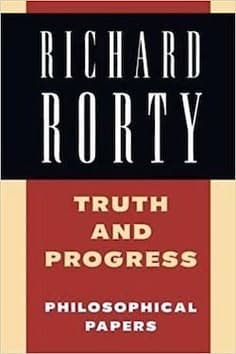
Truth and Progress: Philosophical Papers, Volume 3
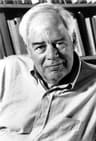
Rorty's central thesis across these essays is that truth is not a goal of inquiry—it is not something we aim at and could in principle reach—but rather a compliment we pay to beliefs that have proved useful within our social practices. The volume's distinctive mechanism is Rorty's consistent application of this anti-representationalist line to named interlocutors: Davidson, Putnam, Searle, Taylor, Dennett, Brandom, McDowell, and Habermas are each engaged on their own terms and then measured against the pragmatist alternative. The collection extends the argument of Philosophy and the Mirror of Nature into moral progress and the historiography of philosophy.
Key Insights
✦What does Rorty mean by denying that truth is a goal of inquiry?
Rorty's claim, developed most directly in the opening essay on Davidson and Crispin Wright, is that inquiry does not aim at truth as a distinct target over and above the resolution of specific problems. We seek beliefs that will let us cope with the world, predict consequences, and coordinate action; when such beliefs succeed, we call them true. Truth is thus a term of commendation, not a property that beliefs approximate. This does not mean Rorty thinks truth is arbitrary or that anything goes—he insists on the difference between warranted assertibility and mere assertion. But he rejects the idea that there is a single, context-independent goal called Truth that inquiry could, in principle, reach.
✦How does the book's structure reflect Rorty's philosophical strategy?
The volume is divided into three parts that trace a deliberate arc. Part I, 'Truth and Some Philosophers,' engages named interlocutors—Davidson, Putnam, Searle, Taylor, Dennett, Brandom, McDowell, Williams—one essay at a time, demonstrating how Rorty's pragmatism plays out in direct confrontation with analytic philosophy of language and mind. Part II, 'Moral Progress,' turns to human rights, cultural difference, feminism, and Havel, showing that the anti-representationalist view of truth has consequences for ethics and politics. Part III, 'The Role of Philosophy in Human Progress,' addresses the historiography of philosophy, Locke, Dewey, Habermas, and Derrida. The structure is cumulative: each part extends the pragmatist argument into a new domain.
✦What does 'Dewey between Hegel and Darwin' contribute to the volume?
This essay is Rorty's most sustained attempt to place Dewey within a genealogy that runs from Hegel's historicism to Darwin's naturalism. Rorty argues that Dewey's achievement was to synthesize these two strands: from Hegel, the insight that thought is shaped by historical and social conditions; from Darwin, the insight that human capacities are continuous with animal adaptation. The result is a naturalistic historicism in which inquiry is a practice of coping rather than a mirroring of reality. The essay is important because it shows Rorty claiming Dewey as a direct precursor of his own anti-representationalism, and it has been influential in subsequent pragmatist scholarship on Dewey's relationship to German idealism.
✦How did contemporary reviewers assess the collection?
The reception was respectful but divided along predictable lines. Charles Taylor's endorsement called it 'Rorty at his best, again and again making us see things from a new, unexpected angle,' while Thomas Nagel, writing in the Times Literary Supplement, recommended it not only to Rorty's admirers but also to 'those who regard him as a leading enemy of reason'—a characteristically double-edged compliment . A 1998 review in the journal Philosophy noted that the journal received a 'surprisingly large proportion' of articles about Rorty, and that 'pretty well all the articles' were 'highly critical,' before perversely assuming that 'there must be something to be said for anyone who attracts widespread hostility' . The collection thus entered a field already polarized around its author.
✦Where does this volume sit in relation to Rorty's other Philosophical Papers collections?
Truth and Progress is Volume 3 of Rorty's Philosophical Papers, following Objectivity, Relativism, and Truth (Volume 1) and Essays on Heidegger and Others (Volume 2). Cambridge University Press presents it as complementing the earlier volumes, and the continuity is substantive: Volume 1 establishes the anti-representationalist position, Volume 2 works it out through Heidegger and Derrida, and Volume 3 brings it into direct engagement with the analytic philosophers—Davidson, Putnam, Brandom, McDowell—who are the volume's primary interlocutors. The collection thus functions as Rorty's most sustained attempt to show that his pragmatism is not a parochial continental import but a position that can be argued for within the terms of mainstream analytic philosophy.
✦Is there a common misreading of Rorty's position in these essays that the volume itself tries to correct?
The most persistent misreading is that Rorty's denial that truth is a goal of inquiry amounts to a denial that truth matters, or that he is indifferent to the difference between justified belief and wishful thinking. The essays in this volume, particularly 'Hilary Putnam and the Relativist Menace' and 'John Searle on Realism and Relativism,' are structured as replies to precisely this charge. Rorty's response is that the critic conflates two distinct claims: that truth is not a goal we can aim at independently of our practices, and that truth is irrelevant to those practices. The first is his pragmatist thesis; the second is a caricature. The volume's repeated engagements with named realist critics are attempts to make this distinction stick.
Wealthy Psyche is an intellectual archive. We do not host, distribute, or sell book copies — physical or digital. We provide structured knowledge to help you think better, faster.