



Formal and Transcendental Logic
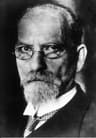
Husserl's central project is to establish that formal logic cannot be self-sufficient: the apophantic logic of consistency (non-contradiction) must be grounded in a logic of truth, and both require a transcendental critique of the subjective acts through which logical formations are constituted. The book distinguishes formal ontology from formal apophantics, shows how the 'logic of truth' introduces material and existential presuppositions that pure formal logic ignores, and argues that the ultimate grounding of logic lies in the transcendental ego's constitutive performances. It is the systematic bridge between the Logical Investigations and the Cartesian Meditations.
Key Insights
✦What is the central claim of Formal and Transcendental Logic, and what does it reject?
Husserl's central claim is that formal logic cannot be a self-sufficient discipline. The 'logic of consistency'—the formal apophantics that studies judgments, proofs, and theories according to their formal validity—must be grounded in a 'logic of truth' that takes account of the material and existential presuppositions of actual knowing. Both, in turn, require a transcendental critique of the subjective acts through which logical formations are constituted . He rejects the assumption, characteristic of mathematical logic, that formal validity can be understood without reference to the intentional performances of a knowing subject. The book argues that even at its most abstract, logic demands an account of the consciousness that produces and validates logical formations.
✦What is the distinction between formal apophantics and formal ontology, and why is it important?
Formal apophantics studies judgments and their formal structures—consistency, consequence, validity—while formal ontology studies the formal categories of objects that judgments are about. Husserl argues that these two disciplines are correlative but distinct, and that the tradition of formal logic has tended to conflate them . The distinction matters because it reveals that the logic of consistency operates with a restricted conception of judgment, one that abstracts from the question of whether the judgment is true of any object. When logic turns to truth, it must acknowledge the material and ontological presuppositions that pure formal apophantics brackets. The book's project is to show how these two dimensions of logic are related through the constitutive work of transcendental subjectivity.
✦How does the book relate to Husserl's Logical Investigations?
Formal and Transcendental Logic is a return to and transformation of the problems Husserl had addressed in the Logical Investigations. In §56, Husserl expresses frustration with interpreters who celebrated the first volume's critique of psychologism while rejecting the phenomenological investigations of the second volume . The later book argues that the Logical Investigations had been 'one-sidedly noetically directed' and had neglected the noematic aspects of meaning . The 1929 work attempts to correct this by developing a full transcendental logic that does justice to both the subjective acts (noesis) and the objective formations (noema) through which logical truth is constituted. It is thus both a continuation and a critical revision of the earlier project.
✦What is the publication and translation history of the work?
Formal and Transcendental Logic was first published in 1929 in volume X of the Jahrbuch für Philosophie und phänomenologische Forschung, edited by Husserl himself, under the subtitle Versuch einer Kritik der logischen Vernunft . The English translation by Dorion Cairns was published by Martinus Nijhoff in The Hague in 1969 . A paperback edition followed, and the work runs 340 pages in the Cairns translation . The critical edition appears as volume XVII of the Husserliana series, edited by Paul Janssen in 1974, which includes supplementary texts and is the basis for scholarly citation .
✦How was the book received by contemporary reviewers and later scholars?
Contemporary reception was muted compared to Husserl's earlier works. A brief notice in Nature in 1969 simply announced the Cairns translation without substantive evaluation . Later scholarship has treated the book as pivotal for understanding Husserl's mature transcendental idealism. One commentator describes it as 'the most important work' for understanding Husserl's development, while another notes that the book is where Husserl most explicitly works out the relation between formal logic and transcendental subjectivity . The book has been influential in phenomenological circles but has had less impact on mainstream philosophy of logic, where Husserl's transcendental approach remains a minority position.
✦What is a common misconception about the book's relationship to psychologism?
A frequent misconception is that Formal and Transcendental Logic softens or abandons Husserl's critique of psychologism from the Logical Investigations. In fact, the book deepens that critique by showing that the rejection of psychologism does not entail the autonomy of logic from subjectivity. Husserl's target is not the appeal to consciousness as such but the reduction of logical validity to empirical psychological processes. The transcendental critique of logic is precisely an account of how objective logical formations are constituted by subjective acts without being reducible to them. The book thus maintains the anti-psychologistic conclusion of the earlier work while rejecting the assumption that logic can be understood without a transcendental investigation of the knowing subject.
Wealthy Psyche is an intellectual archive. We do not host, distribute, or sell book copies — physical or digital. We provide structured knowledge to help you think better, faster.