



Freedom and Nature: The Voluntary and the Involuntary
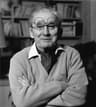
Ricœur's first major work argues that human freedom is not opposed to nature but intelligible only through its reciprocity with the involuntary. Using an eidetic phenomenology that brackets fault and transcendence, he describes deciding, acting, and consenting as structured by motives, powers, and necessities that the will neither invents nor simply suffers. Freedom is an incarnate Cogito's dependent independence—a fragile mediation between voluntary initiative and involuntary givenness, not a sovereign act of pure spontaneity.
Key Insights
✦What is the central claim of Freedom and Nature, and what does it reject?
Ricœur argues that the voluntary and the involuntary are not two separate realms to be reconciled but two poles of a single, intelligible structure. The involuntary has no meaning on its own; only the relation between willing and its bodily, affective, and situational conditions is intelligible. The book rejects Sartre's radical dichotomy between the for-itself's freedom and the in-itself's facticity, insisting instead that freedom is genuinely mine only through its struggle with what it does not choose . It also rejects a substance dualism that would treat mind and body as distinct entities . Freedom emerges as a 'dependent independence,' an incarnate Cogito's mediated consent to necessity rather than a sovereign act of pure spontaneity.
✦What does Ricœur mean by calling this an 'eidetics' of the will, and what does it bracket?
An eidetics is a phenomenological description of essential structures, undertaken within carefully imposed brackets . Ricœur explicitly suspends two dimensions of experience: fault (the reality of evil and failure) and transcendence (the question of God or the absolute). The aim is to describe what willing essentially is—deciding, acting, and consenting—before introducing the distorting reality of fallenness. This bracketing is methodological, not metaphysical: Ricœur is not claiming that fault and transcendence are unreal, only that a pure description of the will's fundamental structures must proceed without them. The later volumes of the Philosophy of the Will, Fallible Man and The Symbolism of Evil, remove these brackets to address human fallibility and evil directly .
✦What role does the body play in the argument, and how does Ricœur differ from Merleau-Ponty?
The body is not an obstacle to freedom but its medium. Ricœur describes motility, habit, emotion, and the unconscious as involuntary structures through which voluntary action becomes possible and concrete. The body is 'the organ of the will' as much as its limit. Marc-Antoine Vallée has shown that Ricœur's project of a willing subject in the world complements Merleau-Ponty's account of perception as the means through which a bodily subject is in the world . Both reject the Cartesian cogito, but Ricœur is more attentive to what exceeds phenomenological description—specifically the question of fault. Once Ricœur moves beyond the will to address evil, Merleau-Ponty ceases to be his primary interlocutor .
✦How does Freedom and Nature relate to the later volumes of Ricœur's Philosophy of the Will?
Freedom and Nature is the first volume of an ambitious project originally conceived in three phases: an eidetics, an empirics, and a poetics of the will . Only the eidetics and a portion of the empirics were published. The second volume appeared in 1960 as two books, Fallible Man and The Symbolism of Evil, which remove the brackets around fault and transcendence . In Fallible Man, Ricœur shifts from describing the mutual reciprocity of voluntary and involuntary to a broader dialectic of human disproportion between finitude and infinitude, locating the possibility of fault in failed mediation . The third volume, the poetics of the will, was postponed indefinitely. Freedom and Nature is thus the foundation upon which Ricœur's later hermeneutic turn was built, even as he moved beyond its strictly eidetic method.
✦How faithful is Erazim Kohák's English translation, and what is the textual history of the edition?
Erazim V. Kohák's translation was first published by Northwestern University Press in 1966, sixteen years after the French original . A new edition appeared in 2007 with a foreword by Don Ihde, retaining Kohák's translation . The translation is generally regarded as serviceable, though Ricœur's dense phenomenological prose presents inevitable difficulties, particularly around terms like 'eidetics,' 'motility,' and 'consent.' The French original, Le Volontaire et l'involontaire, was published by Aubier-Montaigne in 1950 . No major textual controversy surrounds the English edition, but the sixteen-year gap between original and translation meant that Anglophone readers encountered Ricœur's earliest work only after his later hermeneutic turn was already underway.
✦What is a common misreading of the book's claim that freedom and nature are reciprocal?
A common misreading treats the reciprocity of voluntary and involuntary as a harmonious synthesis, as if Ricœur were claiming that freedom and nature fit together without tension. The book's conclusion insists on the opposite: choice appears as a paradox of initiative and receptivity, an 'absolute irruption' that is also relative to motives, values, and bodily conditions . The reciprocity is fragile, not seamless. Ricœur describes human freedom as a 'dependent independence,' and the drama of existence lies precisely in the difficulty of mediating between the two poles. This fragility is what makes failure possible, and it is why the later volumes turn to the question of fault. The unity of the self is a task to be accomplished, not a given structure to be contemplated.
Wealthy Psyche is an intellectual archive. We do not host, distribute, or sell book copies — physical or digital. We provide structured knowledge to help you think better, faster.