



Ideas Pertaining to a Pure Phenomenology and to a Phenomenological Philosophy: First Book (Ideas I)
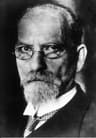
Husserl's central claim is that phenomenology must become a 'presuppositionless' eidetic science of pure consciousness, achieved through the phenomenological and eidetic reductions. The epoché suspends the natural attitude and its thesis of the world's existence, disclosing the transcendental ego as the absolute ground of all meaning and validity. The book introduces the noesis-noema correlation, the distinction between fact and essence, and the thesis that consciousness is intentional through and through. It is the systematic presentation of the transcendental idealism that Husserl had reached after the Logical Investigations, and the work that established phenomenology as a philosophical movement.
Key Insights
✦What is the central claim of Ideas I, and what does it reject?
The central claim is that phenomenology must become a 'presuppositionless' eidetic science of pure consciousness, achieved through the phenomenological and eidetic reductions. The epoché suspends the natural attitude—the unquestioned thesis that the world exists independently of consciousness—and thereby discloses the transcendental ego as the absolute ground of all meaning and validity . Husserl rejects every form of naturalism, including the psychologism he had criticized in the Logical Investigations, because naturalism treats consciousness as a part of the world rather than as the source of the world's sense. The book also rejects the view that phenomenology is a branch of psychology; it is a transcendental science, not an empirical one, and its findings are necessary truths about essences, not contingent facts about mental life.
✦What is the noesis-noema correlation, and why is it central to the book?
The noesis-noema correlation is Husserl's analysis of intentionality into two inseparable moments: the noesis is the act of consciousness—the thinking, perceiving, or judging—while the noema is the object as intended, the correlate of the act. Every noesis has its noema, and every noema is a noema of some noesis . This correlation is central because it allows Husserl to analyze conscious experience without reducing it either to subjective acts alone or to objects alone. The noema is not the real object in the world (which is bracketed by the epoché) but the object precisely as meant, with its sense and modality. The analysis of the noesis-noema structure occupies the third and fourth sections of the book and is the methodological heart of transcendental phenomenology.
✦What is the epoché, and why did it provoke the 'Great Schism' among Husserl's students?
The epoché is the suspension of the natural attitude: the philosopher brackets the question of whether the world exists and turns attention to the pure phenomena given in consciousness. Husserl had first presented the reduction in his 1907 lectures, but Ideas I (1913) was its first full systematic exposition, and it provoked a crisis among his students . Realist phenomenologists such as Adolf Reinach, Max Scheler, and Roman Ingarden objected that the reduction traps consciousness within its own representations and undermines the realist ambitions of the earlier phenomenological project. The 'Great Schism' of 1913 marked the division between transcendental phenomenologists, who followed Husserl into the epoché, and realist phenomenologists, who rejected it. The dispute is one of the most consequential in the history of the movement.
✦What is the relationship between Ideas I and the Logical Investigations?
Ideas I is both a continuation and a critical revision of the Logical Investigations. Husserl had already announced in the Investigations that phenomenology was not psychology, but the earlier work was descriptive and anti-psychologistic rather than explicitly transcendental . The 1913 book makes the transcendental turn explicit: the epoché and the reduction are introduced as the method that grounds all phenomenological analysis. Some scholars argue that the Investigations contain unresolved tensions that led to this turn; the transcendental perspective was Husserl's attempt to overcome the incoherence of a purely descriptive phenomenology that excluded the question of the constitution of objectivity . The later book thus transforms the earlier project, retaining its insights into intentionality while embedding them in a transcendental framework.
✦What is the publication and translation history of Ideas I?
Ideas I was first published in 1913 in volume I of the Jahrbuch für Philosophie und phänomenologische Forschung by Max Niemeyer in Halle . The full German title is Ideen zu einer reinen Phänomenologie und phänomenologischen Philosophie. A second edition appeared in 1922, and a third in 1928. The critical edition was published as Husserliana III/1 and III/2, edited by Karl Schuhmann in 1976, with supplementary texts . The first English translation, by W. R. Boyce Gibson, was published in 1931 under the title Ideas: General Introduction to Pure Phenomenology. The standard modern translation, by F. Kersten, appeared in 1982 from Martinus Nijhoff . A new translation by Daniel Dahlstrom is forthcoming.
✦What is a common misconception about Ideas I's relationship to psychology?
A frequent misconception is that Ideas I is a work of descriptive psychology, a more systematic version of the psychological analyses in the Logical Investigations. Husserl explicitly rejects this reading. Phenomenology is not psychology, not even a priori psychology: it is a transcendental science that studies consciousness as the source of all meaning and validity, not as a region of the empirical world . The epoché brackets the natural attitude in which psychology operates, and the eidetic reduction discloses essences that are not psychological facts. The confusion is understandable because the subject matter of phenomenology is consciousness, which is also the subject matter of psychology. But Husserl's point is that consciousness can be studied in two radically different ways: as a part of nature (psychology) or as the transcendental condition of nature's intelligibility (phenomenology).
Wealthy Psyche is an intellectual archive. We do not host, distribute, or sell book copies — physical or digital. We provide structured knowledge to help you think better, faster.