



Philosophy as a Rigorous Science
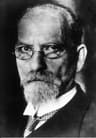
Husserl's central claim is that philosophy must become a rigorous science, but this does not mean modeling philosophy on the natural sciences. His target is naturalism—the view that everything, including consciousness and validity, can be explained by the methods of physics and experimental psychology. Husserl argues that naturalism is self-refuting: it presupposes the very ideal norms of logic and truth it claims to reduce to natural facts. Rigorous science, by contrast, requires a phenomenological analysis of consciousness and its intentional structures, which alone can ground logic, ethics, and knowledge without falling into scepticism or relativism.
Key Insights
✦What is the central claim of 'Philosophy as a Rigorous Science,' and what does it reject?
The central claim is that philosophy must become a rigorous science, but rigor here means something other than the methods of the natural sciences. Husserl's target is naturalism—the view that everything, including consciousness, meaning, and validity, can be explained by the methods of physics and experimental psychology . He rejects naturalism on the grounds that it is self-refuting: any argument for naturalism presupposes the ideal norms of logic and truth that naturalism claims to reduce to natural facts. Rigorous philosophy therefore requires a phenomenological analysis of consciousness and its intentional structures, which alone can ground logic, ethics, and knowledge without falling into scepticism or relativism. The essay is Husserl's most accessible polemic against the naturalistic spirit of his age.
✦Why does Husserl say that naturalism is self-refuting?
Husserl's argument is that naturalism, if taken as a philosophical position, must claim to be true. But truth is an ideal norm: it cannot be reduced to the causal regularities of psychological or physical processes without losing its normative force. If all thinking is determined by natural laws, then the naturalist's own theory is merely a natural event, not a valid insight. Naturalism thus presupposes the very ideal validity it denies . This is a version of the argument Husserl had developed against psychologism in the Logical Investigations, now extended to naturalism as a whole. The refutation does not deny that consciousness has natural conditions; it denies that the norms of reason can be exhaustively explained by those conditions.
✦What role does intentionality play in the essay's argument?
Intentionality—the doctrine that every consciousness is consciousness of something—is the essential law of lived experience that Husserl takes as his starting point . It provides the apodictic insight that no experience is empty and that the correlation between consciousness and its object is given. This insight directs Husserl's effort to found philosophy as a science: if consciousness is essentially intentional, then the study of consciousness cannot be modeled on the study of physical objects, which are not intrinsically 'of' anything. The essay argues that phenomenology, as the descriptive science of intentional consciousness, is the rigorous science that naturalism fails to be. Intentionality is thus the pivot on which the critique of naturalism turns.
✦How does the essay relate to Husserl's later Crisis of European Sciences?
The essay is often read as the early statement of a theme that dominates the Crisis (1936): the crisis of the sciences and the need to ground them in the life-world. A dissertation on Husserl's human sciences argues that, at first glance, the essay treats the human sciences as obstacles to rigorous philosophy, whereas the Crisis assigns them a positive mediating role . But careful reading shows that the early critique of historicism and the human sciences is essentially compatible with the later view. The life-world, which becomes explicit in the Crisis, functions implicitly in the earlier essay as the pre-given ground of all scientific objectivity. The essay is thus the seed of Husserl's later historical and cultural reflections on science.
✦What is the publication and translation history of the essay?
The essay was first published in 1911 in Logos: Internationale Zeitschrift für Philosophie der Kultur, volume 1, pages 289–341, under the German title 'Philosophie als strenge Wissenschaft' . The standard English translation is by Quentin Lauer, published in Phenomenology and the Crisis of Philosophy (Harper Torchbooks, 1965) . A later translation by Marcus Brainard appeared in The New Yearbook for Phenomenology and Phenomenological Philosophy, volume II, 2002, pages 249–295 . The essay was translated into Russian by S. I. Gessen and published in Logos in 1911, making it one of Husserl's earliest works to reach a Russian audience .
✦What is a common misconception about the essay's title?
A frequent misconception is that 'rigorous science' means Husserl wanted philosophy to adopt the methods of physics or experimental psychology. The opposite is true. The essay's entire argument is directed against the view that the natural sciences provide the model for all rigorous inquiry. Husserl's rigor is phenomenological: it consists in the descriptive analysis of essences and intentional structures, not in measurement, experiment, or causal explanation . The title is therefore polemical rather than programmatic in the naturalistic sense: it claims the title of science for philosophy while redefining what scientific rigor means. Confusing Husserl's project with scientism would be to mistake his target for his goal.
Wealthy Psyche is an intellectual archive. We do not host, distribute, or sell book copies — physical or digital. We provide structured knowledge to help you think better, faster.