


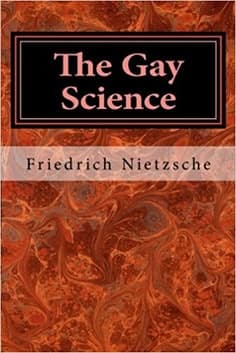
The Gay Science
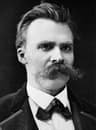
Nietzsche's 1882 work, expanded in 1887, is his most personal and stylistically varied book—a 'philosophical autobiography' in which he records his recovery from pessimism and his capacity to affirm life joyfully despite its terror. Its distinctive mechanism is the fusion of gaiety with rigor: Nietzsche argues that lightness, laughter, and art are not escapes from philosophical seriousness but essential to it. The book is where he first announces the death of God and introduces the eternal recurrence, but its central claim is broader: that philosophy, pursued as a way of life, can teach the art of affirming existence without appeal to transcendent consolation.
Key Insights
✦What is the central argument of The Gay Science, and what does the title's paradoxical phrase mean?
The title's 'gay science'—die fröhliche Wissenschaft—is deliberately paradoxical: gaiety would seem incompatible with the rigor, focus, and precision of scientific activity . Nietzsche's argument is that they are not merely compatible but inseparable. The book demonstrates through its own varied styles and lighthearted attitude that gaiety is essential to the philosopher's task, not a distraction from it . This is not a rejection of truthfulness but a recognition of its limits: rigorous honesty, pursued to its conclusion, reveals that our cognitive powers lead us into delusion and error, so that honesty cannot satisfy its own demands . Art, as a 'good will to appearance,' becomes a necessary counterforce. The book is a philosophical autobiography recording Nietzsche's recovery from pessimism and his capacity to affirm life joyfully despite its terror .
✦How does the announcement of the death of God in this book differ from simple atheism?
The famous 'Madman' passage in Book III is often quoted as a declaration of atheism, but its logic is more complex. The madman runs into the marketplace announcing that God is dead and that 'we have killed him'—but his listeners do not understand, and he realizes he has come too soon . The death of God is not a triumphant discovery but a cultural event whose consequences have not yet been absorbed. As Book V later clarifies, it means that 'the belief in the Christian God has become unworthy of belief' . The madman's questions—'How shall we comfort ourselves?' and 'Must we ourselves not become gods?'—indicate that the death of God creates a task rather than resolving a problem. It is the beginning of a revaluation, not the end of religion.
✦What role does the doctrine of eternal recurrence play in this book, and why does it appear here first?
The Gay Science is where Nietzsche first introduces the eternal recurrence, the thought that one would have to be disposed toward one's life to desire nothing more fervently than its infinite repetition, every moment unchanged . Its placement in this book is significant: it appears not as a cosmological doctrine but as a test of life-affirmation, posed to the individual as an existential question. The book's larger project is the recovery of joy, and eternal recurrence is the ultimate measure of whether that joy is genuine or merely temporary. If one can affirm one's existence even under the thought of its endless repetition, then the affirmation is complete. The idea would later become central to Thus Spoke Zarathustra, but its first appearance here is tentative and experimental.
✦How does The Gay Science relate to Daybreak and Thus Spoke Zarathustra within Nietzsche's development?
The Gay Science occupies a pivotal position between the critical, diagnostic work of Daybreak and the prophetic, visionary mode of Zarathustra. It extends Daybreak's campaign against moral prejudice but introduces the affirmative doctrines—eternal recurrence, the death of God as a cultural event, self-fashioning—that would become central to Nietzsche's later work. Kaufmann's edition notes that the book contains the first formulations of ideas Nietzsche would develop fully in Zarathustra . The stylistic difference matters: Daybreak proceeds through patient excavation, while The Gay Science is more varied, mixing poetry, aphorism, and sustained argument. The book's expanded second edition of 1887 added Book V and a preface, making it a bridge between the 'free spirit' trilogy and the works of Nietzsche's final years.
✦What is the most common misreading of the book's gaiety and lightness?
The most persistent misreading takes the book's gaiety as evidence that Nietzsche had abandoned the seriousness of philosophy for a kind of aesthetic playfulness or literary indulgence. This reading overlooks the argument that gaiety is a philosophical achievement, not a stylistic preference. The lightness of The Gay Science is hard-won: it follows the recognition that honesty, pursued rigorously, leads to nausea and suicide unless art provides a counterforce . Nietzsche is not advocating superficial cheerfulness but a tragic joy that has passed through the worst and emerged capable of affirmation. A related error treats the book as a collection of brilliant fragments without a unifying purpose. Michael Ure's study argues persuasively that it should be read as a coherent work reviving the ancient conception of philosophy as a way of life and the philosopher as physician .
✦What translation and editorial issues affect English editions of The Gay Science?
The standard English edition is Walter Kaufmann's translation, published by Vintage in 1974, which includes the full text of the 1887 edition with Book V and the preface . Kaufmann's version has been praised for its fidelity to Nietzsche's style and for its extensive commentary, though some scholars have criticized his editorial interventions. Earlier translations by Thomas Common (1910) and Anthony Ludovici were based on the first edition and lacked the important material added in 1887. Readers should be aware that the book's structure—five books written at different times, plus a 'Prelude in Rhymes' and an appendix of songs—is itself an editorial and authorial construction, and that the 1887 additions substantially change the book's character from the 1882 original.
Wealthy Psyche is an intellectual archive. We do not host, distribute, or sell book copies — physical or digital. We provide structured knowledge to help you think better, faster.