


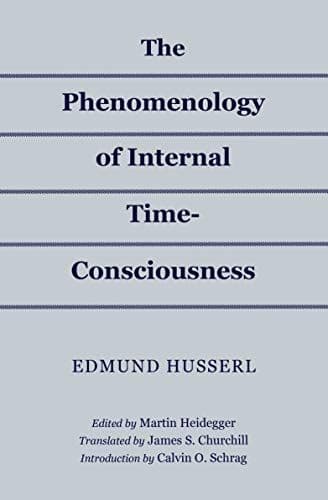
The Phenomenology of Internal Time-Consciousness
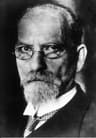
Husserl's central claim is that the experience of time is not a succession of discrete now-points but a continuous flow constituted by the intertwined acts of retention (holding onto the just-past), protention (anticipating the imminent), and a primal impression. This threefold structure is the form of all conscious experience, underlying perception, memory, and imagination. The lectures distinguish phenomenological time—the immanent temporality of conscious acts—from objective or cosmic time, arguing that the former is the foundation of the latter. The self-constitution of the flow of consciousness is the most radical problem the analysis confronts.
Key Insights
✦What is the central claim of The Phenomenology of Internal Time-Consciousness, and what does it reject?
Husserl's central claim is that the experience of temporal succession is not built from discrete now-points but is constituted by a continuous threefold flow: retention (the holding-onto the just-past), protention (the anticipatory openness to the imminent), and a primal impression (the living present). This structure is not itself in time in the ordinary sense; it is the form that makes the experience of time possible . Husserl rejects the view that time-consciousness can be explained by treating moments as isolated atoms later combined by memory or association. He also distinguishes phenomenological time—the immanent temporality of conscious acts—from objective or cosmic time, arguing that the former is the foundation of the latter .
✦What is the editorial history of the work, and why is it considered a problematic text?
The work's textual history is unusually complicated. Husserl never produced a completed manuscript for the 1905 lectures. Over the following years he inserted revised pages and new notes into the folder of materials, which he entrusted to Edith Stein in 1917 for preparation . Stein's redaction was then edited and published by Martin Heidegger in 1928, without Husserl's direct involvement. Only about half of the 1928 text corresponds to the original 1905 lectures; the rest is drawn from supplementary manuscripts of varying dates . Husserl later recognized the error of publishing the text in this form . The Husserliana critical edition (Volume X, 1966), edited by Rudolf Boehm, replaced the 1928 version with a chronologically ordered edition of the manuscripts .
✦What are retention and protention, and how do they differ from memory and expectation?
Retention is the immediate holding-onto the just-past within the living present: when a tone sounds, the preceding tone is not gone but is retained as just-past, without being reproduced or re-presented. Protention is the correlative anticipation of what is about to come, the forward edge of the living present. Neither is a full act of memory or expectation. Memory (recollection) re-presents a past event that has lapsed; retention is the primitive continuity that keeps the stream from dissolving into disconnected instants. Expectation projects a future state; protention is the minimal openness that allows the next moment to be experienced as fulfilling or disappointing an anticipation . The distinction is essential to Husserl's argument that time-consciousness is not a secondary operation performed on primary data but is constitutive of experience itself.
✦What is the problem of the self-constitution of the flow of consciousness?
In the final sections of the analysis, Husserl confronts a paradox: if the flow of consciousness constitutes time, what constitutes the flow itself? The flow cannot be constituted in the same way as temporal objects within it, because it is the condition of their constitution. Husserl describes the flow as 'absolute subjectivity' and acknowledges that its self-constitution is a problem of a different order from the constitution of objects in time . This problem—how the absolute flow can be both the constituting source and in some sense given to itself—became a persistent theme in his later work on time and passivity. Interpreters have disagreed about whether Husserl resolves the paradox or simply marks its limits.
✦How does the work relate to Husserl's later Ideas and to Heidegger's Being and Time?
The time-lectures are the laboratory in which Husserl worked out the analyses that would inform Ideas I (1913) and his later genetic phenomenology. He explicitly says that the ideas developed here are explored further in Ideas and were pursued until the end of his career . The connection to Heidegger is more fraught. Heidegger edited the 1928 publication, and Being and Time (1927) had already transformed the question of temporality into fundamental ontology. Heidegger's appropriation of Husserl's time-analysis was both indebted and critical: where Husserl sought the constitution of temporal experience in consciousness, Heidegger sought the temporal structure of Dasein's being. The 1928 edition thus stands at the crossroads of two very different phenomenological projects .
✦What is a common misconception about the 1928 text as a record of Husserl's views?
A frequent misconception is that the 1928 publication represents Husserl's settled position on time-consciousness. It does not. The text is a composite assembled by Stein from manuscripts spanning more than a decade, and Husserl himself recognized that publishing it in that form was a mistake . The Husserliana edition shows that his views on time evolved significantly between 1905 and 1917, and that some positions in the 1928 text are later insertions or revisions. Reading the Churchill translation as a unified treatise gives a misleading picture of coherence. For scholarly purposes, the critical edition (Husserliana X) and the English translation of it by John Barnett Brough are indispensable, because they present the manuscripts chronologically and allow the development of Husserl's thought to be traced .
Wealthy Psyche is an intellectual archive. We do not host, distribute, or sell book copies — physical or digital. We provide structured knowledge to help you think better, faster.