



The Primacy of Perception: And Other Essays on Phenomenological Psychology, the Philosophy of Art, History and Politics
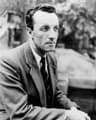
Merleau-Ponty's central claim is that perception is not a derivative or confused form of knowledge but the primordial access to the world from which all higher-order cognition and expression derive. The essays collected here argue that the perceived world is the always presupposed foundation of all rationality, all value, and all existence. Perception is not a science of the world but the very texture of our being-in-the-world, and it is through the body that we are first open to things. The volume includes the title essay, 'Eye and Mind,' and essays on phenomenological psychology, history, and politics.
Key Insights
✦What is the central claim of The Primacy of Perception, and what does it reject?
The central claim is that perception is not a derivative or confused form of knowledge but the primordial access to the world from which all higher-order cognition and expression derive. The perceived world is the always presupposed foundation of all rationality, all value, and all existence . Merleau-Ponty rejects the intellectualist view that perception is a judgment or inference performed by a constituting consciousness, and he rejects the empiricist view that it is a passive reception of sensory atoms. Perception is an active, embodied engagement with a world that is already meaningful before any explicit theorizing. The title essay develops this thesis through an analysis of the relations between perception, language, and the human sciences, arguing that perception is the 'nascent logos' that grounds all subsequent meaning.
✦What is the significance of 'Eye and Mind' in the collection?
'Eye and Mind' is one of Merleau-Ponty's most celebrated essays and the last work he saw through publication before his death in 1961. It develops a phenomenology of painting, arguing that the painter's vision is not a passive reception of appearances but an active interrogation of the visible world. Merleau-Ponty draws on Cézanne, Klee, and others to show that painting reveals the 'flesh' of the world—the intertwining of seer and seen that precedes the subject-object split . The essay is a crucial bridge between the phenomenology of perception and the ontology of The Visible and the Invisible, and it has been enormously influential in art theory and aesthetics. Its inclusion in this volume made it widely accessible to Anglophone readers for the first time.
✦How does the volume relate to Merleau-Ponty's earlier Phenomenology of Perception?
The Primacy of Perception extends and deepens the analysis of the earlier book while making its central insights accessible to a broader audience. The title essay, originally delivered as a lecture in 1946, is a concise summary of the phenomenological psychology developed in Phenomenology of Perception (1945). Other essays in the volume, particularly 'The Child's Relations with Others' and 'The Philosopher and His Shadow,' apply the analysis of perception and embodiment to developmental psychology and to Husserl's late thought. The collection thus serves as both an introduction to Merleau-Ponty's philosophy and a development of its themes in new directions, including art, history, and politics.
✦What is the editorial history of the volume, and who shaped its contents?
The Primacy of Perception was edited and introduced by James M. Edie, a philosopher at Northwestern University and a leading translator and interpreter of Merleau-Ponty in the Anglophone world. Edie selected the essays, some previously published in journals and others appearing in English for the first time, and provided an introduction that situates them within Merleau-Ponty's development . The volume was published by Northwestern University Press in 1964 as part of the Studies in Phenomenology and Existential Philosophy series . Edie's editorial work made Merleau-Ponty's essays accessible to English-speaking readers and helped establish his reputation in the analytic and continental traditions alike. The collection remains the standard English-language source for several of Merleau-Ponty's key essays.
✦How was the volume received by reviewers and scholars?
The volume was widely reviewed and praised for making Merleau-Ponty's essays available in English. A review in The Journal of Philosophy described it as 'a valuable collection' that 'will be welcomed by all those interested in phenomenology and existentialism' . The Times Literary Supplement called the title essay 'a brilliant and suggestive piece of philosophical writing' . Later scholarship has recognised the volume as a crucial resource for understanding Merleau-Ponty's development from the phenomenology of perception to the ontology of the flesh. The essays on art and politics have been particularly influential, and 'Eye and Mind' is widely anthologised in aesthetics courses. The collection has remained in print continuously since its publication.
✦What is a common misconception about the title essay's argument?
A frequent misconception is that Merleau-Ponty is claiming perception is more important than or superior to reason, language, or science. The title 'primacy' is not a claim about value or hierarchy but about foundation: perception is that on which all other forms of knowing depend, not something to which they should be reduced. Merleau-Ponty argues that the perceived world is the always presupposed foundation of all rationality, all value, and all existence . Science and philosophy arise from perception and remain rooted in it, but they are not therefore less valid. The claim is transcendental rather than evaluative: perception is the condition of possibility of any theoretical attitude, not the only legitimate form of experience.
Wealthy Psyche is an intellectual archive. We do not host, distribute, or sell book copies — physical or digital. We provide structured knowledge to help you think better, faster.