



Agamas (Jain canonical scriptures, traditionally attributed)
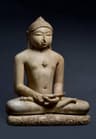
The Jaina Agamas are not a single book but a contested canonical corpus, and their central problem is preservation and authority rather than doctrine. The Svetambara tradition holds that Mahavira's teachings were orally compiled into twelve Angas by his disciples, with eleven surviving and receiving final redaction at Valabhi under Devardhigani Kshamashraman. The Digambara tradition holds that the Angas were gradually lost and that no authentic canon survives. This disagreement over textual survival, not philosophical content, defines what the Agamas are as an object of study.
Key Insights
✦What is the central structural claim of the Svetambara Agama canon?
The Svetambara tradition holds that Mahavira's immediate disciples, the Ganadharas, orally compiled his preaching into twelve Angas, which form the backbone of the canon. Of these twelve, the twelfth—the Drstivada, containing the fourteen Purvas—was lost relatively early, but the remaining eleven were preserved through oral transmission and eventually committed to writing at the Valabhi council under Devardhigani Kshamashraman, traditionally dated 980 or 993 years after Mahavira's nirvana . Beyond the Angas, the Svetambara canon includes Upangas, Chedasutras, Mulasutras, and Prakirnas, totaling forty-five texts in the full Murtipujaka recension, though the Sthanakvasi and Terapanthi subsects accept a reduced set of twenty-one .
✦Why does the Digambara tradition reject the extant Agamas?
The Digambara position is not that the Angas never existed but that they were irretrievably lost. According to Digambara tradition, the twelfth Anga (Drstivada) was lost first, and the remaining eleven Angas gradually passed into oblivion as knowledge of the Purvas faded . Consequently, the Digambaras do not recognize the Svetambara canon as authentic scripture and maintain that no genuine Agama survives. This creates a fundamental asymmetry: the Svetambaras possess a canon they claim preserves Mahavira's words, while the Digambaras possess no canonical Agamas at all and rely instead on later authoritative works by figures such as Kundakunda . The disagreement is thus about textual survival, not doctrinal content.
✦What happened at the Valabhi council, and why does it matter?
The Valabhi council, led by Devardhigani Kshamashraman, is traditionally regarded as the point at which the Svetambara canon was committed to writing for the first time. The traditional date is either 980 or 993 years after Mahavira's nirvana, corresponding to roughly 453 or 466 CE . This redaction is the textual basis for the Agamas as they exist today. Its significance is that the canon is not a verbatim transcript from Mahavira's lifetime but a redacted compilation produced nearly a millennium later, shaped by centuries of oral transmission and the editorial decisions of the Valabhi council. Hermann Jacobi's critical work on the Acaranga established that the canon was neither recited in a single period nor by a single individual .
✦How does the Svetambara canon differ internally among its own subsects?
The Svetambara Murtipujaka tradition accepts the full forty-five-text canon, including thirty-four Angabahya texts outside the Angas. The Sthanakvasi and Terapanthi subsects, however, reject thirteen of these Angabahya texts, accepting only twenty-one. Among the Angas themselves, all Svetambara subsects agree that eleven of the twelve survive, with only the Drstivada lost . This internal differentiation matters because it shows that canonical authority within Svetambara Jainism is not monolithic: different subsects draw the boundary of authentic scripture at different points, even while sharing the same fundamental claim about the preservation of the eleven Angas.
✦What is the relationship between the Agamas and later Jain philosophical texts?
The Agamas are canonical and pre-systematic; later Jain philosophy, such as Umasvati's Tattvartha Sutra, is scholastic and systematic. The Agamas present doctrine in diffuse, practical, and narrative modes—conduct rules in the Acaranga, polemics in the Sutrakritanga, pedagogy in the Uttaradhyayana—without a unified metaphysical apparatus. Umasvati's Tattvartha Sutra, composed centuries later, systematizes Jain ontology, epistemology, and ethics into a concise framework of categories. Reading the Agamas alongside the Tattvartha Sutra reveals the trajectory from canonical revelation to philosophical system, with the Agamas as the authoritative source that later scholasticism presupposes but reorganizes.
✦What is the most common misconception about the Agamas?
A frequent oversimplification treats 'the Agamas' as a single unified book or as a verbatim record of Mahavira's teachings. In reality, the term denotes a corpus of forty-five texts (in the Svetambara recension) of varying antiquity, genre, and authorship, redacted centuries after Mahavira's death. Even within the eleven surviving Angas, the Acaranga and the Sutrakritanga differ markedly in content and form. Moreover, the Digambara tradition rejects the entire extant corpus. To speak of 'the Agamas' without specifying which tradition and which recension is to obscure the most important fact about them: their status as a contested, historically mediated canon rather than a fixed revelation.
✦How accessible are the Agamas in English translation?
English access to the Agamas remains partial. Hermann Jacobi's translations for the Sacred Books of the East—the Acaranga and Kalpa Sutra in volume 22 (1884), and the Uttaradhyayana and Sutrakritanga in volume 45 (1895)—remain the standard complete renderings of those four texts and have been reprinted by Motilal Banarsidass . No complete English translation of the full forty-five-text Svetambara canon exists. Many Agamas are available in Prakrit with Sanskrit or Hindi commentary through editions published in India, but the majority remain untranslated into European languages. For readers without Prakrit, Jacobi's volumes are the primary entry point, though they cover only a fraction of the canonical corpus.
Wealthy Psyche is an intellectual archive. We do not host, distribute, or sell book copies — physical or digital. We provide structured knowledge to help you think better, faster.