



Chance, Love, and Logic
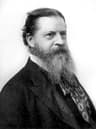
This posthumous 1923 collection, edited by Morris R. Cohen, assembles two sequences of Peirce's essays that together outline his evolutionary cosmology: the "Illustrations of the Logic of Science" (including "The Fixation of Belief" and "How to Make Our Ideas Clear") and the "Love and Chance" series from The Monist. The volume's spine is Peirce's triad of chance (tychism), continuity (synechism), and evolutionary love (agapism)—a metaphysical framework in which indeterminacy, law, and sympathy jointly govern the universe. It is the first book-length collection of Peirce's philosophical essays and the text through which many early readers encountered pragmatism.
Key Insights
✦What is the central argument unifying the essays collected in Chance, Love, and Logic?
The volume's unity lies in Peirce's attempt to construct an evolutionary cosmology grounded in three principles: tychism (the reality of absolute chance), synechism (the reality of continuity), and agapism (the reality of evolutionary love). The "Illustrations of the Logic of Science" establish the pragmatic method and the logic of inquiry, while the "Love and Chance" essays extend that method into metaphysics, arguing that the universe is not a closed deterministic system but a developing order in which chance generates novelty, habit consolidates it into law, and sympathy or love drives creative advance. Cohen's editorial arrangement presents these as complementary, not merely juxtaposed, projects .
✦What specific essays does this collection contain, and where did they originally appear?
The volume is divided into two parts. Part One, "Chance and Logic," reprints five papers from Popular Science Monthly (1877–78), including "The Fixation of Belief," "How to Make Our Ideas Clear," "The Doctrine of Chances," "The Probability of Induction," and "The Order of Nature," plus "Deduction, Induction, and Hypothesis." Part Two, "Love and Chance," reprints five papers from The Monist (1891–93): "The Architecture of Theories," "The Doctrine of Necessity Examined," "The Law of Mind," "Man's Glassy Essence," and "Evolutionary Love" . Dewey's supplementary essay on Peirce's pragmatism concludes the volume.
✦How does this collection relate to William James's popularization of pragmatism?
Chance, Love, and Logic appeared in 1923, well after James's Pragmatism (1907) had made "pragmatism" a public philosophical brand. Peirce, who coined the term in the 1870s, had remained largely unpublished in book form and was often seen as a precursor to James rather than an independent system-builder. Cohen's edition, with Dewey's essay, was part of an effort to correct that impression by showing that Peirce's pragmatism was embedded in a far more technical and systematic philosophy of science and metaphysics than James's . The collection thus documents a divergence: Peirce's pragmatic maxim was a logical rule for clarifying concepts, not a theory of truth, and his later cosmology had no counterpart in James.
✦What is the editorial history of this volume, and how does Cohen's editing shape the reader's encounter with Peirce?
Morris R. Cohen, a philosopher at City College of New York, selected the essays and wrote the introduction. The 1923 first edition was published jointly by Kegan Paul in London and Harcourt, Brace in New York . Cohen states in his preface that he made "no omissions or changes in the text beyond the correction of some obvious slips and the recasting of a few expressions in the interest of intelligibility" . This light editing means the essays are substantially as Peirce published them, but Cohen's selection—omitting Peirce's technical logic and semiotic writings—constructed a particular image of Peirce as a speculative cosmologist and proto-pragmatist, an image later scholarship has both built upon and contested.
✦Is there a common misconception about Peirce's pragmatism that this collection helps to correct?
A persistent misconception is that Peirce's pragmatism is essentially a theory of truth—that a belief is true if it works in practice. The essays in this volume, particularly "How to Make Our Ideas Clear," show that Peirce's pragmatic maxim is a method for clarifying the meaning of concepts by tracing their conceivable practical consequences, not a criterion of truth . The later essays on chance and love make this even clearer: Peirce's cosmology is realist and fallibilist, holding that inquiry converges on truth without any guarantee that current beliefs "work." Dewey's supplementary essay, while sympathetic, reads Peirce through a Jamesian lens, and readers should distinguish Dewey's interpretation from Peirce's own stated positions.
✦How has the volume's reputation and availability changed since its original publication?
The 1923 edition was the first book-length collection of Peirce's philosophical essays and remained a primary entry point for decades. It was reprinted in 1956 by George Braziller and again in 1998 by the University of Nebraska Press as a Bison Book, with a new introduction by Kenneth Laine Ketner . A Routledge reprint appeared in 2001 as part of its International Library of Philosophy series . These reprints indicate sustained demand, but the volume's selections have been supplemented—and in some respects superseded—by the chronological edition of Peirce's Writings and The Essential Peirce. For readers seeking Peirce's own arrangement of his ideas, however, Chance, Love, and Logic remains a historically significant compilation.
Wealthy Psyche is an intellectual archive. We do not host, distribute, or sell book copies — physical or digital. We provide structured knowledge to help you think better, faster.