



How to Make Our Ideas Clear
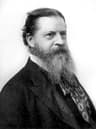
Peirce's 1878 essay introduces the pragmatic maxim: the meaning of a concept consists entirely in its conceivable practical effects. It argues that the traditional distinction between clear and distinct ideas is insufficient, and that a higher grade of clarity is achieved by tracing a conception's consequences for action and experience. The essay also presents Peirce's account of belief as a habit of action and his definition of truth as the opinion fated to be agreed upon by all who inquire. Published in Popular Science Monthly, it is the second and most influential installment of his "Illustrations of the Logic of Science."
Key Insights
✦What is the pragmatic maxim, and what problem does it solve?
The pragmatic maxim is Peirce's rule for achieving a higher grade of clarity than the traditional distinction between clear and distinct ideas. He argues that familiarity and definition are insufficient: a concept is genuinely clear only when we have identified all its conceivable practical consequences, and those consequences are the whole of our conception of the object . The problem it addresses is that philosophical and scientific disputes often persist because the concepts involved are vague. By tracing a concept's effects on action and experience, the maxim provides a method for determining whether a purported concept has any meaning at all, and for resolving disputes that turn on confused notions .
✦How does Peirce's account of belief in this essay differ from his earlier "The Fixation of Belief"?
"The Fixation of Belief" established that inquiry begins with doubt and ends in settled belief, and it defended the scientific method as the most reliable way to fix belief. "How to Make Our Ideas Clear" builds on that account by specifying what belief consists in: a habit of action. Peirce writes that belief involves "the establishment in our nature of a rule of action" . This is the crucial link to the pragmatic maxim. If belief is a habit of action, then the meaning of a belief—what it commits us to—is given by the actions it would produce under various circumstances. The second essay thus converts the psychological account of the first into a logical doctrine of meaning.
✦How does Peirce's pragmatism differ from William James's, and what does this essay reveal about the divergence?
Peirce coined the term "pragmatism" and later renamed his own doctrine "pragmaticism" to distance it from James's version. The divergence is visible in "How to Make Our Ideas Clear." Peirce's maxim is a logical rule for clarifying concepts by tracing their practical consequences; it is not a theory of truth, and it does not license belief on passional grounds. James extended the pragmatic method into a broader theory of truth and a defense of the will to believe in cases where evidence is inconclusive . Peirce insisted that his maxim was a tool for meaning-analysis, grounded in a realist metaphysics according to which truth is the opinion fated to be agreed upon by all inquirers—not whatever happens to work for an individual.
✦What does Peirce mean by defining truth as the "opinion fated to be agreed upon" by all inquirers?
In the essay's final section, Peirce defines truth and reality in terms of the ideal limit of inquiry. The real is that whose characters are independent of what any individual or group may think them to be; the true is the opinion that inquiry is destined ultimately to reach, if investigation is pursued indefinitely. This is not a prediction that any actual community will reach final agreement, but a regulative ideal that gives meaning to the concepts of truth and reality. Peirce's formulation has been criticized for its apparent convergence thesis—the assumption that inquiry must converge on a single opinion—but it is central to his rejection of nominalism and subjectivism. The definition links his pragmatic maxim to a realist metaphysics: the meaning of concepts is practical, but the truth of beliefs is determined by an independent reality .
✦What are Peirce's examples of the diamond and force, and what do they illustrate?
Peirce uses two examples to illustrate the pragmatic maxim. The first is hardness: a diamond is hard because, if you were to attempt to scratch it with certain other substances, it would not be scratched. The meaning of "hard" consists entirely in these conditional predictions about experimental outcomes. The second example is force: the concept of force is clarified by its role in accounting for changes in motion, and any further metaphysical speculation about what force "really is" beyond its measurable effects is empty. These examples show that Peirce's maxim is not a form of crude operationalism, since the conditionals involved are subjunctive and counterfactual—they concern what would happen under conceivable circumstances, not only what has been observed .
✦Did Peirce himself remain satisfied with the formulation in this essay?
No. Peirce later expressed dissatisfaction with aspects of the 1878 formulation, particularly what he came to see as its nominalistic and psychologistic tendencies. In notes from the 1890s he lamented the "materialistic" flavor of the original maxim, and in later essays such as "Issues of Pragmaticism" (1905) he revised it to make explicit its grounding in scholastic realism—the reality of generals and laws . The mature Peirce insisted that the pragmatic maxim presupposes a realist metaphysics, not a verificationist one. Readers who encounter the maxim only in its 1878 form should be aware that Peirce himself regarded it as an early, imperfect statement of a doctrine he continued to develop for the rest of his life.
Wealthy Psyche is an intellectual archive. We do not host, distribute, or sell book copies — physical or digital. We provide structured knowledge to help you think better, faster.