



Nitya Grantha
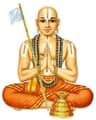
The Nitya Grantha is Ramanuja's manual of daily worship, a liturgical handbook rather than a philosophical treatise. Its central mechanism is the integration of purification, mantra recitation, meditation, and acts of surrender into a single daily regimen for the advanced devotee. The text describes the worshipper's cosmic ascent to the Lord's heaven and return, mapping an inner journey onto outward ritual. Unlike Ramanuja's systematic works, it is applied theology—showing how Visishtadvaita devotion is enacted in practice, not just argued in commentary. Its authenticity, however, has been questioned by some traditional scholars.
Key Insights
✦What is the Nitya Grantha's distinctive function within Ramanuja's corpus?
The Nitya Grantha is Ramanuja's only work of applied liturgical theology. While his Vedarthasangraha and Sri Bhashya argue philosophically for Visishtadvaita, the Nitya Grantha shows how that theology is enacted in daily worship. Francis Clooney describes it as a manual describing the daily worship of an advanced devotee, melding purifications, ritual offerings, mantra recitation, meditations, and acts of surrender to God . This makes it a rare window into the practical dimension of Ramanuja's tradition, filling out his profile as an exemplar of integral spiritual, intellectual, and practical religion . It is not a philosophical treatise but a ritual handbook for those already initiated into the tradition.
✦Is the Nitya Grantha authentically Ramanuja's work?
This is a genuine controversy. The text is traditionally attributed to Ramanuja and is included in editions of his collected works, such as the 1971 Sri Bhagavad Ramanuja Granthamala edition . However, a Sanskrit literary history notes that while eight works in Sanskrit are attributed to Ramanuja—including the Nitya Grantha—the authenticity of the Nitya Grantha and the Gadya-traya is doubtful, as both differ in style and subject matter from his other works and lack philosophical content . This does not mean the text is worthless or late; it means that its attribution to Ramanuja himself, rather than to a close disciple or later figure in his tradition, cannot be taken for granted.
✦What does the Nitya Grantha actually describe?
The text outlines a structured daily worship regimen. It begins with purification as both a physical and spiritual practice, involving a de-creation and re-creation of the self, followed by a recollection and reaffirmation of the act of taking refuge . The worshipper then performs a yāga, a cosmic ascent that traverses the devotional cosmos from elemental foundations up to the throne of God, followed by a return to the place of daily worship . Finally comes pūjā, intimate worship of the Lord, involving meditation on Narayana's form and offerings of scents, flowers, and lights . The entire sequence integrates mantra, visualization, and surrender into a single practice.
✦What is the most common misreading of the Nitya Grantha?
A persistent misreading treats the Nitya Grantha as a philosophical work comparable to Ramanuja's Vedarthasangraha or Sri Bhashya, and then judges it as thin or derivative because it lacks sustained argument. This misunderstands its genre. The Nitya Grantha is a liturgical manual, not a treatise. Its purpose is to prescribe practice, not to defend doctrine. Clooney's study argues that precisely because it is applied theology, it offers insights that Ramanuja's systematic works cannot: it shows how Visishtadvaita is lived, not just thought . Reading it as a failed philosophical text misses its value as a record of ritual practice and devotional formation within the Sri Vaishnava tradition.
✦What translations of the Nitya Grantha exist?
English access to the Nitya Grantha is recent and limited. Francis X. Clooney published the first English translation in the International Journal of Hindu Studies in December 2020, accompanied by an introductory essay . Clooney, a Jesuit scholar of Hinduism, has also written on the text's relevance for interreligious reflection, presenting it as a resource for understanding how religions are studied and practiced . Before Clooney's work, the text was available in Sanskrit editions, including the 1971 edition in the Sri Bhagavad Ramanuja Granthamala series . A Russian translation by Ruzana Pskhu was published in 2026, indicating growing scholarly interest in this understudied text .
Wealthy Psyche is an intellectual archive. We do not host, distribute, or sell book copies — physical or digital. We provide structured knowledge to help you think better, faster.