


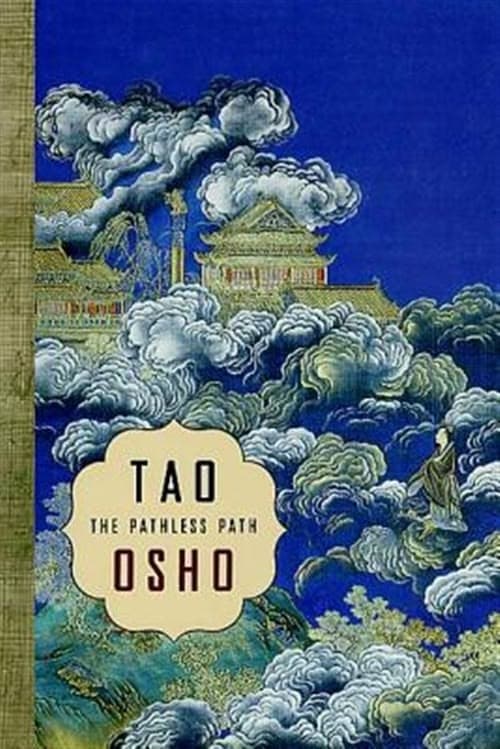
Tao: The Pathless Path
Tao: The Pathless Path is a transcription of Osho's discourses on five parables from Lieh Tzu, and its central mechanism is the contrast between Confucian goal-seeking and Taoist pathlessness. Osho reads Lieh Tzu's stories not as ancient wisdom to be preserved but as occasions for dismantling the reader's conditioned mind, arguing that Tao is the way itself—not a destination. The book's distinctive claim is that contentment arises from non-comparison and spontaneity, while the Confucian pursuit of perfection is a form of spiritual death.
Key Insights
✦What is Osho's central interpretive claim in Tao: The Pathless Path?
Osho's governing claim is that Tao is not a goal to be achieved but the way itself—'the goal is all along the Way' . He uses Lieh Tzu's parables to contrast two orientations: the Confucian pursuit of perfection, which he treats as a form of spiritual death, and the Taoist embrace of spontaneity and non-comparison. In his reading of the parable 'A Man Who Knows How to Console Himself,' Osho argues that the wandering monk's joy is a 'comparative happiness'—pseudo-happiness—because it depends on comparing himself to those who died young or those who are poorer. True contentment, Osho insists, arises only when one stops comparing altogether . This is the book's spine: the pathless path is the abandonment of destination-thinking.
✦What are the textual origins and publication history of this book?
The discourses were delivered in Poona and first published by Rajneesh Foundation in 1978 as a hardcover . The original series was titled Tao: The Pathless Path Vol 1, and a second volume followed. Later editions substantially reframed the material: St. Martin's Griffin published a 192-page paperback in 2002, and a 2016 ebook edition followed from St. Martin's . The 2002 and 2016 editions present the book as a standalone commentary on five parables from Lieh Tzu, with a Q&A section addressing how Taoist understanding applies to everyday life . This means the book now circulating is a curated selection from a larger discourse series, not the complete original transcript.
✦How does Osho use the figure of Confucius in these discourses?
Osho follows the Taoist tradition of treating Confucius as a foil—a figure of earnest, goal-oriented striving who cannot grasp the pathless path. In the parables Osho comments on, Confucius appears as a traveler 'going from somewhere to somewhere, always seeking and searching for knowledge,' in contrast to the wandering monk who sings in poverty . Osho exploits this contrast to argue that Confucian self-cultivation—the project of becoming a 'gentleman' with no flaws—is precisely the trap Taoism dissolves. The moment a person becomes perfect, Osho says, they are dead; an alive person is never perfect, and his teaching is 'basically not for perfection but for totality' . This anti-perfectionist reading is the book's most distinctive interpretive move.
✦What is the most common misreading of Tao: The Pathless Path?
A persistent misreading treats the book as a reliable introduction to Lieh Tzu or classical Taoist philosophy. Osho himself did not claim this. His discourses use the parables as springboards for his own teaching, and his interpretations are often freely creative—as when he reads the monk's joy as 'comparative happiness' rather than simple contentment. Readers seeking a philologically grounded study of Lieh Tzu should consult scholarly translations and commentaries on the Lieh Tzu text itself. Osho's book is valuable as a record of his pedagogical style and his characteristic blend of Taoist imagery with Vedantic and Zen-inflected themes, not as a window onto the historical Lieh Tzu or the Taoist canon.
✦How has the book been received by readers, and what criticisms exist?
Reader reception has been strongly positive on commercial platforms. Goodreads records over 1,000 ratings with an average above 4.2 stars, and Amazon reviews describe it as 'profound,' 'simple and straight to the point,' and 'one of the truly magnificent and under-rated' books by Osho . One reviewer, however, raised a textual concern: Osho was 'non-English speaking and his discourses were translated by people who did not have English as a first language,' making some passages 'a bit difficult to comprehend' . This observation points to the mediated nature of all of Osho's English-language books—they are transcriptions and translations of oral performances, not texts he wrote himself.
✦How does this book relate to Osho's other discourse series on spiritual traditions?
Tao: The Pathless Path belongs to the same genre as The Mustard Seed (on the Gospel of Thomas), Zen: The Path of Paradox, and The Book of Secrets (on the Vigyan Bhairav Tantra). In each, Osho takes a traditional text or story collection as an occasion for extemporaneous teaching, using the source material as a launching point rather than an authority to be expounded. What distinguishes the Tao series is its sustained contrast between Confucian and Taoist orientations: the book is structured around the tension between goal-seeking and pathlessness, between the rational and the spontaneous. This gives it a sharper thematic unity than some of Osho's more free-form question-and-answer collections, even though its interpretive liberties with the source material remain considerable.
Wealthy Psyche is an intellectual archive. We do not host, distribute, or sell book copies — physical or digital. We provide structured knowledge to help you think better, faster.