



Zen: The Path of Paradox
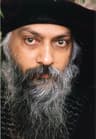
Zen: The Path of Paradox is a transcription of Osho's 1977 discourses on Zen, and its central mechanism is the use of paradox as a pedagogical shock rather than a doctrine to be understood. Osho reads classic Zen stories and koans not as puzzles with solutions but as devices for inducing the cessation of thinking, arguing that Zen's 'path of paradox' is the deliberate use of nonsense to short-circuit the mind's meaning-making. The book's distinctive claim is that Zen is not a religion or philosophy but a transmission of silence, and that the master's function is to mirror and disrupt, not to teach.
Key Insights
✦What is Osho's central interpretive claim about Zen in this book?
Osho's governing claim is that Zen is not a philosophy or a religion but a 'path of paradox'—a deliberate use of absurdity to stop the mind's compulsive meaning-making. He reads koans and Zen stories not as riddles awaiting solution but as shocks designed to create a gap in thinking where knowing can occur. In his words, 'When thinking stops and knowing happens… truth has to be seen' . This is why the book does not systematize Zen doctrine; it performs the disruption it describes, using stories of masters kicking, shouting, or giving tautological answers to demonstrate that the master's function is to mirror and short-circuit, not to instruct.
✦When were these discourses delivered, and what is their publication history?
The talks were delivered at Buddha Hall in Poona between June 11 and June 20, 1977 . The original series comprised ten discourses, published by Rajneesh Foundation in December 1978 as a hardcover . Later editions radically altered the text's scope: a 2003 St. Martin's Griffin edition runs 192 pages and contains only six chapters, described on Sannyas Wiki as 'selected chapters' from the original Vol. 1 . This means the book now circulating under the title Zen: The Path of Paradox is not the full 1977 discourse series but a curated selection, and readers should be aware that the original ten-discourse structure has been editorially reduced.
✦How does the 2003 St. Martin's edition differ from the 1978 original?
The differences are substantial and editorial. The 1978 Rajneesh Foundation edition presented the complete ten-discourse series delivered in June 1977 . The 2003 St. Martin's Griffin edition, subtitled simply 'The Path of Paradox,' contains only six chapters—five selected discourses (chapters 1, 3, 5, 7, and 9 from the original) plus a compilation of questions and responses . This selection process removed half the original material and reorganized the remainder into a more compact volume. The 2003 edition also reframed the book for a general trade audience, dropping the 'Vol. 1' designation and presenting it as a standalone work on Zen. Readers comparing editions will find different texts under the same title.
✦What is the most common misreading of this book's approach to Zen?
The most persistent misreading treats the book as an exposition of Zen doctrine or a guide to koan practice. Osho himself resists this framing: he repeatedly insists that Zen cannot be taught, only transmitted, and that the stories he comments on are not illustrations of principles but performances of silence. A reader approaching the book to learn 'what Zen teaches' will find Osho dismantling the very question, arguing that the search for meaning is the obstacle. The book is better understood as a record of Osho's own pedagogical performance—using Zen stories as occasions for his characteristic blend of provocation, humor, and anti-doctrinal insistence—rather than as a reliable introduction to Zen Buddhism as practiced in Japan or China.
✦How has the book been received by readers, and what criticisms exist?
Reader reception has been overwhelmingly positive on commercial platforms, with Amazon India showing 115 ratings and reviews describing it as 'straight into the heart of Zen' . However, critical voices exist within that same record. One reviewer noted that Osho 'tells you to drop your ego, but his own ego often pops up, when he equates himself with the zen masters' . Another complained of poor print quality in a recent Indian edition. No peer-reviewed scholarly assessment of the book appears to exist. This pattern—strong devotional readership alongside negligible academic attention—is consistent with Osho's published discourse literature generally, and the book's status as a transcription of oral performance further complicates its evaluation as a work of Zen scholarship.
✦How does this book relate to Osho's other discourse series on religious traditions?
Zen: The Path of Paradox belongs to the same genre as The Mustard Seed (on the Gospel of Thomas), The Book of Wisdom (on Atisha), and The Book of Secrets (on the Vigyan Bhairav Tantra). In each, Osho takes a traditional text or story collection as an occasion for extemporaneous teaching, using the source material as a springboard rather than an authority to be expounded. What distinguishes the Zen series is its focus on pedagogy itself: the koan, the shock, the master's silence are all devices for inducing a cognitive rupture, and Osho's commentary is unusually self-conscious about its own method. The book is thus both a discourse on Zen and a demonstration of Osho's own performance of the same disruptive pedagogy.
Wealthy Psyche is an intellectual archive. We do not host, distribute, or sell book copies — physical or digital. We provide structured knowledge to help you think better, faster.