


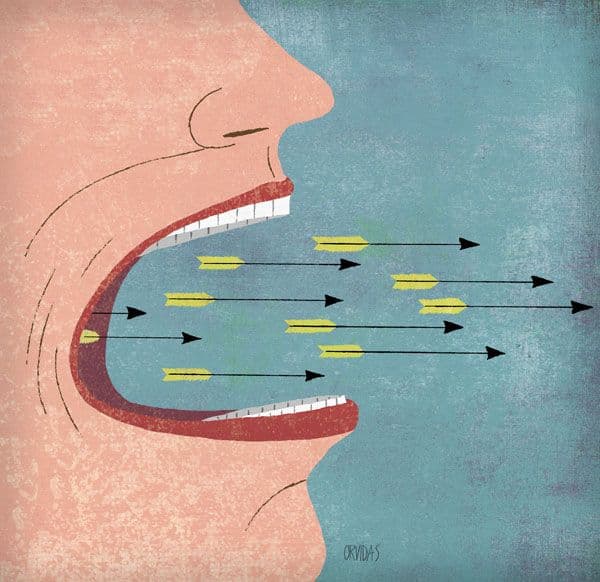
The request hides a fantasy: that the slip is a locked box and interpretation a master key. We want a method, a checklist, a set of rules that will convert the embarrassing stumble into a clean, usable truth. But the slip arrives without an instruction manual, and the very idea of a technique for reading it risks flattening the very thing that makes it alive—its suddenness, its shame, its unbidden quality. To interpret a slip of the tongue is less like solving an equation and more like catching a whisper in a crowded room and trying to place the voice. It requires a listener who is willing to be unsettled, who can tolerate uncertainty, and who understands that the slip is never a straightforward confession but a compromise, a tiny battleground between the impulse to speak and the prohibition against speaking. This inquiry will not offer a method. It will explore the conditions under which a slip might yield its secrets—and the far more common conditions under which any attempt to pin it down becomes an act of interpretive violence, a second silencing rather than a liberation.
The Freudian Slip: A Crack in the Facade of Consciousness
The Discovery and Its Promise
When Freud first drew systematic attention to slips of the tongue—Fehlleistungen, or parapraxes—he was not discovering that people make mistakes. He was proposing that no mistake is innocent, that every lapse of speech is motivated by an unconscious wish that has slipped past the internal censor. The promise was immense: everyday life, in its most trivial moments, revealed the hidden architecture of desire. The colleague who opens a meeting by declaring it “closed” is not simply tired; something in him wants the meeting over before it begins. The lover who calls a new partner by an old name is not merely forgetful; an old attachment pulls at the edges of speech. This promise turned the slip from a source of embarrassment into a royal road, a miniature dream occurring in full daylight, dense with meaning and waiting for a listener.
Determinism and the Meaningful Accident
Psychic determinism—the idea that nothing in mental life is arbitrary—is the philosophical backbone of the Freudian slip. For the slip to be interpretable, it must be assumed that every substitution, every omission, every transposition of sounds is the product of an intention, even if that intention is unconscious. This is a profound and unsettling claim. It suggests that we do not simply “have” an unconscious that occasionally leaks; we are an ongoing negotiation between conflicting intentions, and speech is the surface on which that negotiation is written. To interpret a slip, then, is to take seriously the idea that the mind is multiple, that it contains rival currents, and that what we call a mistake is merely the moment when one current temporarily overrides the other. The task is not to brush the error away but to welcome it as evidence of a richer psychic reality than the one we consciously curate.
The Structure of a Slip: Language as a Battlefield
Condensation and Displacement in Small
Freud argued that slips are structured by the same mechanisms that shape dreams: condensation (fusing multiple ideas into a single word or sound) and displacement (shifting the accent from a dangerous idea to a safer one). A man who meant to say “I have a lot of respect for her” but says “I have a lot of regret for her” has condensed his admiration and his hidden sorrow into a single altered phoneme. The unconscious wish—to express the regret he cannot acknowledge—displaced the intended word onto a phonetically similar but semantically charged substitute. The slip is a micro-drama, a poem compressed into a syllable. Interpreting it requires reconstructing the chain of associations that led from the intended word to the spoken one, and that reconstruction can never be done in isolation; it demands context, history, and the speaker’s own emotional resonance.
The Intentional Unconscious
A slip of the tongue is not a mechanical failure of the speech apparatus. It is an act, albeit one for which the speaker disowns responsibility. The unconscious intention that produces the slip is just as real as the conscious one it derails, and in some ways more honest. The challenge of interpretation is to hold both intentions in view simultaneously: the socially appropriate surface text and the subversive undertext that punctures it. This means that the interpreter must resist the temptation to choose one meaning as the “true” one and treat the other as mere error. The slip’s truth lies precisely in the tension between the two, in the fact that the speaker both wanted and did not want to say what emerged.
Interpreting the Slip: A Delicate Art, Not a Science
The Listener’s Position: From Laughing to Witnessing
When a slip occurs in everyday conversation, the typical response is a ripple of laughter followed by a hasty dismissal: “I didn’t mean that.” The amateur interpreter often seizes on the slip with a knowing smirk, as if it has revealed a hidden truth that the speaker was too naive to see. This is almost always a misuse of interpretation. The slip is not a confession extracted under duress; it is a fragile, ambivalent expression that belongs, in the first instance, to the speaker. The ethical listener moves toward the slip not with triumphant certainty but with gentle curiosity, offering it back to the speaker as a question, not a verdict: “I noticed you said X instead of Y—does that word feel connected to anything for you?” Interpretation, in this sense, is an invitation to self-inquiry, not a diagnosis delivered from above.
Context, Association, and the Danger of Wild Analysis
Freud warned against the temptation of “wild analysis,” the practice of throwing interpretations at the patient without the grounding of a sustained relationship. A slip detached from its context is a Rorschach inkblot onto which the interpreter’s own fantasies can be projected. The same slip—a man calling his wife by his mother’s name—might mean entirely different things depending on whether the mother has recently died, whether the marriage is strained, whether the wife has been acting in a maternal way, or whether the mother’s name simply rhymes with something else that was on his mind. The interpreter’s first discipline is to gather associations, to ask what was passing through the speaker’s mind just before and just after the slip, and to remain alert to the speaker’s affective reaction to the error. The embarrassment, the denial, the over-earnest correction—all are as telling as the words themselves.
When the Slip Reveals More Than Intended: The Social Dimension
Slips in Relationships: The Unintended Confession
Few moments are as emotionally charged as a slip that occurs in the midst of an intimate conversation. A partner says “I love you” and accidentally inserts an ex-lover’s name; a parent calls a child by a sibling’s name, and the tone is one of irritation; a friend says “I’m so happy for you” but the face briefly registers something else as the words tumble out. These slips function as relational thermometers, registering subterranean currents of jealousy, grief, or resentment that the surface relationship cannot accommodate. To interpret such a slip is to walk a razor’s edge: the truth it points to may be deeply wounding, and the act of naming it may irreparably alter the relationship. Sometimes the most attuned response is to register the slip silently, to file it away, to allow it to inform one’s own understanding without demanding that the other immediately own it. Interpretation is not always a verbal act; it can be an internal shift in how one listens.
Workplace and Power Dynamics
The slip that occurs in a hierarchical setting—calling a boss “Dad,” accidentally using a peer’s nickname for a senior executive, mispronouncing a key client’s name in a way that sounds like a derogatory term—exposes the tensions that professional courtesy masks. The subordinate who says “I resent that” instead of “I resent that” has momentarily dissolved the membrane between public deference and private frustration. The colleague who introduces a new initiative as a “disaster” rather than a “venture” may be articulating a group-wide skepticism that no one has dared to voice. Interpreting these slips in the workplace requires extreme caution; the speaker may be severely punished if the slip is amplified. Yet for the attentive observer, these slips provide crucial data about morale, unspoken conflicts, and the emotional climate that official surveys rarely capture.
“A slip of the tongue is the unconscious raising its hand in a classroom where only the conscious is allowed to speak. To interpret it well is to welcome that interruption without demanding it recite a prepared lesson.”
The Slip in the Digital Mirror: Typos, Autocorrect, and the Algorithmic Unconscious
The Freudian Typo
The keyboard has become a new portal for the unconscious. The typo that turns “sorry” into “story,” the email sign-off that reads “Best retards” instead of “Best regards,” the text message autocorrected from “I’m on my way” to “I’m on my warpath”—these are the slips of the digital age. They are not merely mechanical errors; they are shaped by the same associative patterns that shaped their spoken ancestors. The fingers, like the tongue, have their own memory, their own favored patterns, and they often betray the emotional truth that the conscious writer is editing out. Interpreting a digital slip requires the same associative listening, but it also demands an attention to the medium: the autocorrect algorithm is not a neutral tool; it is a collaborator, a censor, and a distorting mirror that reveals what the software “thinks” we intended. The gap between what we typed and what the algorithm decided we meant is itself a site of unconscious communication.
Autocorrect as Censor and Collaborator
Autocorrect often functions like a primitive superego, enforcing a standardized, polite lexicon and ruthlessly suppressing anything anomalous, idiosyncratic, or emotionally raw. When it changes a profanity into a harmless word, it is performing a repression. When it consistently substitutes a specific name for a similar-sounding one, it may be revealing an associative pattern the user has not consciously acknowledged. The slip that emerges from an autocorrect failure is a double exposure: the user’s unconscious impulse and the algorithm’s unconscious bias overlaid on each other. To interpret such a slip is to ask not only “What was I trying to say?” but “What is this machine trying to make of me, and why did its intervention produce this particular distortion?”
Slips and the Body: The Tongue as a Somatic Outlet
When the Body Speaks Before the Mind
The slip is not purely linguistic; it is a motor act, a physical production of sound that involves the breath, the larynx, the lips, the tongue. Long before the conscious mind selects a word, the body has prepared a posture, a tension level, a rhythm of speech. When a slip occurs, it is often because a bodily impulse—a surge of anxiety, a flush of anger, a wave of exhaustion—has disrupted the fine coordination required for fluent speech. The slip is a somatic event as much as a verbal one, and interpreting it well may require attending to the body that produced it. What was the speaker’s posture just before the slip? Did their voice tighten? Did they blush? These bodily correlates are part of the slip’s meaning, signaling the emotional charge that the word alone cannot convey.
The Connection to Symptom and Conversion
In classical psychoanalysis, the bodily symptom—the hysterical paralysis, the tic, the headache—is a form of symbolic expression, a conversion of an unbearable idea into a physical manifestation. The slip of the tongue occupies a middle ground between the symptom and pure speech. It is a body-mind event, a moment when the physiological apparatus of speech is commandeered by an unconscious intention that would otherwise remain entirely mute. Interpreting a slip can thus be a first step toward recognizing a pattern of somatization, an early warning that an unresolved conflict is pressing for expression through the body as well as through words. The slip that recurs in specific relational contexts—always when talking to a critical parent, always when discussing a traumatic memory—may be the precursor of a more entrenched symptom if the underlying conflict is not addressed.
The Ethics of Interpretation: Who Has the Right to Name the Unconscious?
Interpretation as Power
To interpret another person’s slip is to claim a knowledge about them that they do not yet consciously possess. It is an assertion of epistemic authority, and like all authority, it can be abused. The therapist who wields the slip as a weapon, the partner who uses it to score points in an argument, the friend who announces “Freudian slip!” with a laugh that is not entirely kind—all are enacting a small but real violence. The slip is often a moment of vulnerability, an exposure the speaker did not choose, and to pounce on it is to deepen the shame that produced it. An ethical interpretation is one that holds the slip lightly, that offers it as a possibility rather than a decree, and that is prepared to be wrong. The interpreter must be willing to have their interpretation refused, and to reflect on what their own investment in being right might signify.
The Recipient’s Own Resistance
The person who makes a slip will frequently deny its significance, sometimes with a vehemence that itself demands attention. The denial is not necessarily a rejection of a true interpretation; it is often a reflexive defense against an intrusion that feels premature or unsafe. The interpreter who respects the speaker’s resistance—who does not push, does not insist, does not take the refusal personally—preserves the relationship in which a later, more receptive moment may arrive. Some slips need to be carried in the listener’s mind for weeks, months, or years before the speaker is ready to return to them. The patience to wait is as much a part of the art of interpretation as the insight to see.
When a Slip Is Just a Slip: The Limits of Overdetermination
Cognitive and Linguistic Models
Not every slip is a miniature Oedipus play. Cognitive psychology and psycholinguistics offer alternative explanations: phonological interference, retrieval failures, the competing activation of similar-sounding words. The speaker who says “left” instead of “right” may simply be tired, may have a spatial processing quirk, may have been momentarily distracted by a sign on the left side of the road. The analytic attitude, taken to an extreme, can become a kind of paranoia in which every utterance is scanned for hidden meaning and the speaker loses the freedom to speak without being dissected. The wise interpreter knows that psychic determinism is a working hypothesis, not an absolute law. The slip that carries no discernible emotional weight, that does not resonate with the speaker’s history or current conflicts, that evokes no surprise or blush, may indeed be merely a random glitch. The capacity to leave it alone is a sign of interpretative maturity, not of failure.
The Danger of Hyper-Vigilance
In a culture saturated with psychological concepts, there is a risk of turning everyday conversation into a paranoid field of detection. The dinner party guest who silently catalogs every slip, the spouse who weaponizes the concept of the Freudian slip to win arguments, the social media commentator who screenshots a celebrity’s typo as proof of hidden depravity—all are practicing a degraded form of interpretation that turns listening into surveillance. The slip is a flower that blooms in the space of relaxed attention; when attention becomes too focused, too eager to catch, the flower closes. The analyst’s evenly hovering attention, not a detective’s sharp focus, is the mental state most conducive to hearing slips without distorting them.
Approach to Interpretation | Assumption | Typical Response | Risk |
|---|---|---|---|
Reductive-Certain | Every slip has a single, decodable unconscious meaning | “You called your boss Dad—clearly you see him as a father figure.” | Imposes interpreter's frame; ignores speaker's subjective resonance; shuts down inquiry |
Empathic-Curious | Slips are overdetermined; meaning is constructed through exploration | “I noticed that shift—what was going through your mind just before you said that?” | May feel evasive if speaker wants a more active stance; requires patience |
Dismissive-Scientific | Slips are random neurological noise; no psychological significance | “Don't worry, it's just a cognitive glitch—happens to everyone.” | Misses potential psychic meaning; may feel invalidating if slip carries strong affect |
Slips and the Creative Process: The Poetry of Error
Artistic Production and the Unbidden Thought
Artists have long been more welcoming to the slip than scientists. Poets court the accidental rhyme, painters incorporate the stray brushstroke, jazz musicians build solos around wrong notes. The slip is the enemy of the bureaucratic memo but the ally of the creative mind, because it short-circuits the well-worn neural paths and delivers a fresh, uncalculated conjunction. When a writer types a word they did not intend and then, upon rereading, discovers it is better than the one they planned, they are experiencing the slip as a gift. Interpreting such a slip is not about uncovering repressed content; it is about recognizing that the unconscious is not only a repository of buried conflicts but also a source of generative surprise. The interpretation here is not diagnostic but appreciative: a noticing of the new meaning that the error has opened.
Surrealism and the Cultivation of Slips
The surrealists elevated the slip—and its cousins, the dream and the automatic drawing—into a deliberate artistic method. André Breton’s “automatic writing” was an attempt to bypass conscious intention entirely, to let the unconscious speak in a continuous, unedited stream. The surrealists understood that the slip, when not corrected, could be a portal to a more authentic, less socially constrained reality. Their work suggests that interpreting a slip might sometimes mean not interpreting it at all, but simply letting it stand, allowing it to disrupt the smooth surface of ordinary communication and to introduce an element of the strange, the uncanny, the genuine. The slip as art, not as evidence; the slip as a disruption of the real rather than a confession hidden within it.
The Slip in the Therapeutic Encounter: A Clinical Perspective
Using Slips in Psychoanalysis
In the analytic setting, the slip is welcomed as a precious piece of clinical data. The analyst is trained not to laugh, not to dismiss, and not to leap to interpretation, but to hold the slip in mind and allow it to resonate with the surrounding material. A slip may confirm a pattern that has been emerging in the transference; it may signal a new level of trust, as the patient’s censorship relaxes enough to let something through; it may herald the approach of a repressed memory that is not yet ready to be spoken directly. The analyst may choose to store the slip silently for many sessions, waiting until the context has thickened enough to support a gentle inquiry. When the interpretation finally comes, it is often in the form of a simple observation: “You said her name just now—the name you’ve been avoiding for weeks.” The art lies in the timing, the tone, and the absence of triumph.
The Analyst’s Countertransference Slips
Analysts, too, make slips, and these are arguably even more revealing. When an analyst miscalls a patient’s name, forgets an appointment, or stumbles over an interpretation, the unconscious of the analyst has entered the room. The classical tradition viewed such slips as evidence of the analyst’s unresolved conflicts, requiring further personal analysis. Relational and intersubjectivity theorists, however, see the analyst’s slip as a potential opening for a more authentic encounter. If the analyst can acknowledge the slip without excessive shame, can explore what it might express about the shared emotional field, the slip can deepen the analytic work rather than derail it. The analyst’s willingness to be fallible, to be caught off guard by their own unconscious, models for the patient a relationship to error that is curious rather than punitive.
“The slip of the tongue is the psyche’s sneeze—involuntary, revealing, and impossible to fake. How we respond to it—with curiosity or with judgment, with patience or with invasion—determines whether the truth it carries will be welcomed or driven further underground.”
Conceptual Table: Layers of Meaning in a Slip
Layer | What It Conveys | Interpretive Question |
|---|---|---|
Surface error | The bare linguistic mistake (sound substitution, word reversal, omission) | What is the phonetic or semantic relationship between the intended word and the uttered word? |
Contextual resonance | The immediate situation—who is present, what topic was being discussed, what emotion was in the air | What was happening in the relational field when the slip occurred? What emotion preceded it? |
Associative chain | The speaker's personal history with the uttered word, the intended word, and their overlap | What memories, dreams, or earlier experiences are linked to these words for the speaker? |
Unconscious wish | The repressed impulse that sought expression through the error | What might the speaker want to say, to do, or to feel that the surface speech was suppressing? |
Defensive function | The protection the slip provides—a disguise, a deflection, a partial release | What would be too dangerous to say directly, and how does the slip both reveal and conceal it? |
Closing Reflection: The Humility of Not Knowing
The slip of the tongue frustrates the desire for mastery. It refuses to be fully decoded, because its meaning is not a static object but a living relation between speaker, listener, and the shared history that binds them. To interpret a slip well is less a matter of technique than of character: a willingness to listen without an agenda, to be surprised, to be wrong, and to tolerate the discomfort of ambiguity. The most profound slip is often the one that remains uninterpreted for a long time, gestating in the shared silence until its meaning emerges not through analysis but through the natural unfolding of the relationship. The art of interpretation is the art of restraint, of knowing when to speak and when to hold, when to name and when to wait. For the slip is not a thing we break open; it is a door we stand before, and whether it opens depends not on our cleverness but on our capacity to be a presence before which the unconscious dares to show itself again.