


There are moments in a conversation when we walk away feeling inexplicably heavy, as if we have swallowed a feeling that does not belong to us. A partner’s accusation lodges in our chest and, hours later, we find ourselves inhabited by a guilt that makes no rational sense, yet refuses to be argued away. A colleague’s panic about a deadline somehow becomes our own, a dread that spreads before we can name it. These experiences, mundane in their occurrence but strange in their structure, point toward a phenomenon that psychoanalysis has named with precision: projective identification. It is more than a defense, more than a distortion. It is a form of unconscious transmission that blurs the boundary between selves, a process by which one person disowns an unbearable state of mind and, through subtle pressures, evokes that very state in another.
First illuminated by Melanie Klein in 1946, projective identification has traveled far beyond the nursery and the paranoid-schizoid position. It has become one of the most generative and unsettling concepts in clinical theory, reshaping our understanding of communication, empathy, and the therapist’s own psychic life. Yet its implications extend into every corner of human intimacy and conflict. To ask “what is projective identification?” is to ask how we come to feel what is not ours, how the unthinkable in one mind becomes a reality in another, and what it means to inhabit a world where the boundaries of the self are perpetually, and often silently, negotiated.
The Kleinian Genesis: From Projection to a New Kind of Object Relation
Beyond Simple Projection
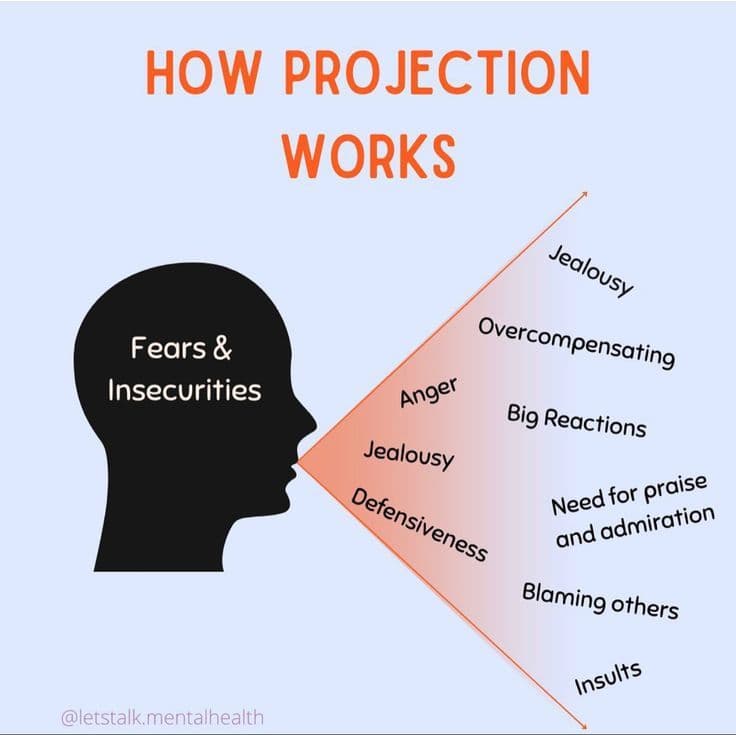
Projection, in its classical Freudian sense, is a one-way expulsion: an unacceptable impulse or quality is attributed to another person, while the self remains largely unchanged. The jealous husband sees his wife’s innocent friendliness as seduction, but his internal state, while agitated, is not fundamentally transformed by the misperception. Melanie Klein, observing the intense phantasy life of very young children, discerned something more radical. In the primitive mind, the phantasy of putting parts of the self into the object is not a mere misattribution; it is felt as a concrete act. The infant who experiences a rage so overwhelming that it threatens to annihilate from within may, in unconscious phantasy, expel that rage into the mother. But the process does not end there. The mother, as a real external person, is now perceived as the carrier of that rage—and the infant, emptied of it, may then fear her as the persecutor who now holds the dangerous contents.
The Three-Step Dance
Klein’s original formulation already contained the seeds of an interpersonal drama. The subject projects a split-off part of the self (or an internal object) into an external object. Then, through subtle behaviors and affective pressures, the subject exerts control over the object, unconsciously pressuring the recipient to feel and act in accordance with the projection. Finally, the object, if the induction succeeds, actually experiences the projected affect, and the subject may then re-introject a now-modified version of what was expelled. This is not projection followed by identification in sequence; it is a single, albeit complex, process—a way of being with the object that forces the object to live out the disowned inner reality. The concept thus crosses the boundary from intrapsychic to intersubjective. It is not merely a fantasy; it is a transaction.
The Primitive Communication of Infancy: Bion’s Transformative Reading
From Evacuation to Communication
Wilfred Bion, building on Klein, fundamentally reframed projective identification. He saw it not only as a primitive defense against unbearable states but as the very first form of non-verbal communication—the infant’s only means of conveying a terrors that cannot be thought. The infant’s overwhelming fear of dying, for instance, cannot be symbolized; it is experienced as raw, unprocessed sensory-emotional data that Bion called beta-elements. The infant, in phantasy, projects these beta-elements into the mother. A receptive mother allows herself to be disturbed by the infant’s distress, experiences it as her own anxiety for a moment, and then, through her mature mind, processes it into alpha-elements—thinkable thoughts, emotional meaning. She returns the now-digested experience to the infant in a tolerable form, through holding, tone of voice, and attuned response. The infant introjects not just relief but the very capacity to think about its own experience.
The Container-Contained Model
This became the core of Bion’s container-contained (♀/♂) model. The mother functions as a container for the infant’s unbearable projections. Successful containment transforms raw terror into mental growth. But this hinges on the mother’s capacity to be receptive without being overwhelmed, to take in the projection without acting on it destructively or rejecting it outright. When the container fails—when the mother defends against the infant’s distress, retaliates, or collapses—the infant re-introjects not understanding but a “nameless dread,” a terror that now seems even more dangerous because even the container could not hold it. Projective identification, then, is a double-edged sword: it is the mechanism by which we offload pain onto others, but also the very foundation of empathy, emotional learning, and the human capacity to share mental states. To demonize it is to misunderstand the nature of psychic life; without it, we would be islands incapable of true resonance.
“Projective identification is not a mistake of perception. It is the unconscious effort to make another person feel what we cannot bear to know is ours—and thereby to control, communicate, or destroy the unwanted self.”
The Recipient’s Predicament: Feeling the Alien Within
How Induction Works
The recipient of a projective identification does not simply imagine the projected feeling; they are induced to live it. This induction operates through a myriad of subtle, often non-verbal cues: a tone of voice that accuses, a facial expression that invites a specific emotional response, a narrative that casts the listener in a pre-scripted role. A patient who cannot bear their own dependency may describe their problems in a way that makes the therapist feel an urgent, almost compulsive need to offer solutions. The patient then disowns the dependency by locating it in the therapist, who feels the pressure to be the omnipotent rescuer. The therapist’s experience is not a reflection about the patient; it is a live installation of the patient’s disowned part. For the clinician, recognizing that a powerful feeling that arises suddenly and disproportionately in the session may be a projective identification is a crucial act of survival and understanding. It transforms what might feel like a personal failing (“Why am I so anxious with this patient?”) into a piece of clinical data.
The Therapist Under Siege
Working with highly disturbed patients often involves being the recipient of violent or deeply disturbing projections. A patient with a history of abuse may unconsciously make the therapist feel like a predator, while the patient occupies the role of helpless victim. The therapist may feel invaded by sadistic impulses or overwhelmed by a sense of incompetence that precisely mirrors the patient’s own dissociated self-states. If the therapist acts out—becoming cold, punitive, or overly seductive—the projective identification has triumphed. The therapeutic task is to survive the projection without retaliation or collapse, to hold the foreign body in consciousness, and eventually to help the patient re-own it. This is excruciatingly difficult work; it requires the therapist to suffer what the patient cannot yet suffer, while remaining a thinking, reflective presence. It is the psychoanalytic version of “taking the blow.”
Projective Identification in the Everyday: The Unseen Choreography of Relationships
Couples and the War of Ghosts
Intimate partnerships are fertile ground for projective identification. One partner, unable to tolerate their own aggression, may act with exaggerated gentleness while unconsciously provoking the other to express anger for both of them. The “quiet one” and the “angry one” are often locked in a mutual projection system, each carrying a disowned piece of the other’s inner world. A wife who projects her own ambition into her husband may become his most devoted supporter, living vicariously through his career, yet secretly resenting him for the very success she has fostered. Meanwhile, he may feel an oppressive pressure to succeed, a burden he cannot name, because it is not entirely his own. The divorce that erupts over “irreconcilable differences” frequently conceals a failure to reintegrate these projected parts; when the container couple splits, each person is left with the half-life they had assigned to the other, suddenly impoverished.
Workplaces and Scapegoating
Organizations are emotional ecosystems that run on projective identification. A team that cannot acknowledge its collective anxiety about a failing project may locate all the incompetence in one member, who is then scapegoated and eventually fired. The group feels momentarily purified, the anxiety apparently resolved—until the next target emerges. The scapegoated individual often colludes unconsciously, having their own readiness to receive the group’s disowned vulnerability. Leaders who inspire fierce loyalty or fear often do so by becoming containers for the idealizing or persecutory projections of their followers. The charismatic CEO carries the team’s disowned grandiosity; the tyrant carries their disowned sadism. When the leader falls, it is not just a person who fails but a whole system of projection that collapses, leaving the group to confront the now-uncontained affects it had outsourced.
Context | Projector’s Disowned State | Recipient’s Induced Experience | Typical Outcome |
|---|---|---|---|
Intimate relationship | Dependency, vulnerability | Feeling burdened, caretaking, resentment | Reciprocal burnout, chronic dissatisfaction |
Workplace team | Incompetence, fear of failure | Scapegoated individual becomes anxious underperformer | Expulsion of member, temporary group cohesion |
Parent-child dyad | Parent’s unfulfilled ambitions or shame | Child becomes overachiever or identified patient | Child’s identity fused with parental projections |
Social media discourse | Group’s disowned aggression, envy | Public figure becomes hated villain or idol | Polarization, collective catharsis |
The Social and Political Body: Projective Identification at Scale
The Other as Dustbin
Projective identification is not confined to the dyad; it scales to the level of entire societies. A nation may project its disowned cruelty, greed, or sexual licentiousness onto a minority group, and then, through discriminatory laws and rhetoric, induce that group to live out the projection. The colonized are treated as lazy, primitive, or hypersexual, and the material conditions created by the colonizer—poverty, broken families, disenfranchisement—generate behaviors that seem to confirm the stereotype. The projection becomes reality through systemic enforcement, and the dominant group feels both superior and terrified of the monster it has created. This is the psychotic core of racism and xenophobia. The foreigner is not merely misperceived as dangerous; they are made dangerous by the very violence the group directs at them, and then pointed to as the proof of the original projection. It is a closed, perfectly self-fulfilling loop that only breaks when the container refuses to contain—when the projected-on group speaks its own experience and disrupts the phantasy.
The Digital Amplification of Splitting
Social media accelerates and ritualizes projective identification. The algorithm curates a simplified world of heroes and villains, and users pile their disowned rage, envy, and hope onto public figures. A celebrity or politician becomes a shared container for collective affects that individuals cannot metabolize alone. The vitriol directed at a young actress for a minor transgression carries the weight of a thousand personal shames that have found a single outlet. The adoration of a tech visionary carries the disowned agency and hope of followers who feel powerless. Cancel culture, at its most primitive, functions as a mass projective identification: the group locates all badness in a single person, then annihilates them symbolically, experiencing temporary relief—until the next container is needed. The speed of these cycles prevents the slow, painful work of re-owning one's own shadow.
The Clinical Art: Surviving and Interpreting the Projective Storm
The Therapist’s Countertransference as a Diagnostic Tool
In classical technique, countertransference was seen as an interference, the analyst’s own unresolved issues contaminating the work. The Kleinian tradition, especially through Paula Heimann and Heinrich Racker, reconceptualized countertransference as a creation partly induced by the patient—a direct expression of the patient’s projective identification. The therapist, attending carefully to their own unexpected emotional responses—sudden boredom, inexplicable sexual arousal, feeling stupid, or a wave of uncharacteristic rage—can use these as a compass. The feeling is not an obstacle; it is the very material of the session. The therapist who feels crushed by a patient’s hopelessness may be feeling the patient’s own disowned despair, which the patient cannot experience directly without psychological collapse. The task becomes to hold that despair in reverie, to name it gently, and eventually to help the patient recognize it as their own.
Techniques of Containment and Interpretation
Working through projective identification requires more than intellectual decoding. The analyst must first survive the induction without resorting to action. Then, a gradual interpretation can link the patient’s behavior to the feelings it evokes in the therapist: “I notice that when you describe being abandoned, I feel a strong urge to reassure you in a way that feels almost automatic, as if I’m not allowed to just be quiet and think. I wonder if this pressure I feel might be something you’re very familiar with inside yourself.” Such interpretations are not delivered from a detached height; they emerge from the heat of the intersubjective moment. The goal is for the patient to tolerate the retraction of the projection, to re-experience the original unbearable affect within a safer relational matrix, and thereby to expand the mind’s capacity to hold its own contents. This process is not linear; it often requires innumerable cycles of projection, containment, and gradual re-introjection.
The Body as Site of Projection: Somatic Resonance and Unthought Knowns
When the Therapist’s Body Speaks
Projective identification does not respect the mind-body boundary. A therapist listening to a patient who cannot consciously grieve may find themselves fighting back inexplicable tears, or developing a headache during sessions with a patient who dissociates from rage. These somatic countertransference responses are pre-symbolic communications, beta-elements that bypass language entirely. The body of the therapist becomes a resonant chamber for what the patient’s body knows but cannot represent. A patient who was physically abused may induce in the therapist a tightness in the chest, a tension in the jaw, that exactly mirrors the traumatic body-memory. Attending to these somatic signals can open a pathway to experience that verbal interpretation alone might never reach. The analyst’s body is, in this sense, a clinical instrument—one that must be calibrated through personal analysis and bodily awareness.
The Enactment of the Unspeakable
Sometimes projective identification escalates into an enactment: a behavioral sequence played out between patient and therapist that expresses what cannot yet be spoken. The therapist, under pressure, may become subtly rejecting, overly inquisitive, or unnaturally silent, collaborating in a scene that re-creates an early relational trauma. Enactments are inevitable and, when recognized, invaluable. They are the projective identification made flesh. By surviving the enactment and then reflecting on it together—without blaming—the analytic dyad can transform a repetition compulsion into a memory. The therapist’s acknowledgment of their own participation (“I realize I became distant just when you were sharing something painful, and I wonder if that’s a familiar experience for you”) can be more mutative than a purely verbal interpretation.
Differentiating Projective Identification from Neighboring Concepts
Where the Lines Blur
A frequent confusion lies between projective identification and ordinary projection, transference, or empathy. While all involve an externalization of inner states, projective identification uniquely includes a pressure toward the other to become the projected content. The table below maps these distinctions, though clinical reality often blends them.
Concept | Core Mechanism | Interpersonal Pressure | Recipient’s Experience |
|---|---|---|---|
Projection | Attributing one's own unacceptable impulse/quality to another | None; perception is distorted but the other is not changed | May feel misunderstood but not internally altered |
Projective Identification | Evacuating a split-off part of the self into the other, then controlling the other to conform | Strong; subtle behaviors induce the projected state in the other | Feels inhabited by alien affect, often compelled to act it out |
Transference | Reacting to a current person as if they were a figure from the past | Minimal direct induction; the other is a screen for projection | May feel puzzled by the inappropriateness of the response |
Empathy | Resonating with another's emotional state while maintaining self-other distinction | None; it is a receptive, voluntary process | Feels with the other but retains a sense of agency |
Enactment | Unconscious behavioral collusion between patient and therapist that dramatizes a relational pattern | Mutual; both parties contribute | Both later may feel “we did that together without knowing why” |
Projective Identification as a Spectrum
It is helpful to think of projective identification along a continuum from benign to malignant. At its most benign, it is the basis of emotional contagion and intuition; we “catch” a friend’s joy or a baby’s distress and respond appropriately. At its most pathological, it is a violent intrusion that can drive the recipient mad, as in cases of folie à deux or severe gaslighting, where the victim comes to doubt their own mind. Most everyday instances fall in the middle: a partner who “makes” us feel guilty, a boss who induces helplessness. The health of a relationship can be measured by the fluidity with which projections can be returned and metabolized, rather than chronically stored in one partner.
The Ethical Quandary: Who Owns the Feeling?
Responsibility in the Intersubjective Field
If projective identification is a ubiquitous unconscious process, questions of responsibility become deeply ambiguous. If a person induces another to feel rage through subtle provocation, is the provoked person’s outburst entirely their own? Legal and moral frameworks rely on a clear agent, but projective identification reveals that emotions are co-constructed. A couple locked in a projective system is less a meeting of two separate wills than a single psychological field with two poles. This does not absolve anyone of accountability—adults are expected to observe and regulate their responses—but it calls for a more complex understanding of relational justice. The recognition that an emotion “starts” somewhere else does not eliminate the receiver’s task of metabolizing it rather than acting on it. And the projector, once aware, bears the burden of taking back their disavowed parts. The ethics of projective identification is an ethics of reclaiming one’s own shadow.
The Analyst’s Ethical Burden
For therapists, the ethical dimension is acute. A patient who projects sexual desire into the therapist does so as an unconscious communication, not a literal invitation. The therapist who reciprocates—who acts on the induced feeling—has failed the container function catastrophically. The asymmetry of the therapeutic relationship means that the therapist must carry the lion’s share of responsibility for detecting and processing the projection. This is why personal analysis is non-negotiable: an analyst whose own unconscious is a sealed room will inevitably act out what they cannot feel, causing harm. The ethical use of projective identification requires the therapist to be a living vessel for the patient’s pain, without confusing it with love, hate, or desire for the patient. It is an impossible ideal, and yet we approach it as best we can.
“In the consulting room, the patient projects not only into the therapist’s mind, but into the therapist’s being. The question is not whether we will be colonized, but whether we can house the visitor long enough to introduce it to its owner.”
The Limits of Understanding: When Projective Identification Remains Uncontainable
The Primitive Agony Beyond Words
Bion spoke of “beta-elements” that defy thought. Some projective identifications carry such primitive terrors—of annihilation, of fragmentation—that no human container can fully digest them. Working with survivors of extreme early trauma, one encounters feelings that seem to have no narrative, no shape, only a raw, formless dread that threatens to overwhelm the therapist’s capacity for reverie. Here, the therapist’s task is not to transform the unthinkable into thought, but simply to survive it—to go on being present without retreat, without false reassurance, and without collapse. Sometimes the most profound containment is a silent, steady presence that says, without words: “I will not be destroyed by what you have brought, and I will not abandon you with it.” This kind of containment is sacramental rather than interpretive. It respects the limits of language and acknowledges that some wounds never fully become meaning; they become scars that may be touched but not erased.
The Opacity of the Other
There is a danger in the very concept of projective identification: the clinician who pathologizes every intense feeling as “the patient’s projection,” thereby denying their own genuine reactions. Not everything that arises in the therapist is induced; the therapist is a real person with real history. Disentangling what belongs to the patient and what belongs to the self is a lifelong discipline. Moreover, some aspects of the patient’s experience remain fundamentally inaccessible; the other’s subjectivity is never fully transparent. Projective identification, for all its power, does not grant telepathy. It is a bridge made of shadows, and it can bear only so much weight. The honest analyst acknowledges the presence of uncontainable elements and does not pretend to a mastery that would be a defense of its own.
Projective Identification and the Construction of the Self
We Are the Introjected Other
If projective identification is how we expel parts of ourselves, introjective identification is how we take in parts of others. The self, from a Kleinian and post-Kleinian perspective, is built out of the internalized objects derived from these cycles of projection and introjection. The mother who lovingly contains the infant’s projections becomes an internal good object that later forms the basis of a capacity for self-soothing. The father whose gaze is consistently contemptuous is introjected as a harsh internal critic. Our very sense of who we are—our identity, our gender, our values—is sedimented from the projections we have received and made our own. A child who is repeatedly treated as if they are fragile becomes, through projective identification, actually fragile. The internal world is a community of ghosts, many of them hostile, and much of psychoanalysis is about making those ghosts speak so they can be integrated or laid to rest.
Digital Identity as Shared Projective Field
The self presented on social media is an ongoing act of projective identification. We project a curated image—confident, successful, desirable—and the audience, through likes and comments, affirms and shapes that projection, which we then introject as a real sense of identity. But the audience also projects its own needs onto the profile: they see a brand, a mirror, an object of envy. The influencer becomes a collective container for millions of disowned aspirations and envies, and their identity becomes a co-construction they may barely recognize. The collapse of a digital persona—a cancellation, a scandal—is a massive failure of projective identification: the container breaks, and the projected material returns in a flood. Understanding this through a Kleinian lens reveals that identity is never wholly private; it is always negotiated in an intersubjective field, whether face-to-face or screen-to-screen.
Conceptual Table: The Bionian Container-Contained Model
Element | Infant (Projector) | Mother (Container) | Outcome if Successful | Outcome if Failed |
|---|---|---|---|---|
Beta-elements | Raw, unthinkable terror/frustration | Receives, experiences emotional disturbance | Transformed into alpha-elements, symbolic thought | Returned as nameless dread, intensified terror |
Projective phantasy | Evacuation into mother, concretely felt | Allows self to be used as container | Infant introjects a capacity for thinking and tolerance of frustration | Infant introjects a fear of mental processing itself |
Alpha-function | Absent; needs to be borrowed | Provides through reverie, maternal preoccupation | Development of the “thinking couple” internally, basis for symbolism | Alpha-function destroyed or never developed, dominance of beta-screen |
Relation to the object | Object used for evacuation, feared as persecutor | Object survives, remains receptive but distinct | Object perceived as reliable, separate; depressive position possible | Object perceived as annihilating or dead; paranoid-schizoid entrenched |
Closing Reflection: The Shared Atmosphere of the Mind
Projective identification reveals that the boundary between self and other is not a wall but a membrane, perpetually crossed by unconscious currents. What we call “my feeling” is often a visitor that arrived long before we noticed it; what we call “your problem” may be an exiled piece of our own history. This is not a comfortable vision. It undermines the atomistic individualism on which so much of our law, morality, and self-help rests. But it also opens a deeper possibility: that we are not separate organisms jostling in space, but participants in a continuous field of psychic exchange, each of us shaping and being shaped by the emotional lives of those around us. The recognition of projective identification brings with it an immense responsibility—to become better containers, more conscious of what we emit and what we absorb, more willing to reclaim what we have disowned rather than forcing it into others.
In an era of polarized discourse and digital disembodiment, the capacity for reverie—the quiet, receptive state in which the other’s unconscious may find a home—is a countercultural act. To listen not just to words but to the pressures that accompany them, to notice when we are being enlisted in a drama that predates our meeting, to offer back what we have taken in after it has been held, questioned, and rendered less toxic: this is the clinical heart of psychoanalysis, and it is also a model for a more honest form of human relationship. Projective identification is not a flaw in the psyche to be eradicated. It is the very texture of our being-with-others, and the question is not whether we engage in it, but with how much awareness, how much compassion, and how much courage we consent to the hidden choreography that binds us.