


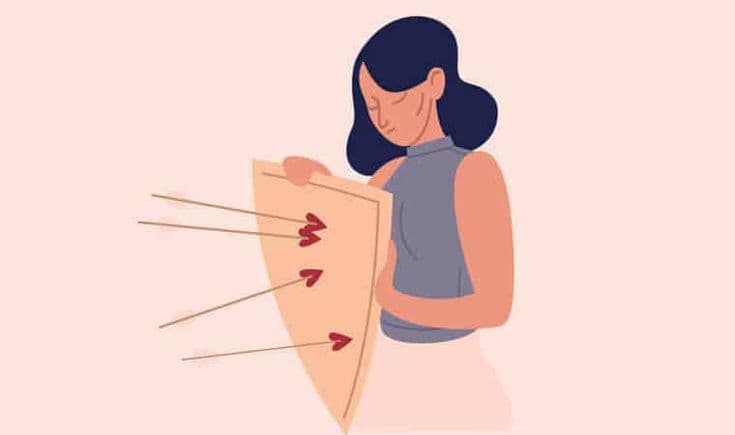
You are about to give a presentation. Your stomach clenches. A thought flickers: "What if I fail?" Then, before you can fully register the fear, you find yourself scrolling through your phone, checking email, straightening papers — anything but preparing. Later, you cannot explain why you were distracted. You say, "I was just busy." The discomfort has been handled, but you did not handle it. Something in you handled it for you. That something is a defense mechanism.
Defense mechanisms are the mind's automatic, unconscious strategies for managing anxiety, conflict, and emotional pain. They are not chosen; they happen. They are not signs of weakness; they are necessities of functioning. Without defenses, every impulse would demand immediate expression, every criticism would shatter self-esteem, every loss would drown consciousness in grief. Defenses are the ego's first responders — often crude, sometimes elegant, always operating below the radar of awareness.
The popular understanding of defense mechanisms is that they are bad — distortions to be eliminated, barriers to authenticity. This is a misunderstanding. Defenses are neither good nor bad; they are adaptive or maladaptive depending on context, rigidity, and cost. The same mechanism that saves a child from unbearable trauma can, in adulthood, imprison that adult in loneliness. The task of psychoanalysis is not to strip away defenses but to make them more flexible — to help the ego choose when to repress and when to face, when to project and when to own.
1. The Origin of Defenses: Anxiety as the Engine
Defense mechanisms arise to manage anxiety — not the realistic fear of an external threat, but the signal that an internal conflict is about to become overwhelming. Freud distinguished three types of anxiety: realistic (danger in the world), neurotic (fear that id impulses will break through and cause punishment), and moral (fear of superego reproach). All three can trigger defenses. The ego, sensing a rise in tension, automatically deploys strategies to keep threatening material out of conscious awareness.
The infant has only primitive defenses: projection ("the bad is out there"), denial ("this is not happening"), and introjection ("the good is inside me"). As the child develops, more complex defenses emerge: repression, reaction formation, intellectualization, rationalization, and eventually mature defenses like sublimation, altruism, and humor. The developmental trajectory is not about eliminating defenses but about replacing rigid, reality-distorting defenses with flexible, reality-acknowledging ones. A toddler who denies that he broke the vase is using an age-appropriate defense. A forty-year-old who denies his drinking problem is using the same defense maladaptively.
This developmental perspective challenges the view that defenses are simply pathologies. They are achievements of the ego — solutions to the problem of living with a mind that generates conflict, desire, and fear. The question is not whether you have defenses. The question is which ones you have, how rigidly you use them, and what they cost you in terms of genuine contact with reality and with yourself.
"Defenses are the ego's way of saying, 'I cannot bear that yet.' Sometimes that 'yet' lasts a lifetime."
2. Primary vs. Secondary Process: The Two Languages of Defense
To understand defense mechanisms, one must understand the distinction between primary process (the unconscious mode of thinking) and secondary process (the conscious, logical mode). Primary process is imagistic, non-linear, indifferent to negation and contradiction, driven by the pleasure principle. Secondary process is verbal, sequential, reality-oriented, governed by logic. Defense mechanisms transform primary process material (unacceptable wishes, terrifying memories) into forms that secondary process can tolerate — or, failing that, keep the material entirely out of awareness.
Repression, the most basic defense, works by preventing the translation of primary process impulses into secondary process language. The wish remains, but its representational form is blocked. Other defenses work by distorting the translation: projection attributes the wish to another person; reaction formation turns the wish into its opposite; rationalization supplies a logical (secondary process) explanation that masks the primary process motive.
The clinical implication is that defenses are not lying in any simple sense. The person who rationalizes truly believes their excuse; the person who projects truly believes the other is angry. The defense operates by altering perception itself, not by suppressing a truth that remains accessible. This is why simply telling someone "you're projecting" rarely works. The defense must be interpreted gently, repeatedly, and in the context of a trusting relationship — because from the inside, the projection feels like reality.
3. The Hierarchy of Defenses: From Primitive to Mature
Psychoanalytic clinicians have identified dozens of defense mechanisms. They are often organized along a continuum from immature (more reality-distorting, less adaptive) to mature (more reality-acknowledging, more adaptive). The following table summarizes key defenses in rough hierarchical order:
Level | Defense | Brief Description | Example |
|---|---|---|---|
Primitive | Denial | Refusal to acknowledge external reality or internal feeling | Denying a cancer diagnosis despite clear evidence |
Projection | Attributing one's own unacceptable feelings to another | "He's angry at me" when you are angry at him | |
Splitting | Seeing people or situations as all-good or all-bad | Idealizing a new partner, then devaluing them utterly after a small slight | |
Acting out | Expressing an unconscious wish through impulsive action | Getting drunk before a difficult conversation instead of talking about anxiety | |
Neurotic | Repression | Forgetting or blocking threatening content from awareness | No memory of a traumatic event |
Displacement | Redirecting an emotion from its original object to a safer one | Yelling at a child after being criticized by your boss | |
Reaction formation | Turning an unacceptable impulse into its opposite | Being excessively kind to someone you secretly hate | |
Intellectualization | Thinking about feelings in abstract terms to avoid experiencing them | Analyzing the psychology of your panic attack instead of feeling the fear | |
Rationalization | Offering logical reasons for irrational behavior | "I failed because the test was unfair" (when you did not study) | |
Isolation of affect | Separating a thought from its emotional charge | Describing a traumatic event as if reading a news report | |
Mature | Sublimation | Channeling unacceptable impulses into socially valued activities | Aggressive drives channeled into competitive sports or surgery |
Humor | Expressing painful feelings without discomfort by making them funny | Laughing about your own mistakes to reduce shame | |
Altruism | Helping others as a way to manage one's own distress | A recovering addict becoming a counselor |
AnticipationRealistic planning for future discomfortPreparing for a difficult conversation instead of avoiding it
The hierarchical model is clinically useful but not rigid. A "mature" defense can be used rigidly and pathologically; a "primitive" defense can be adaptive in extreme situations (e.g., denial in the immediate aftermath of a catastrophe). Context, flexibility, and the degree of reality distortion matter more than the defense's position on a ladder.
4. Repression: The Grandfather of Defenses
Repression is the most famous — and most misunderstood — defense mechanism. It is not simply forgetting. It is an active, motivated process that keeps threatening mental contents out of conscious awareness. The repressed does not disappear; it expresses itself indirectly, in dreams, slips, symptoms, and patterns of behavior. The person who has repressed a childhood trauma may have no conscious memory of the event but may suffer from panic attacks, phobias, or relationship difficulties whose source is unknown to them.
Repression differs from suppression, which is a conscious effort to put something out of mind (e.g., "I'll think about that later"). Suppression is not a defense mechanism in the psychoanalytic sense; it is a deliberate coping strategy. Repression is automatic, unconscious, and often leaves no trace of its operation. You do not decide to repress; you simply find that certain memories, wishes, or feelings are inaccessible. The inaccessibility is the defense.
The clinical challenge with repression is that you cannot simply "lift" it by an act of will. The material is repressed because it was once overwhelming. To bring it to consciousness requires a safe relationship (with an analyst), a method (free association, dream interpretation), and time. Even then, the repressed may emerge only in fragments, and the ego will resist its emergence (see Section 7). Repression is not an enemy; it is a guardian. The task is not to fire the guardian but to persuade it that the threat has passed.
5. Projection and Introjection: The Two Sides of the Boundary
Projection and introjection are complementary defenses that manage the boundary between self and other. Projection attributes an unacceptable aspect of oneself to another person. You are angry, but cannot tolerate your anger, so you perceive the other as angry. You are attracted to someone forbidden, so you convince yourself they are seducing you. Projection keeps the self pure by expelling the bad, but at the cost of misreading reality — and often provoking the very response you fear. If you treat your partner as if they are angry, they may become angry.
Introjection is the opposite: taking in external qualities as if they were one's own. The child introjects the parent's prohibitions, which become the superego. The adult introjects the admired colleague's confidence, temporarily feeling stronger. Introjection can be adaptive (learning from others) or maladaptive (losing one's own identity by merging with a dominant other). Pathological introjection is seen in depression: the person has introjected a lost loved one and now directs anger toward that introject — which means directing anger toward the self.
Projection and introjection often operate together in a dance of projective identification, a more complex phenomenon in which the projector not only attributes a feeling to another but also unconsciously pressures the other to actually feel it. A patient who cannot bear his own helplessness may project it onto his therapist, and then behave in ways that make the therapist feel helpless. The therapist's countertransference — the induced feeling — becomes data about the patient's internal world. Projective identification is a defense that also becomes a form of primitive communication.
6. Rationalization and Intellectualization: The Smokescreen of Reason
Human beings are rationalizing animals. We are not nearly as rational as we believe, but we are exceptionally good at generating plausible-sounding explanations after the fact. Rationalization is the defense mechanism that supplies logical reasons for irrational behavior. The smoker says, "I need to maintain my weight, and quitting would make me gain." The spurned lover says, "I didn't really want her anyway — she was too conventional." The rationalization is not necessarily false, but it is not the real reason. The real reason (nicotine addiction, fear of abandonment) is too painful to acknowledge, so the ego substitutes a more palatable narrative.
Intellectualization is rationalization's close cousin. It involves thinking about an emotional topic in abstract, detached terms, thereby avoiding the feeling itself. The medical student who discusses the details of her own illness as if she were a case study is intellectualizing. The man who responds to a breakup by reading attachment theory and analyzing his childhood patterns — without ever crying — is intellectualizing. Intellectualization is common in academic and professional settings, where it is often rewarded. The cost is that the person may never actually feel their feelings, leaving the emotional work undone and symptoms like insomnia or free-floating anxiety in its place.
Both rationalization and intellectualization preserve self-esteem and manage anxiety in the short term. In the long term, they can prevent genuine emotional processing. The task of therapy is not to eliminate reason but to help the patient feel the feeling behind the rationalization — to say, "I am afraid of being alone" rather than "She wasn't right for me anyway." The difference is not in the words but in the lived, bodily experience of the emotion.
7. Resistance: The Defense Against the Defense
When a defense is working well, the person is unaware of it. When psychoanalytic treatment begins to approach a defended area, the ego intensifies its defenses. This intensification is called resistance. Resistance is not the patient being difficult; it is the psyche's natural response to the threat of change. It is the defense mechanism rising to its own defense.
Resistance can take many forms: coming late to sessions, forgetting what was discussed, changing the subject, suddenly feeling that therapy is useless, developing intense feelings for the therapist (erotic transference) that distract from the work, or intellectualizing instead of feeling. The analyst does not attack resistance. The analyst helps the patient observe it. "I notice that every time we talk about your mother, you begin to describe the weather in detail. What is that like for you?" The question is not an accusation; it is an invitation to become curious about one's own evasions.
The paradox of resistance is that it is both an obstacle and the path. The very defenses that keep the patient stuck also point to where the stuckness is located. The patient who cannot talk about sex is revealing the importance of sex. The patient who cannot feel sadness is showing where sadness is stored. Resistance is the ego's hand, trying to protect a wound. The analyst's job is not to pull the hand away but to help the patient notice that they are holding it there — and to ask whether it might be safe to let go, just a little.
8. The Adaptive Unconscious: Defenses in Everyday Life and Culture
Defenses are not confined to the consulting room. They structure everyday interactions, workplace dynamics, and cultural phenomena. The following table contrasts how the same defense might appear in personal life versus in broader cultural contexts:
Defense | Personal Example | Cultural/Collective Example |
|---|---|---|
Projection | A partner who is unfaithful constantly accuses the other of cheating | A nation that commits atrocities projects evil onto its enemy |
Reaction formation | A homophobic preacher who secretly has same-sex desires | A political party that loudly denounces what it secretly practices |
Splitting | Seeing an ex as all-bad, a new lover as all-good | Media that portrays one party as saviors, the other as demons |
Rationalization | Explaining away a failed project with external factors | Corporations justifying pollution as "necessary for jobs" |
Social media amplifies defenses. The algorithm rewards outrage (projection), virtue signaling (reaction formation), and echo chambers (splitting). The user who scrolls to avoid a difficult emotion is using displacement (from internal discomfort to external distraction). The online argument that feels so compelling is often a projective enactment — each participant fighting not the other but an internal demon they have ejected onto the screen. Recognizing this does not make one immune, but it offers a moment of pause: "Am I really arguing with this person, or with a ghost?"
Defenses are also woven into organizational life. A company that blames its failures on a rival (projection), or that celebrates "work-life balance" while expecting 80-hour weeks (reaction formation), or that restructures endlessly to avoid facing a dysfunctional culture (acting out) — these are collective defenses. They protect the organization from anxiety at the cost of reality testing. The consultant who points out the defense is rarely thanked.
9. The Question of Change: Can Defenses Be Altered?
Defense mechanisms are not fixed character traits. They can and do change, but not through direct effort. You cannot decide to stop rationalizing; that decision would itself be a rationalization. Change occurs through the slow, indirect process of psychoanalytic therapy: the defenses are named, their cost is examined, and new experiences (particularly in the transference) provide opportunities to respond differently.
Several factors predict defensive change:
Interpretation: The analyst helps the patient see the defense in action. "I notice that when you feel sad, you immediately start making jokes." The interpretation must be timed so that the patient is ready to hear it — not so early that it is dismissed, not so late that it is redundant.
Working through: The same defense is interpreted repeatedly across different contexts. The patient begins to recognize the pattern themselves, to notice the joke before it leaves their mouth, to pause.
New relational experience: The analyst does not respond as the patient's internal objects expect. The patient projects rage, and the analyst does not retaliate. The patient idealizes, and the analyst does not become inflated. This mismatch loosens the old defense.
Ego strengthening: As the patient gains capacity to tolerate anxiety without immediate defensive discharge, the ego can choose more mature defenses — or sometimes, no defense at all, just the raw feeling, held without action.
Change is rarely linear. The patient may regress to more primitive defenses under stress. A defense that seemed resolved may reappear in a new form. This is not failure; it is the nature of psychic structure. The goal is not a defense-free existence (impossible and undesirable) but a more flexible, less costly repertoire.
"The mature person is not the one without defenses, but the one whose defenses are like a well‑fitted suit — worn when needed, not confused with the skin."
10. The Paradox of Insight: Knowing the Defense Does Not Drop It
A common frustration in therapy: the patient gains insight — "I see that I use intellectualization to avoid my sadness" — yet the intellectualization continues. The patient may even intellectualize about their intellectualization, producing a recursive loop that feels like progress but is actually the same defense wearing a new hat. Insight alone is rarely sufficient.
Why does insight fail to produce immediate change? Because defenses are not beliefs; they are automatic, embodied, procedural responses. They were laid down before language, often in the first years of life. Knowing that you project does not stop the projection because the projection happens before you know. The projection is the perception. By the time you have the thought, "I am projecting," the projection has already occurred. The task is not to stop projection but to shorten the interval between the projection and its recognition — to move from being in the defense to observing the defense, and eventually to catching it before it fully forms.
This is why working through takes time. The same insight must be lived hundreds of times, in slightly different contexts, until the neural (or psychic) pathways are rerouted. The patient who first says, "I am isolating affect" with pride may still be isolating. The patient who says, with a tired sigh, "There I go again — isolating affect" — that patient is closer to change. The difference is not in the words but in the degree of genuine contact with the avoided feeling.
11. Mature Defenses and the Question of Virtue
The mature defenses — sublimation, humor, altruism, anticipation — are sometimes described as "healthy" or even "virtuous." But this can be misleading. A person who sublimates aggressive drives into a surgical career may be a skilled, compassionate surgeon — or a sadist who cuts into bodies with unconscious glee. Altruism can be a genuine gift or a form of covert narcissism (the helper who needs to be needed). Humor can lighten a room or cruelly deflect vulnerability.
The maturity of a defense is not determined by its name but by its consequences. A primitive defense used flexibly and temporarily (e.g., denial during the first hour after a trauma) can be more adaptive than a mature defense used rigidly (e.g., humor that never allows genuine grief). The clinician assesses not just the defense mechanism but its fit with context, its cost to the person, and whether alternative responses are available.
Moreover, the hierarchy of defenses reflects a particular cultural and developmental ideal: the autonomous, reality-acknowledging, emotionally regulated individual. This ideal is not universal. Some cultures value collective coping, religious surrender, or stoic endurance over Western-style psychological flexibility. Defenses that look primitive from one perspective may be socially adaptive in another. The psychoanalytic clinician must be humble about imposing a hierarchy.
12. Defenses in the Digital Age: The Unconscious on Screen
The digital environment presents novel opportunities for defense — and novel risks of automaticity. The smartphone is a displacement machine: anxiety arises, and instead of feeling it, you scroll. The notification is a conditioned stimulus that interrupts reflection. The algorithm learns your defensive patterns and feeds them back to you, creating a closed loop of avoidance.
Social media platforms are projection amplifiers. You project your own insecurities onto the curated images of others, then feel inadequate. You project your own aggression onto a political outgroup, then feel righteous. The platform does not cause the projection, but it removes the friction that might otherwise prompt reflection. In face-to-face conversation, a projection might be challenged by the other's response. Online, the other is a two-dimensional avatar who can be made to confirm any projection.
Digital defenses are not new in kind, but they are new in scale and speed. The person who intellectualizes about their own anxiety now has infinite content to consume — psychology articles, meditation apps, self-help videos — all of which can be used to avoid the actual feeling. The person who acts out can do so with a few keystrokes, sending a tweet they will regret within minutes. The capacity for pre-reflective action has never been higher. The capacity for reflective pause has never been more necessary — or more difficult to sustain.
Closing Reflection: The Necessary Lie
Defense mechanisms are often called "distortions." This is true, but it misses something essential. They are also the ego's way of saying yes to life under impossible conditions. The child who dissociates during abuse is not making a mistake; she is surviving. The adult who still uses denial may be protecting a fragile sense of self that cannot yet bear the truth. Defenses are not lies we tell ourselves; they are truths we live, in a form we can bear. To judge them as simply pathological is to forget the context in which they were forged.
Psychoanalysis does not aim to strip away defenses. It aims to make them more transparent, more flexible, less costly. The goal is not to live without a shield but to know that you are carrying one — and to lower it when the air is safe. The person who can say, "I am rationalizing right now, and I think I am afraid" — that person has not dropped the defense. They have befriended it. And that friendship, imperfect and ongoing, is the only mastery the ego can reasonably claim.
Frequently Asked Questions
What is a defense mechanism in simple terms?
A defense mechanism is an automatic, unconscious mental process that protects you from anxiety, conflict, or emotional pain. It distorts reality in some way to make it more tolerable. Examples include forgetting a traumatic event (repression) or blaming someone else for your own anger (projection).
Are defense mechanisms always unhealthy?
No. Defenses are necessary for normal functioning. They become unhealthy only when they are too rigid, too reality-distorting, or used inappropriately for the situation. Mature defenses like sublimation, humor, and altruism can be highly adaptive.
What is the difference between repression and suppression?
Repression is unconscious and automatic; you do not know you are repressing. Suppression is conscious and deliberate; you choose to put something out of mind (e.g., "I'll think about that later"). Suppression is not considered a defense mechanism in psychoanalytic theory.
Can you change your defense mechanisms?
Yes, but not by direct effort. Change occurs through psychotherapy, particularly psychoanalysis, where defenses are interpreted, worked through, and loosened through new relational experiences. The goal is flexibility, not elimination.
What is the most primitive defense mechanism?
Denial, projection, and splitting are among the most primitive. They emerge in early childhood and involve significant distortion of reality. They are common in young children, psychotic states, and severe personality disorders.
Is sublimation always good?
Sublimation — channeling unacceptable impulses into socially valued activities — is generally adaptive, but it can be problematic if it becomes a rigid avoidance of direct emotional expression. A workaholic who sublimates all relational needs into career success may be successful but lonely.
How do defense mechanisms relate to the id, ego, and superego?
Defense mechanisms are ego functions. The ego uses them to manage conflicts among the id (impulses), the superego (moral prohibitions), and external reality. Without defenses, the ego would be overwhelmed by anxiety.
Can defense mechanisms be observed in animals?
Some primitive defenses (denial, displacement, avoidance) appear in animals, but the more complex defenses (rationalization, intellectualization, reaction formation) require symbolic thought and language, so they are uniquely human.
Is denial always a defense mechanism?
Denial can be a defense (unconscious refusal to acknowledge reality) or a conscious decision to ignore something (e.g., "I know the statistics, but I choose to focus on the positive"). The unconscious form is the defense mechanism.
How do I know if I am using a defense mechanism?
By definition, you cannot know directly, because defenses operate unconsciously. However, you may notice patterns: repeated justifications that feel too clever, emotional reactions that seem out of proportion, or others telling you that you are avoiding something. The best way to discover your defenses is through psychotherapy.