


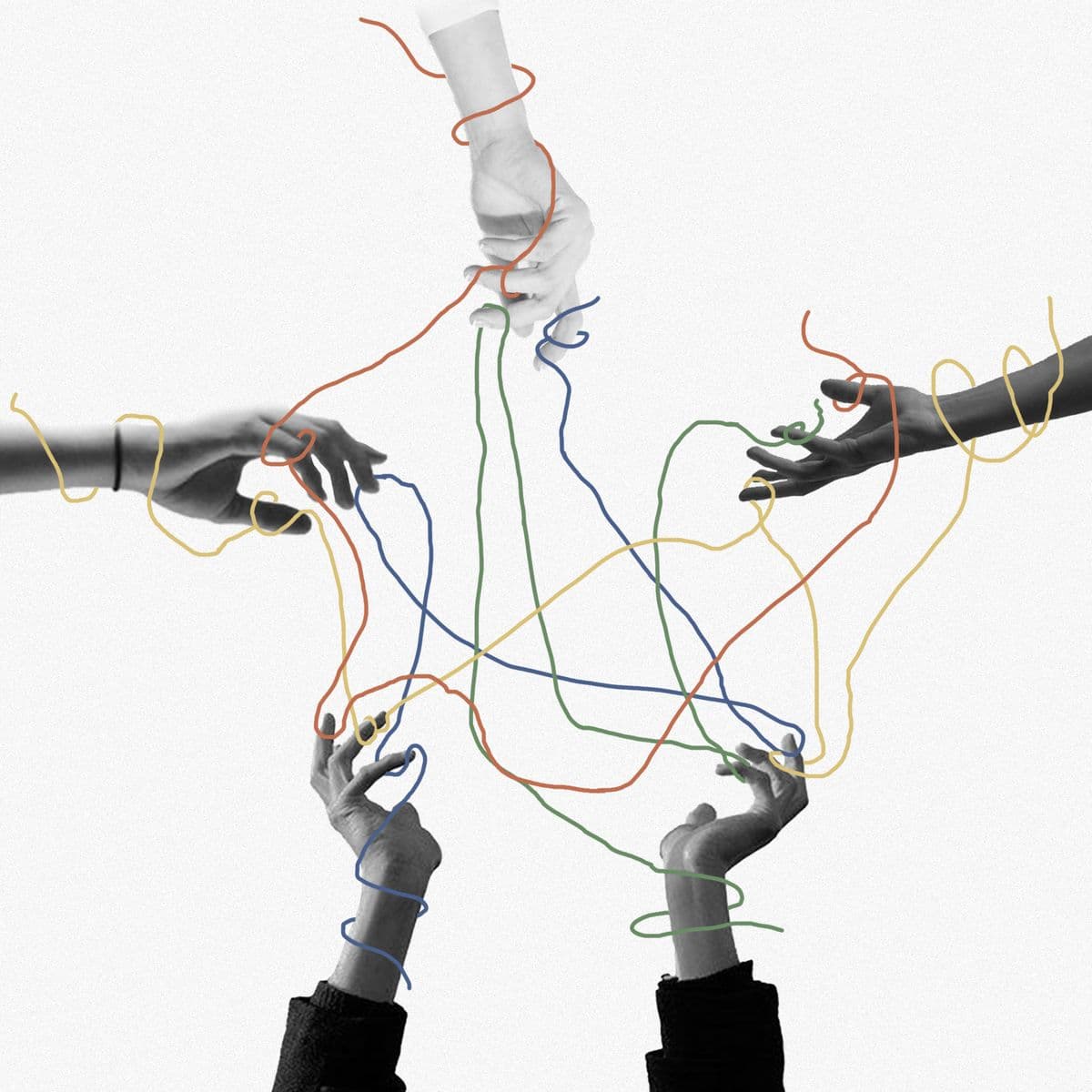
We are never alone. Even in the emptiest room, a crowd of ghosts sits with us—the mother who disappointed, the father who never arrived, the sibling whose birth exiled us from the center of the world. These presences are not memories in the usual sense, recollections we can summon at will and then dismiss. They are living forces, structural components of the mind that shape what we desire, what we fear, and what we believe we deserve. Object relations theory is the psychoanalytic tradition that takes this haunted inner world as its subject. It proposes that the fundamental motivation of human life is not the discharge of instinctual tension but the search for, and the preservation of, meaningful relationships—first with real others, then with the internalized images of those others that become the building blocks of the psyche. To ask “What is object relations theory?” is to ask how we come to carry others inside us, how the dramas of our earliest bonds become the unconscious script of our adult lives, and what it might mean to revise that script in the presence of someone willing to read it with us.
The Copernican Shift: From Drive to Object
Freud’s Original Object and the Beginnings of a Revolution
Classical psychoanalysis began with the drive. The infant, in Freud’s model, was a closed system of endogenous excitations seeking discharge; the mother was merely the most convenient instrument of gratification, a means to the end of pleasure. The term “object” itself reflected this instrumental status—the object of the drive, the target through which tension was reduced. Yet even within Freud’s own writings, cracks in this edifice appeared. Mourning and melancholia, he observed, involved an identification with the lost object, a taking-in of the other that restructured the ego itself. Here the object was not merely a disposable target; it became part of the self. This insight, like a seed planted in frozen ground, waited for later thinkers to water it into a full transformation of psychoanalytic theory.
Fairbairn’s Radical Premise: Libido Is Object-Seeking
W. R. D. Fairbairn, working in relative isolation in Edinburgh, delivered the decisive break. In a single, stunning reversal, he declared that libido is not pleasure-seeking but object-seeking. The infant does not hunger for the breast as a source of milk; the infant hungers for the mother as a person, and the milk is the medium of that connection. The entire drive-discharge model, with its hydraulic metaphors and its distinction between ego-instincts and sexual instincts, was a detour from the real psychological truth: we are made of our relationships, from the first breath to the last. When the real mother fails—as all real mothers inevitably do—the child does not simply repress a drive; the child internalizes the frustrating relationship, splitting it into good and bad aspects and building an internal world of compensatory objects that become the unconscious template for every subsequent bond. The schizoid position, Fairbairn’s term for the basic human condition, is not a pathology but the starting point of all psychological development: the split between the exciting, enticing object and the rejecting, depriving object that the child carries within.
The Internal World as a Populated Universe
Internal Objects Are Not Snapshots but Dramas
If ordinary psychology speaks of “inner voices” and “inner critics,” object relations theory takes this metaphor with deadly seriousness. An internal object is not a static representation of a person; it is a dynamic relationship between a part of the self and a part of the other, charged with affect and organized by phantasy. The internal mother is not a photograph but a drama—the self clinging to a maternal imago that sometimes smiles and sometimes turns away, sometimes holds and sometimes drops. These internal dramas are unconscious, not in the sense of being hidden behind a curtain, but in the sense of being the very medium in which conscious experience swims. We do not “remember” the rejecting father; we inhabit a world in which authority figures are always about to withdraw their love, and we respond to them with the same mixture of appeasement and rage that we felt at age four.
Part-Objects and Whole-Objects: The Evolution of Relating
Melanie Klein’s great contribution was to map the infant’s progression from part-object to whole-object relations. The infant’s earliest experience is not of a mother but of a breast—or rather, of two breasts that have no relation to each other: the good breast that appears in response to hunger, the bad breast that withholds and frustrates. This splitting is not a conscious decision; it is the primitive mind’s only way of managing the overwhelming ambivalence of a world in which the same source provides both bliss and agony. Gradually, if development proceeds well enough, the child begins to perceive that the good and bad breasts belong to the same mother, who is neither perfect nor monstrous but a whole person with both loving and frustrating capacities. This shift from part-object to whole-object relations is the psychological equivalent of the Copernican revolution: the self is no longer the center of a universe of good and evil forces, but one person among others, capable of guilt, concern, and the desire to repair.
“The infant’s internal world is not a picture gallery but a theater of war. The objects in it love, hate, pursue, and abandon each other, and the self is the stage on which these battles are fought.”
The Paranoid-Schizoid and Depressive Positions: Two Ways of Organizing Experience
Klein’s Developmental Landmarks
Klein proposed that we do not simply pass through childhood stages and leave them behind; we oscillate throughout life between two fundamental positions—clusters of anxiety, defense, and object-relations that color every experience. The paranoid-schizoid position, dominant in the first months of life, is characterized by splitting, projection, and the fear of persecution. The infant’s rage at the absent breast is projected outward, turning the bad breast into a terrifying persecutor. The self, too, is split, with the loving parts projected into the good breast to keep them safe. This position never fully disappears; in adult life, it erupts whenever we cannot tolerate ambivalence, whenever we split the world into saints and villains, whenever our own disowned guilt appears to us as the malevolence of others.
The Depressive Position: The Birth of Concern
The depressive position marks the dawning recognition that the good and bad objects are one and the same, and that one’s own aggression has endangered what one loves. This is the origin of guilt, of mourning, of the drive to repair. It is called depressive not because it is pathological but because it involves an acknowledgment of loss, of limitation, of the fact that love and hate coexist in the same heart. The depressive position is a developmental achievement, but it is a fragile one; we slide back into paranoid-schizoid modes whenever we are threatened, exhausted, or overwhelmed. A healthy psyche is not one that has permanently “reached” the depressive position but one that can tolerate the oscillation, regressing without getting stuck, returning to concern without false saintliness.
Position | Core Anxiety | Defenses | Object Relations | Adult Manifestations |
|---|---|---|---|---|
Paranoid-Schizoid | Persecutory: fear of annihilation from without | Splitting, projection, idealization, denial | Part-objects; objects are split into all-good and all-bad | Black-and-white thinking, scapegoating, idealization/devaluation cycles |
Depressive | Depressive: fear of having destroyed the loved object | Reparation, integration, sublimation | Whole-objects; ambivalence recognized and tolerated | Capacity for guilt, concern, mourning, and genuine intimacy |
Winnicott and the Holding Environment: The Setting That Creates the Self
The Good-Enough Mother
D. W. Winnicott, a pediatrician turned psychoanalyst, brought object relations theory into the nursery with a poet’s ear and a clinician’s precision. His most famous phrase, “There is no such thing as a baby,” captures the relational core: a baby can only be understood as part of a mother-infant unit. The good-enough mother is not a perfect mother but an ordinary devoted one who adapts to the infant’s needs in the early weeks with an almost trance-like preoccupation, and then, gradually, fails in tolerable doses, allowing the infant to emerge from the illusion of omnipotence into a world that is real because it resists. The holding environment Winnicott describes is not just physical cradling; it is the total psychological provision that allows the infant’s “going-on-being” to continue without interruption. When this environment fails repeatedly—when the mother impinges, intrudes, or withdraws in ways the infant cannot make sense of—the continuity of the self is broken, and a false self forms to manage the world while the true self goes into hiding.
Transitional Objects and the Space of Play
Winnicott’s concept of the transitional object—the teddy bear, the blanket, the shred of silk that the child clings to—illuminates the mysterious borderland between inner and outer reality. The transitional object is neither purely subjective hallucination nor fully objective thing; it exists in an intermediate area of experience that is the birthplace of culture, art, religion, and play. This space of paradox—the object is and is not the mother, the child both creates and finds it—is the foundation of all symbolic life. When a culture loses this capacity for intermediate experience, it becomes either starkly literalist or fantastically delusional. The therapeutic relationship, at its best, is another such intermediate space: an illusion the patient and analyst create together, real enough to change both but bounded enough to end without destroying either.
The True and False Self: A Lifelong Dialectic
The Etiology of Compliance
The false self is not a lie. It is a survival mechanism, a caretaker self built precociously to anticipate and meet the needs of the environment when the environment could not meet the needs of the infant. The child who learns that only the cheerful, undemanding presentation is acceptable develops a false self that is polished, competent, and internally dead. The false self may achieve worldly success while the true self remains frozen, waiting for a permission that never came. In analysis, these patients are often exquisitely attuned to the analyst’s moods, acutely aware of what is expected, and yet strangely absent from their own lives. The therapist’s task is not to tear down the false self—that would be an act of violence—but to provide a relational environment so reliably non-impinging that the true self dares to stir, to make a spontaneous gesture, to risk existing for its own sake rather than for the sake of another’s gaze.
The True Self as a Potential, Not a Thing
Winnicott’s true self is not a hidden essence waiting to be uncovered like a pearl in an oyster. It is a potential, a capacity for aliveness, spontaneity, and authentic relating that can only be realized in a facilitating environment. The infant’s spontaneous gesture—the reach of an arm, the gurgle of delight—is the first expression of the true self, and when the mother responds to it, the infant feels real. When the gesture is ignored, the infant learns to substitute the mother’s gesture for its own, and the sense of realness fades. Throughout life, we oscillate between moments of true self-expression and the necessary accommodations of the false self; psychic health is not the abolition of the false self but the ability to live mainly from the true self, with the false self as a flexible social interface rather than a prison.
Bion and the Mind as a Digestive System for Emotional Experience
Alpha-Function, Beta-Elements, and the Birth of Thought
Wilfred Bion extended object relations theory into a theory of thinking itself. He proposed that the infant is bombarded with raw sensory and emotional data—beta-elements—that cannot be used for thinking. These are evacuated through projective identification into the mother, who, through her alpha-function (a process of dreaming, reverie, and unconscious processing), transforms them into alpha-elements—digestible bits of experience that can be stored as memory, linked into dream-thoughts, and used for conscious and unconscious thinking. The infant then introjects not only the processed material but the very capacity for alpha-function: to make sense of one’s own emotional life by having had it made sense of by another. A mother who cannot contain the infant’s projections—who becomes overwhelmed, retaliatory, or simply absent—returns the beta-elements in an even more terrifying form, a nameless dread. The infant then develops a mind that attacks its own capacity for linking, that cannot bear to know, and that lives in a world of concrete facts without psychological meaning.
The Container-Contained Model as Therapy
Bion’s model transforms the therapeutic process. The analyst, like the mother, must allow the patient’s beta-elements—the chaotic, unprocessed terrors—to enter and disturb their own psyche, and must, through reverie, gradually return them in a more thinkable form. The interpretation is not an explanation delivered from above but a piece of alpha-function offered back to the patient. When the patient cannot bear to think about a trauma, the analyst does the thinking first, lending their own mind as a temporary container until the patient can take the function back, internalized. This is a profoundly somatic, relational process; the analyst’s capacity to be affected and to survive is the therapeutic instrument.
The Internal Saboteur and the Attraction to the Bad Object
Fairbairn’s Darkest Insight
Fairbairn posed a chilling question: Why do abused children cling to their abusers? Why do adults return, again and again, to relationships that replicate the miseries of their childhood? The answer, he argued, lies in the structure of the internal world. When a child’s real objects are bad—neglectful, abusive, or terrifying—the child has no option but to internalize them. To preserve the hope that the external world is good, the child takes the badness into themselves, becoming a bad child with good parents rather than a good child with bad parents. The internalized bad objects then become a permanent lure; the adult is unconsciously drawn to partners who resonate with these internal templates, hoping, through endless repetition, to master the unmasterable, to turn the bad object good by the sheer force of love. This is the root of the repetition compulsion, and it explains why many people flee from genuinely good experiences—they feel foreign, unreal, undeserved, and they threaten the entire internal order of things.
The Inner Saboteur as Guardian of the Status Quo
Fairbairn described an internal saboteur, a structural part of the ego that attacks the libidinal self—the part that hopes, desires, and reaches toward the object. The saboteur is the internalized voice of the rejecting parent, and it operates with a savage logic: it is safer to destroy one’s own longing than to risk the devastating disappointment of a longed-for other who will not respond. Every time a patient begins to feel hope for the analyst’s care, the saboteur may strike, plunging the patient into despair, precipitating a negative therapeutic reaction, or driving the patient to devalue the very help they have sought. Recognizing this saboteur as an internal object, a distorted introject that can be spoken to and understood, is a critical step in loosening its grip.
“We are not just in relationships with others; we are in relationships with the others we have taken inside. The abuser who lives in the mind is often far more tyrannical than the one who lived in the house, because the internal one never dies unless we face it and grieve the love we never had.”
Object Relations in the Consulting Room: The Therapeutic Action
Interpretation Plus Relationship
Classical analysis conceived of therapeutic action as the making conscious of the unconscious through interpretation. Object relations theory, while not discarding interpretation, places equal or greater weight on the new relational experience the therapy provides. The analyst does not merely interpret the patient’s projection onto a blank screen; the analyst becomes a new kind of object, one who tolerates the patient’s rage without retaliation, who survives the patient’s destruction, who can be used and still remain available. Winnicott wrote of “the use of an object,” in which the subject must destroy the object (in phantasy) and discover that the object survives outside the subject’s omnipotent control; only then does the object become real and separate. The analyst who survives the patient’s attacks without collapsing or retaliating becomes a real, whole object in the patient’s inner world, facilitating the shift from part-object to whole-object relations.
The Analyst as a Container for Unthinkable States
Drawing on Bion, many contemporary object relations clinicians see the analyst’s primary function as containment. The patient arrives with unbearable states of mind that have never been processed because no one ever received them. The analyst receives these states—the nameless dread, the chaotic rage, the deep unspeakable grief—and, through attending to their own somatic and emotional responses, gradually transforms them into something that can be thought and named. Over time, the patient internalizes the analyst’s containing function, becoming able to hold and process their own emotional experience. This is a profound structural change, not merely symptom relief; it is the building of a mind that can do what the mind was always meant to do.
The Wider Social World: Groups, Organizations, and Collective Splitting
From Individual to Collective Object Relations
Object relations theory does not stop at the consulting room door. Its insights into splitting, projection, and idealization illuminate the dynamics of groups and entire societies. The paranoid-schizoid position is the default mode of threatened collectives: a nation splits the world into us (all-good) and them (all-bad), projects its own feared destructiveness onto an external enemy, and then attacks that enemy with a righteous fury that feels entirely justified. Racism, xenophobia, and political polarization are not merely ideological phenomena; they are mass projective identifications, shared internal object systems that temporarily relieve the group of unbearable ambivalence at enormous human cost.
The Leader as a Container for Collective Phantasy
Organizations and nations often select leaders who fit the collective’s internal object world. A leader who resonates with the group’s idealizing projections becomes a container for hopes of salvation; a leader who embodies the group’s disowned aggression may attract followers who feel liberated by their cruelty. When such leaders fall, the collective experiences a depressive crisis that can be productive—if the group can mourn, integrate, and find a more realistic basis for solidarity—or that can regress into a new round of splitting and scapegoating. The consultant or organizational therapist using object relations thinking does not ask “What are the stated goals?” but “What are the unconscious anxieties this group is managing, and how is the leader being used as a selfobject?”
Object Relations in the Digital Age: Splitting on Steroids
The Algorithm as a Parinoid-Schizoid Amplifier
Social media platforms, with their architecture of likes, shares, and instantaneous public judgment, are engines of splitting. They simplify people into avatars, amplify moral outrage, and provide an endless stream of targets for projective identification—the celebrity whose minor transgression becomes a magnet for collective hatred, the influencer idealized and then devoured when they prove human. The algorithm does not merely reflect the user’s preferences; it mirrors the primitive defense of splitting, reinforcing the fantasy that the world can be divided into clean categories of good and evil, worthy and worthless. The digital mob enacting a cancellation is a textbook paranoid-schizoid group process, complete with the expulsion of a now-bad object that temporarily restores a fragile sense of group goodness.
Ghosting and the Manipulation of Internal Objects
When someone “ghosts”—disappears from a relationship without explanation—they are enacting a form of object manipulation that resonates deeply with object relations theory. The ghosted person is not merely abandoned; they are left in a state of intolerable ambiguity, a void that the mind frantically fills with phantasies: Did I do something wrong? Was it all a lie? The ghoster, by refusing to become a whole object with a face and a reason, regresses the other to a part-object relationship, where the missing other becomes an all-bad persecutor or, more painfully, a lost good object that may still return. The ghosted person’s internal world is colonized; the absent other occupies it with a ghostly presence that cannot be mourned because there has been no death, only an evaporation.
Conceptual Table: Object Relations vs. Classical Drive Theory
Dimension | Classical Freudian Drive Theory | Object Relations Theory |
|---|---|---|
Primary motivation | Discharge of instinctual tension (libido, aggression) | Search for, and maintenance of, object relationships |
Nature of the object | Target of the drive; interchangeable means to pleasure | An end in itself; the source of emotional sustenance and psychic structure |
Infant's initial state | Primary narcissism; objectless autoeroticism | Primitive relatedness; internal object world present from birth |
Source of conflict | Clash between drive demands and external reality / superego prohibitions | Conflict between loving and hating the same object; ambivalence intrinsic to relationship |
Superego formation | Heir to the Oedipus complex; internalization of parental prohibitions | Built from internal objects; early, harsh, and split; later integration possible |
Therapeutic aim | Make the unconscious conscious; lift repression | Modify internal object relations; transform the capacity for whole-object relating |
Closing Reflection: A Life Made of Relationships
Object relations theory offers a vision of the human being as fundamentally and inescapably relational. There is no self apart from the others who have shaped it, and there is no relationship with an external other that is not saturated with the internal others we carry. The theory does not promise a cure for this condition—to be cured would be to be empty, a mind without ghosts, a life without history. What it offers is a way of understanding the hidden architecture of our loves and hates, our alliances and our estrangements, and a way of healing that works not by exorcising the internal objects but by bringing them into a conversation where new experiences can gradually, gently, transform them. The good-enough analysis, like the good-enough childhood, provides the space in which the true self dares to emerge, in which the split fragments of the inner world begin to integrate, and in which the capacity to mourn—to let go of the impossible hope for a perfect object and to love the imperfect, real ones who are actually here—can finally develop. That, perhaps, is the most profound gift of object relations theory: it teaches us that we are not broken by our need for others, but made by it, and that the same need, held well, is the engine of all creativity, intimacy, and meaning.